
A 20% sugar tax can lead to lower consumption of sugary items.
Dr Mariella Borg Buontempo
Taxes on sugary drinks are followed by lower sales, about 15% in the largest review, and the WHO recommends raising prices by at least 20% to cut consumption. Surveys of how much people say they drink have not detected a significant fall, but they are far less precise than sales data. The evidence covers drinks much better than sugary foods in general.How we reached this verdict ↓
Analysis and evaluation
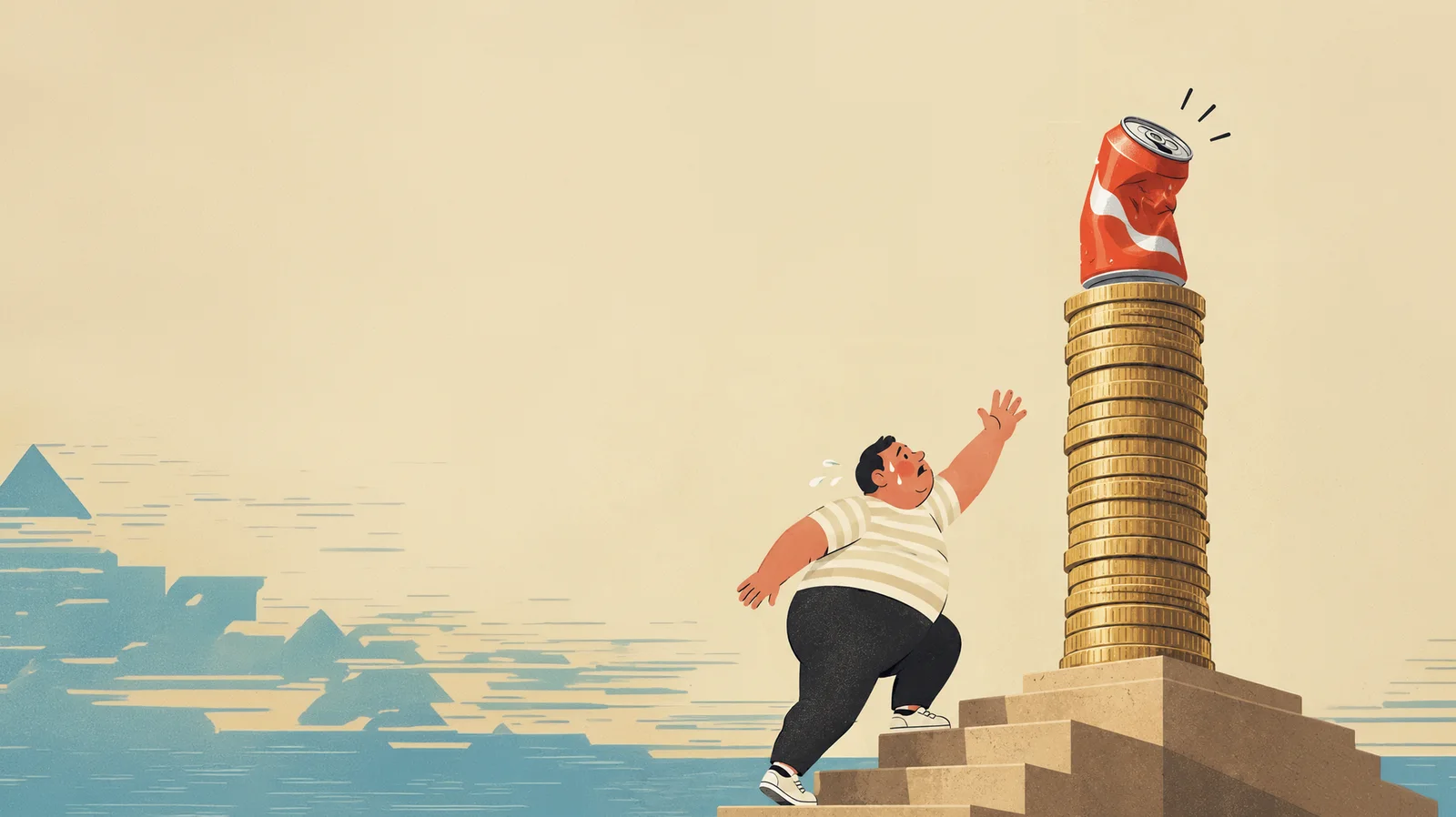
Sugar taxes cut sales of sugary drinks, and sales are the most reliable measure of how much people consume. The claim holds for drinks. For sugary foods in general, the evidence is thin.
Sales of taxed drinks fall
The largest review, by Andreyeva and colleagues in 2022, pooled 86 studies of taxes on sugar-sweetened drinks. Sales of the taxed drinks fell by about 15% after the taxes came in, and there was no sign of people switching to untaxed drinks instead, so the drop was not simply moved elsewhere. The WHO's guidance supports taxes that raise the retail price of sugary drinks by at least 20%, a rise it considers large enough to reduce consumption.
Why sales are the better measure
In the same review, the change in how much people said they drank was not statistically significant. That does not show the taxes left intake unchanged. Consumption is usually measured through surveys in which people recall what they drank, and these are far less precise than sales figures, which record what is actually bought across a whole market. A fall that shows up clearly in sales can go undetected in recall surveys.
A 20% tax does not mean a 20% fall. The effect depends on how much of the tax shops pass on in prices and how strongly buyers respond.
The evidence is mostly about drinks
Almost all the strong evidence concerns sugar-sweetened drinks such as soft drinks. Taxes on sugary foods are rarer and less studied, and results depend heavily on which products are covered. The best-known attempt at a broader food tax, Denmark's fat tax, barely moved sales.
Taxes can also change the product
Some taxes charge more for drinks with more sugar, giving manufacturers a reason to cut it. After the UK's Soft Drinks Industry Levy was announced, many manufacturers reformulated their drinks, lowering sugar intake even where people kept buying similar volumes.
What the modelling says for Malta
Two University of Malta studies have modelled food taxes here. K. Sant, in 2019, modelled a 20% tax on sugary drinks alone and found that around 40% of adults would lose some weight. Sarah Cassar, in 2022, modelled a 30% tax on fat and sugar paired with a 10% subsidy on fruit and vegetables: the obesity rate fell by about 1.6 percentage points, roughly 8,000 people. With the tax and the subsidy both at 20%, the rate rose by about a point, because shoppers respond more to cheaper fruit than to dearer sweets. Both studies borrow price responses from abroad, since no Maltese estimates exist.
Malta imports most of what it eats and drinks, and a market this size will not persuade a multinational to change a recipe. A Maltese tax would work mainly through price, which for sugary drinks is where the evidence is strongest.
A tax on sugary drinks works better than a tax on fat
Denmark is the only country to have tried a national fat tax. From October 2011 it charged about €2 per kilogram of saturated fat; sales of the targeted foods fell by 0.9%, shoppers switched between fatty products or crossed into Germany, and the tax was abolished in January 2013. Britain's levy on sugary drinks went the other way: Cambridge researchers estimated an 8% fall in obesity among girls in their last year of primary school, about 5,000 cases a year, though they found no effect among boys.
Evaluation
The claim holds for sugary drinks. Taxes that raise prices by about 20% are backed by the WHO and are followed by lower sales, the best available measure of consumption. Recall surveys are too imprecise to confirm the fall in intake, but they do not contradict it. The claim speaks of sugary items in general, and there the evidence is much thinner; that is the context the verdict reflects.
Editorial note
How we assessed this claim
We checked whether taxes on sugary products have been shown to reduce purchases or consumption, whether there is support for a 20% price rise specifically, and whether the evidence covers sugary foods as well as drinks. We gave most weight to WHO guidance and to reviews pooling evidence from several countries.
We treated sales as the main measure of consumption. Sales data record what is actually bought across a whole market. Consumption data mostly come from surveys in which people recall what they drank, which are far less precise, so a real fall can go undetected. A result that is not statistically significant means no fall could be confirmed, not that there was none.
On that basis the claim, which says a tax "can" lower consumption, holds for sugary drinks. That rules out anything below True but lacks context. It stops short of True because the claim covers sugary items in general, where the evidence is thin, and because a 20% tax does not mean a 20% fall.
Limitations
- Effects differ between countries depending on prices, which products are taxed and what alternatives are on offer.
- Most studies measure what people buy rather than what they eat or drink. Where intake was measured, the surveys were small and relied on people's own recall.
- The Maltese estimates come from models that borrow price responses from other countries; no tax has been tried here.
Sources
- World Health Organization, WHO guideline on fiscal policies to promote healthy diets (2024)
- World Health Organization, Fiscal policies for diet and prevention of noncommunicable diseases: technical meeting report (2016)
- Andreyeva T. et al., Outcomes following taxation of sugar-sweetened beverages: a systematic review and meta-analysis, JAMA Network Open (2022)
- Scarborough P. et al., Impact of the announcement and implementation of the UK Soft Drinks Industry Levy on sugar content, price, product size and number of available soft drinks in the UK, 2015-19, PLOS Medicine (2020)
- World Bank, Taxes on sugar-sweetened beverages: international evidence and experiences (2020)
- Spunt, Malta is the EU's most obese country. Would a fat tax change that? (5 October 2026)
- S. Cassar, Analyzing the potential impact of food taxes and subsidies on obesity in Malta, M.Sc. Economics dissertation, University of Malta (2022)
- K. Sant, The potential economic impact of a sugar-sweetened beverage tax in Malta, University of Malta (2019)
- M. Bødker et al., The Danish fat tax: effects on consumption patterns and risk of ischaemic heart disease, Preventive Medicine (2015)
- University of Cambridge, on Rogers et al., PLOS Medicine (2023): sugary drinks levy and obesity in year six children