

KPMG property conference: should Malta keep building or rethink its growth model?
At KPMG’s property conference, developers, economists and planning experts offered contrasting views on population growth, outdated planning policies and whether Malta’s dependence on property investment is sustainable.
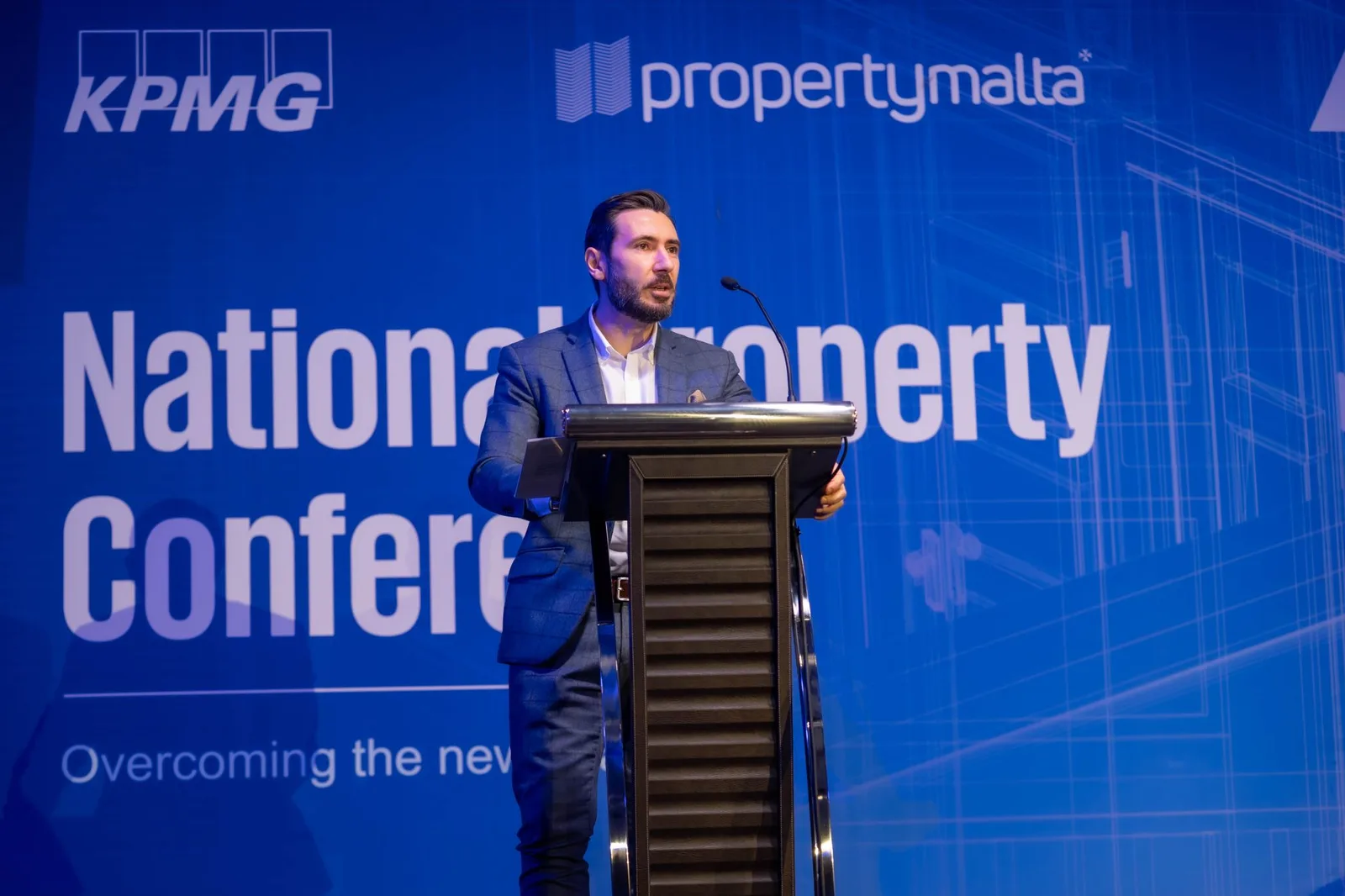
Should Malta continue building to accommodate a growing population, or should the country first decide how much it wants its population to grow? This question emerged as one of the central points of contention at KPMG’s National Property Conference on Friday, 6 November, where developers, economists and planning experts offered different perspectives on the future of Malta’s property industry.
While there was broad recognition of the industry’s economic importance, participants differed on how Malta should respond to growing demand for property, limited land availability and uncertainty surrounding its long-term economic direction. Some emphasised the need to increase housing supply and make better use of existing development zones, while others questioned whether continued population growth should be treated as an assumption around which the country’s planning policies must be designed.
The debate formed part of the conference marking the launch of the tenth edition of KPMG’s Construction Industry and Property Market Report. Presenting its findings, Steve Stivala explained that construction and real estate together generate approximately €2.13 billion in direct gross value added, equivalent to 9.7% of Malta’s economy. Construction accounts for around €900 million, while real estate contributes a further €1.23 billion. Including indirect economic effects, the combined contribution rises to approximately 14% of the economy, with the industries also supporting employment equivalent to around 12% of the workforce.
Despite their expansion, the sectors’ relative contribution to economic activity has remained broadly stable since 2018, suggesting that property and construction have generally grown alongside the wider economy rather than becoming increasingly dominant. Yet their economic significance did not settle the question of whether their current development trajectory remains sustainable.
Construction has held its share of the economy since 2018; real estate's share has risen since 2022
Share of Malta's gross value added at current prices, %
Hover or drag across the chart to read each year
More housing or a different economic model?
When the discussion turned to Malta’s limited land and the sustainability of continued development, Gravina approached the problem from the perspective of existing population trends and housing demand. He acknowledged public concerns about continued demographic expansion but argued that additional housing supply is necessary to relieve pressure on property prices.
His position reflected a fundamental housing-market consideration: when demand for accommodation continues to grow, restricting the availability of homes can place further upward pressure on prices. From this perspective, increasing supply is part of the response to Malta’s affordability challenge, even if population growth itself remains politically contentious.
Malta's population grew by almost a third in ten years, and its house prices outpaced the EU's
Index, 2015 = 100
Hover or drag across the chart to read each year
Developer Michael Stivala similarly maintained that opportunities for further development remain, despite the scarcity and high cost of land. He pointed particularly towards the regeneration of existing buildings within development zones, suggesting that the industry could continue responding to demand without necessarily relying on the expansion of development boundaries.
However, architect Alex Torpiano challenged the underlying assumptions informing this approach. Rather than focusing primarily on how Malta can accommodate continued growth, he questioned whether the country had sufficiently determined the demographic future it wanted in the first place.
Torpiano argued that decisions about whether Malta’s population should continue expanding, stabilise or eventually decline are fundamentally political. They cannot simply be left to the Planning Authority or treated as inevitable consequences of economic growth. He also questioned whether the country’s Vision 2050 strategy had adequately addressed the demographic implications of its economic ambitions.
Whether Malta's population grows or shrinks depends almost entirely on migration
Malta's population on 1 January: actual, and Eurostat's 2023 projections with and without migration
Hover or drag across the chart to read each year
This introduced an important distinction into the discussion. Gravina’s argument concerned the need to provide sufficient housing for the population Malta is expected to have, while Torpiano questioned whether that expected population should itself become an explicit policy choice. The two positions are not necessarily incompatible, but they approach the problem from different starting points. One addresses the consequences of existing trends, while the other asks whether those trends should continue shaping the country’s future.
The contrast became more apparent following an intervention by architect Christopher Borg, who explained the relationship between Malta’s economic vision and land-use planning. Borg described how the Planning Authority must translate expected economic activity into physical requirements, considering not only residential accommodation but also demand for offices, hotels, infrastructure and other developments. Household composition, population density, fragmented ownership and competing land uses all influence how that demand can be accommodated.
Borg’s contribution illustrated the practical task facing planners when economic growth projections are translated into development needs. Torpiano, however, questioned whether planners were being given a sufficiently clear national direction from which to work. In effect, while Borg explained how economic assumptions influence planning requirements, Torpiano challenged whether the underlying demographic assumptions had been adequately debated and decided.
The disagreement therefore extended beyond the construction industry itself. An economy that generates growth primarily through an expanding workforce can create different pressures on housing, infrastructure and land from one that increasingly relies on productivity improvements, technology and capital investment. A target for economic growth does not automatically determine the rate at which the population must expand, making the composition of Malta’s future growth a central consideration.
Even Michael Stivala, while identifying opportunities for further development, expressed concern that the industry lacked a sufficiently clear long-term direction. The participants therefore shared an interest in greater predictability, even if they differed on whether the immediate priority should be accommodating existing demand or reconsidering the economic assumptions generating it.
Planning reform: update the rules or decide the destination first?
A second contrast emerged over Malta’s outdated local plans and the uncertainty surrounding development decisions.
Ian Stafrace argued that the country’s planning framework had failed to keep pace with changes in the economy and the built environment. He highlighted the age of local plans affecting areas such as Valletta and Marsaxlokk, questioning whether policies drawn up many years ago could still provide appropriate guidance for present development pressures.
Malta's local plans were written for a country of about 400,000 people
Population on 1 January, with the year each planning policy was approved
Hover or drag across the chart to read each year
He also drew attention to the frustration experienced by residents in established neighbourhoods, where low-rise homes may be replaced by substantially larger apartment blocks. In his assessment, insufficient clarity about what can be developed creates uncertainty among residents and contributes to suspicion towards the planning process. Stafrace called for renewed dialogue, arguing that planning discussions had become increasingly polarised and that disagreements frequently prevented constructive engagement.
Michael Stivala shared concerns about ambiguities within the planning system but placed greater emphasis on the influence of public pressure. He argued that heavily publicised development applications can face different pressures from those attracting less attention, creating uncertainty for developers over how the planning process will unfold. He also expressed frustration with what he considered an unwillingness among some non-governmental organisations to engage constructively.
Although both identified problems with predictability, their emphasis differed. Stafrace focused on the need for clearer planning policies and more constructive public dialogue, while Michael Stivala drew attention to the influence of public controversy on individual applications. The latter was an assessment by a participant rather than evidence that planning decisions are systematically influenced by publicity.
Torpiano approached the matter from another direction. Rather than treating the revision of local plans as the starting point, he argued that Malta must first establish where it intends to go as a country. Without clearer decisions on population, economic development and land use, revising planning documents risks producing another framework built around assumptions that may subsequently change.
The distinction is important. Stafrace’s argument suggested that outdated planning rules are themselves part of the problem and require attention. Torpiano’s position suggested that planning reform cannot be effective without a sufficiently clear national strategy to guide it.
These are not mutually exclusive arguments. Local plans can require updating while national economic and demographic objectives remain under discussion. Nevertheless, the debate revealed different views on where reform should begin: with the planning system and its existing shortcomings, or with the political decisions that determine what that system is supposed to achieve.
Is property investment strengthening Malta’s economy or limiting its alternatives?
Perhaps the most economically significant disagreement concerned Malta’s dependence on property as an investment.
Torpiano questioned whether the attractiveness of property partly reflects the lack of alternative opportunities available to investors. He raised concerns about the concentration of household wealth in real estate and asked whether continued investment demand could be sustained indefinitely, particularly if Malta’s demographic trajectory were to change.
No euro area country holds more of its household wealth in housing than Malta
Housing wealth as a share of households' total assets, end of 2025, %
Michael Stivala challenged the practicality of redirecting investment away from property. He used the example of an overseas investor with substantial capital who chooses to purchase a property for rental purposes, questioning what similarly accessible and attractive opportunities could realistically be offered instead.
Torpiano responded by raising the risk associated with future rental demand. If Malta’s population were eventually to stabilise or decline, the assumption that properties could continually generate rental income from a growing pool of tenants would become less secure.
The exchange exposed two competing considerations. Michael Stivala emphasised the decisions investors make under present market conditions, where real estate offers a familiar means of deploying capital. Torpiano questioned the longer-term assumptions supporting those decisions, particularly whether sustained demographic growth should continue being treated as the foundation of future property demand.
The discussion also extended to artificial intelligence and technological change. Michael Stivala acknowledged that AI could significantly transform the workforce, while observing that existing local plans were not designed with such developments in mind. This introduced another uncertainty into the property debate: if technological advances change the number or composition of workers required to generate economic growth, they could also change future housing demand.
However, a future slowdown in population growth is not a certainty, nor would it automatically lead to a collapse in property demand. The issue raised at the conference was whether development and investment decisions should take a wider range of demographic and economic scenarios into account.
Gravina approached the investment question from a broader macroeconomic perspective. While acknowledging that the rental market requires property owners willing to provide accommodation, he questioned whether such a substantial share of national savings should be directed towards real estate rather than other economic activities.
He distinguished between investment that increases productive capacity and the purchase of existing property assets. Buying an existing home can provide accommodation and rental income, but it does not necessarily generate the same additional productive capacity as investment in business expansion, equipment or technology.
For Gravina, the solution was not simply to discourage property investment, but to ensure that more attractive alternatives become available. This placed his position closer to Torpiano’s concerns about investment concentration, although Gravina placed greater emphasis on the economic conditions necessary to encourage diversification.
Sandro Chetcuti introduced another explanation for the preference towards property, suggesting that more competitive interest rates on bank deposits could make traditional savings products more attractive. Michael Stivala added that even Malta’s domestic bond market includes substantial property-related financing, meaning that some alternatives to direct property ownership may still leave investors exposed to the same industry.
Malta's current accounts pay a quarter of the euro area rate, but its term deposits pay as much
Interest rates on household deposits, September 2026, % a year
Taken together, the interventions revealed different views about why capital continues flowing towards property. Torpiano emphasised the risks of concentration and dependence on future demand, Gravina questioned whether savings could better support productive investment, Chetcuti highlighted the limited returns available from bank deposits, and Michael Stivala stressed the practical difficulty of offering investors equally attractive alternatives.
The underlying question was whether property investment is simply responding to market incentives or whether Malta’s wider financial and economic environment is encouraging an excessive concentration of capital in real estate.
Where participants found common ground
Despite the differences over growth, planning and investment, participants identified several challenges requiring attention regardless of the country’s longer-term direction.
KPMG’s stakeholder consultations highlighted high land costs, transport and waste-management expenses, shortages of skilled workers and the administrative burden associated with regulatory compliance. There was support for improving vocational training, introducing or strengthening skills cards, maintaining appropriate insurance requirements and ensuring more effective enforcement of construction standards.
However, stakeholders also emphasised that higher standards should be accompanied by proportionate implementation, avoiding unnecessary administrative and financial burdens.
Michael Stivala raised a particular concern about the retention of trained foreign workers, arguing that measures affecting third-country nationals could lead to businesses losing employees after investing in their training. This highlighted another tension within the wider economic debate: the desire to improve skills and productivity while ensuring that firms can retain the workers needed to develop those capabilities.
Quality of life also featured prominently in KPMG’s presentation. While much of the property debate focuses on individual buildings, the consultation findings stressed that the success of development depends equally on the surrounding environment. Transport infrastructure, parking, waste management, open spaces and neighbourhood conditions all influence residents’ experiences, regardless of the quality of their individual homes.
The report also highlighted the importance of energy-efficient construction and better information for buyers about building quality. Although more efficient buildings can reduce long-term operating costs, buyers may be reluctant to pay higher upfront prices, creating a potential role for incentives that better reflect the lifetime costs of property ownership.
These concerns demonstrated that improving the quality of development remains necessary regardless of whether Malta continues experiencing rapid population growth or eventually shifts towards a different economic model.
The conference ultimately brought into focus a distinction that is often overlooked in discussions about Malta’s property industry. There is a difference between asking how the country should accommodate continued growth and asking what kind of growth the country should pursue.
For those focused on existing housing demand, the immediate challenge is ensuring sufficient supply, improving the planning process and making better use of available land. For those questioning the economic and demographic assumptions behind that demand, the priority is establishing a clearer national direction before committing the country’s limited space to further development.
Both perspectives address genuine economic considerations, but they do not necessarily lead to the same policy priorities.
The debate at KPMG’s conference therefore went beyond whether Malta should continue building. It raised the more fundamental question of whether the country’s property sector should continue adapting to the economic and demographic trends currently shaping demand, or whether Malta should first reconsider the direction of those trends themselves.