
Should Malta worry about Chinese spies?
As Nvidia’s founder becomes embroiled in allegations involving Chinese espionage, an overlooked connection has emerged: Malta helped manufacture the company’s earliest chips. Behind that historical link lies one of Malta’s most important industries, with more than four decades of experience, substantial exports and an expanding role in European semiconductor manufacturing.
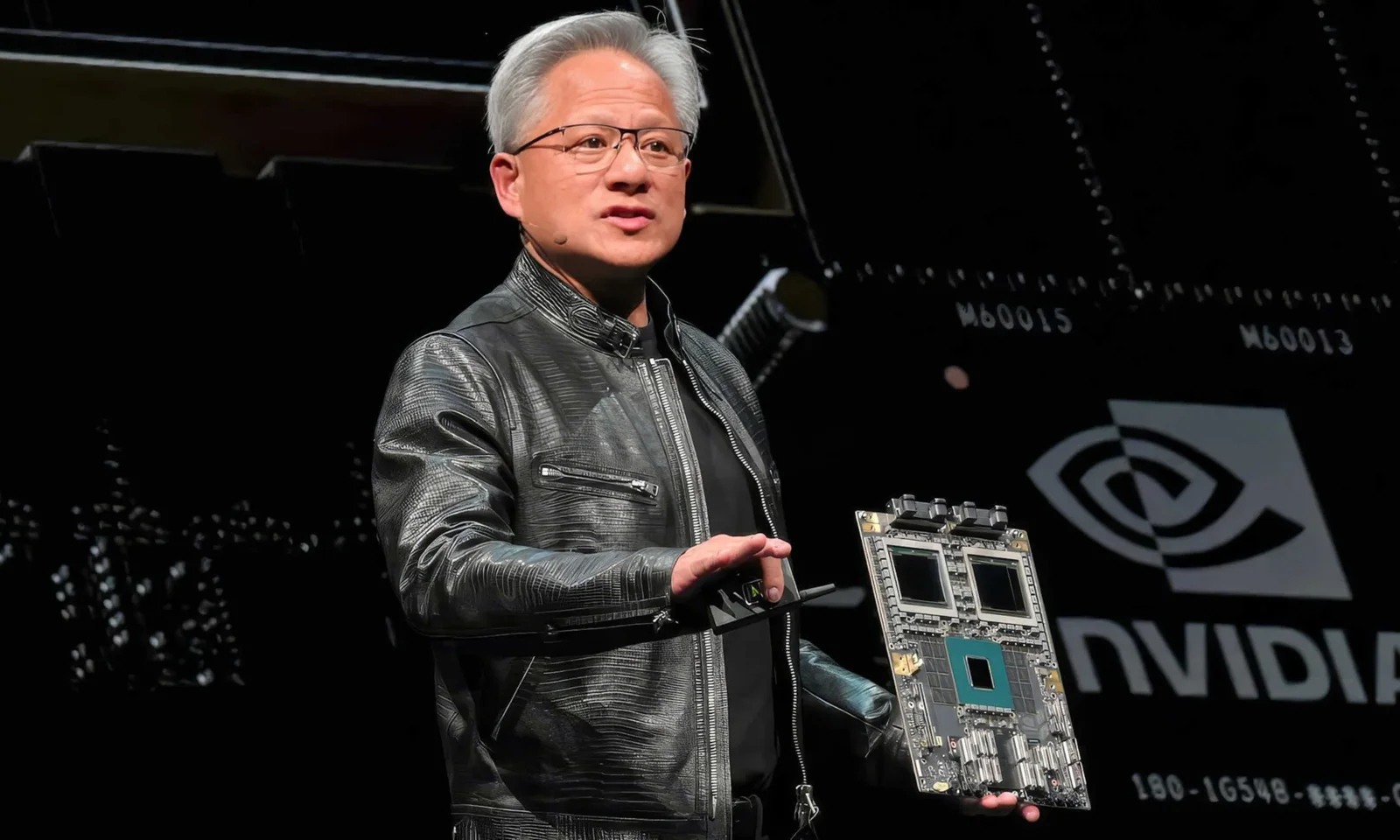
Jensen Huang, the founder of technology giant Nvidia, has become the centre of an international controversy following allegations that a woman with whom he had a relationship was involved in Chinese intelligence activities.
The allegations, which remain under investigation, have attracted considerable attention because of Nvidia’s importance to the global artificial intelligence industry. On 12 November, the company announced that Huang had resigned as its chief executive, while maintaining that it had no reason to believe its technology or confidential information had been compromised.
But only three weeks earlier, Huang had made a rather different headline-worthy revelation, one that concerned Malta.
Speaking at a technology conference in Berlin on 21 October, he recalled how Nvidia’s earliest computer chips were manufactured through a European production network.
“We manufactured a chip in Crolles, France, assembled it in Malta and shipped it around the world,” Huang told the audience.
It was a brief reference to an important chapter in the company’s history. Nvidia’s first chip, the NV1, was introduced in 1995, when the company was still attempting to establish itself in the computer graphics market.
At that time, nobody could have predicted that Nvidia would eventually become one of the world’s most important suppliers of processors used in artificial intelligence.
Nor would many people today associate Malta with the early development of one of the technology industry’s most influential companies.
Yet Huang’s reference points to a much larger story.
For around 45 years, Malta has played a substantial role in the international semiconductor industry. What began as a manufacturing investment in the early 1980s has developed into one of the country’s most significant industrial activities, employing skilled workers, generating exports and attracting investment in increasingly advanced production technology.
The connection to Nvidia is therefore not an isolated historical curiosity. It is evidence of Malta’s longstanding participation in an industry that has become essential to the modern global economy.
How Malta entered the semiconductor industry in 1981
The origins of Malta’s semiconductor industry go back to the final years of Dom Mintoff’s administration.
In 1981, Italian semiconductor manufacturer SGS-ATES established operations in Malta following negotiations involving the Maltese government and the company’s leadership.
Former industry minister Joe Grima provided an account of those negotiations in an interview with Business Today published on 28 January 2009.
According to Grima, the investment originated from the relationship between Mintoff and Pasquale Pistorio, who was then responsible for external business development at SGS-ATES.
The Malta Development Corporation subsequently helped organise the transfer of part of the company’s production to Malta.
The Kirkop factory formally opened in 1982 with approximately 400 employees.
The decision to invest in Malta reflected the economic circumstances of the period.
European manufacturing was experiencing difficult conditions, and Malta was attempting to attract foreign investment capable of providing employment and supporting exports.
Grima recalled that Malta offered several advantages, including lower wages than mainland Europe, a flexible workforce and workers capable of learning new technical skills.
These factors were particularly important for semiconductor assembly, which required accuracy, reliability and careful quality control.
The investment introduced Maltese workers to a specialised industrial activity with international customers and demanding production standards.
As Grima observed, this was technology that Malta had not previously developed on such a scale.
The factory was therefore important for more than the number of people it employed. It provided an opportunity to build technical expertise and establish Malta within a sophisticated international manufacturing network.
The company itself subsequently underwent significant changes.
In 1987, SGS joined with French semiconductor operations to form SGS-Thomson. In 1998, the business adopted the name STMicroelectronics.
By then, Malta had already spent more than a decade developing experience in semiconductor production, including the assembly of the early Nvidia chips that Huang would recall many years later.
What does Malta actually manufacture?
To understand Malta’s importance in the industry, it is necessary to distinguish between the different stages of semiconductor manufacturing.
Semiconductors are electronic components found in almost every category of modern technology. They help computers process information, allow vehicles to manage electronic systems, enable sensors to detect changes in their environment and support industrial machinery.
However, manufacturing a chip involves several separate activities.
The process generally begins with design, where engineers determine the electronic functions and circuitry required.
The circuitry is then manufactured on thin silicon wafers through an exceptionally precise process known as fabrication.
After fabrication, individual chips must be separated, connected to external circuits, enclosed in protective packages and tested.
Malta has historically specialised in these later stages, particularly assembly, packaging and testing.
This explains Huang’s reference to France and Malta.
The silicon circuitry was manufactured in France, while the Maltese operation helped turn those chips into usable components that could be incorporated into electronic products.
Although this work is different from designing advanced processors, it remains essential to semiconductor production.
A chip cannot be sold as a reliable finished component unless it can connect to other electronics, withstand the conditions in which it will operate and meet the necessary performance standards.
These requirements are particularly important for applications such as vehicles, sensors and industrial equipment, where component failure can affect safety or the operation of expensive machinery.
Today, STMicroelectronics describes its Kirkop factory as its largest semiconductor packaging and testing centre in Europe.
The operation produces advanced chip packages, including those used in automotive applications and microelectromechanical systems, commonly known as MEMS sensors.
These are components that can detect physical conditions such as movement, pressure or acceleration and convert them into electrical signals.
Their applications extend across different industries, from vehicles and consumer electronics to industrial equipment.
Malta’s role, therefore, is not to manufacture Nvidia’s current generation of artificial intelligence processors. Rather, it is to provide specialised manufacturing capabilities within a much broader semiconductor industry.
That is an important distinction, but it does not diminish the significance of the activity taking place in Kirkop.
A factory processing more than a million chips every day
The scale of Malta’s semiconductor operations is considerable.
According to STMicroelectronics’ 2026 recruitment and facility information, its Kirkop plant has approximately 20,000 square metres of cleanroom space and processes more than 1.34 million chips daily.
Cleanrooms are specialised manufacturing environments where airborne particles and other sources of contamination are carefully controlled.
Such conditions are necessary because semiconductor components are extremely small and sensitive. Contamination that might be insignificant in an ordinary factory can interfere with electronic components or affect their reliability.
The operation also demonstrates how much manufacturing has changed since the early 1980s.
The factory that initially employed around 400 people now has approximately 1,500 employees, according to the company’s published site profile.
It is one of Malta’s largest private employers.
But employment is only one measure of its importance.
The Kirkop operation increasingly relies on automation, robotics, digital systems and sophisticated production management to improve efficiency and quality.
According to STMicroelectronics, engineers and data scientists at the site work on technologies including predictive maintenance, production optimisation and digital twins, which use digital models to help monitor and improve manufacturing processes.
These developments illustrate an important change in Malta’s industrial competitiveness.
The original investment was attracted partly by relatively low wages. Today, maintaining the factory’s position requires technical capabilities, specialised training, productivity improvements and substantial investment in equipment.
In May 2025, the government announced the completion of a phase of the factory’s modernisation project, including upgraded facilities and improvements to manufacturing processes.
The same announcement reported that the facility had been earmarked for closure approximately seven years earlier, before undergoing a transformation supported by further investment.
That provides some perspective on the challenges involved in maintaining manufacturing operations in a small economy.
An established industrial presence does not guarantee that a multinational will continue investing indefinitely. Factories must remain competitive against alternative locations within a company’s international production network.
The government’s announcement on 20 May 2026 marked another development.
A new industrial facility in Kirkop was transferred for the next phase of an expansion project valued at €250 million, involving cooperation between STMicroelectronics and the Maltese authorities.
The project is intended to introduce further advanced manufacturing technologies, automation and robotics.
It represents an important commitment to maintaining Malta’s position in the industry’s international production network.
One of Malta’s largest export industries
The economic significance of semiconductors becomes particularly clear when examining Malta’s exports.
According to figures released by the Maltese government in May 2025, the semiconductor sector generated more than €1.2 billion in exports, equivalent to approximately one-third of Malta’s total merchandise exports.
The same announcement estimated that the wider semiconductor sector sustained more than 4,000 jobs.
These figures suggest that semiconductors occupy a much larger position within Malta’s manufacturing economy than their public visibility might indicate.
Economic discussions about Malta frequently concentrate on services, particularly tourism, financial services and other activities that have contributed to the country’s growth.
However, semiconductors demonstrate that Malta also maintains a substantial presence in the production and international trade of physical goods.
There is an important statistical distinction.
The €1.2 billion export estimate refers to the value of goods sold abroad. It should not be interpreted as the industry’s direct contribution to Malta’s GDP.
Semiconductor production relies on imported materials and components, meaning that only part of the final export value represents economic value created locally.
Similarly, the government’s estimate of more than 4,000 jobs refers to the wider sector rather than employment exclusively within the Kirkop factory.
Nevertheless, the figures demonstrate that semiconductor manufacturing is economically important to Malta.
The sector generates demand for technical occupations, contributes to merchandise exports and creates opportunities for industrial specialisation.
It also links Malta to an international industry whose economic importance continues to expand.
According to World Semiconductor Trade Statistics, worldwide semiconductor sales reached approximately $795.6 billion in 2025, an increase of 26.2% over 2024.
Growth was particularly strong in computing applications, supported by demand for artificial intelligence infrastructure.
This does not mean that Malta’s semiconductor exports are growing at the same rate or directly benefiting from every development in AI technology. The market contains different products and manufacturing activities, with different patterns of demand.
It does, however, illustrate the scale of the international industry in which Malta has developed its expertise.
Can Malta move beyond assembling and testing chips?
The next stage of Malta’s semiconductor development could be particularly important.
For decades, the country’s main strength has been in the manufacturing activities carried out at Kirkop.
The challenge now is to determine whether this industrial base can support a wider range of economic activities, including research, chip design and the development of new businesses.
In September 2025, Malta officially launched its Semiconductor Competence Centre.
The initiative brings together industry, Malta Enterprise, the University of Malta, MCAST and other partners to develop skills, support research and encourage innovation in semiconductor technologies.
Its objectives include providing specialised training, supporting technical education and helping emerging businesses develop commercially viable semiconductor products.
The centre also supports programmes intended to encourage new businesses in chip design.
This represents an attempt to expand Malta’s participation in the semiconductor value chain.
Design is a different activity from packaging and testing. It requires specialised engineering knowledge, research capabilities and access to sophisticated development tools.
It can also create opportunities for intellectual property development and business activities that do not depend exclusively on operating large manufacturing facilities.
However, such an expansion will require more than establishing a competence centre.
Malta will need sufficient numbers of appropriately trained engineers and researchers, stronger relationships between education and industry, and an environment in which new businesses can access the expertise and investment required to develop their products.
The success of these initiatives should ultimately be measured by their economic results: whether they lead to new businesses, sustainable employment, commercially useful research and additional private investment.
There is also a question of diversification.
Although STMicroelectronics has provided Malta with a substantial industrial base, the country’s established semiconductor manufacturing activities remain closely associated with one large multinational.
Developing additional businesses could make the industry more resilient while creating wider opportunities for workers and researchers.
Rather than attempting to replicate the scale of the world’s largest semiconductor manufacturing economies, Malta could build on its existing areas of expertise and develop complementary activities.
A smaller economy does not need to participate in every stage of production to establish an internationally competitive position.
The history of Kirkop demonstrates precisely that.
Forty-five years of industrial experience
The controversy involving Nvidia’s founder has understandably attracted international attention.
But for Malta, the most interesting part of the story may be something Huang said before the controversy emerged.
His recollection of Nvidia’s early chips being assembled in Malta is a reminder that the island’s involvement in advanced manufacturing is neither new nor insignificant.
What began with a factory employing around 400 people in the early 1980s has developed into a substantial industrial operation with specialised workers, advanced equipment and international customers.
The country now hosts a facility processing more than a million chips a day, while the wider sector accounts for a considerable share of merchandise exports.
More importantly, the continued investment in Kirkop suggests that Malta has managed to retain manufacturing activities that increasingly depend on technology, efficiency and specialised skills, rather than simply low labour costs.
There are still challenges. Manufacturing technology continues to evolve, international competition remains substantial, and Malta must ensure that its education and training systems can supply the skills that the industry requires.
But these are challenges associated with developing and maintaining an established industrial strength.
The opportunity is to use that strength as a foundation for additional economic activity, particularly in research, design and specialised technology businesses.
Malta’s semiconductor story is not about Chinese spies. It is about how a small island became part of one of the world’s most important manufacturing industries, and whether it can turn 45 years of experience into an even stronger position in the decades ahead.