
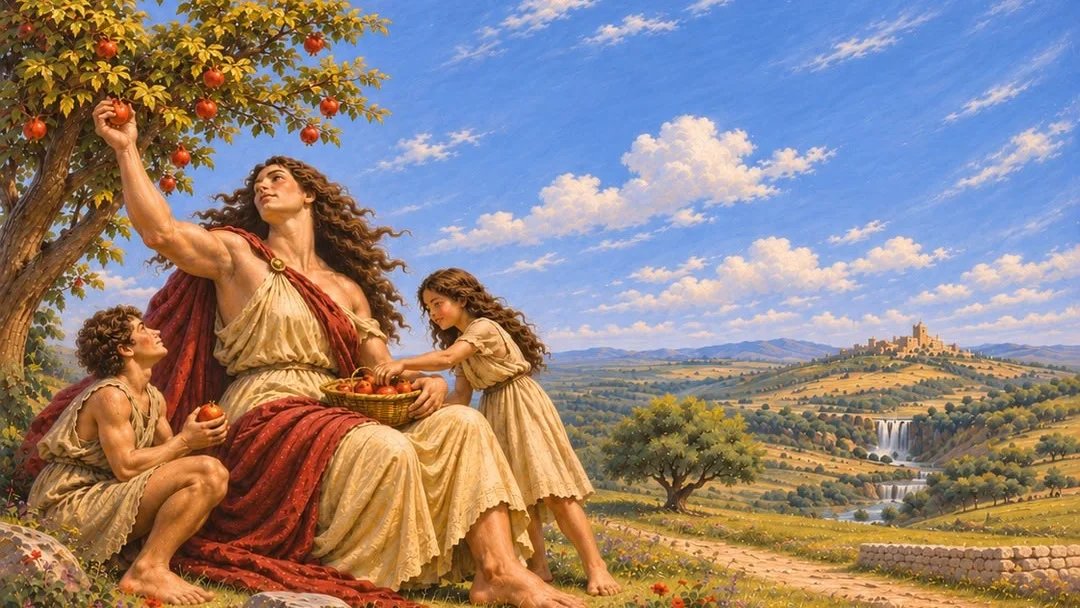
Long before the inhabitants of Malta and Gozo traced their ancestry through family records, surnames or historical documents, there was another explanation for where they came from. According to an old Maltese legend, some descended from giants.
The story begins on the coast of a distant land, where a giantess lived with her two children, a boy and a girl. One day, while the mother was away in the woods, a boat arrived on the shore. A group of sailors landed and discovered the two children, whom they captured and took aboard their vessel.
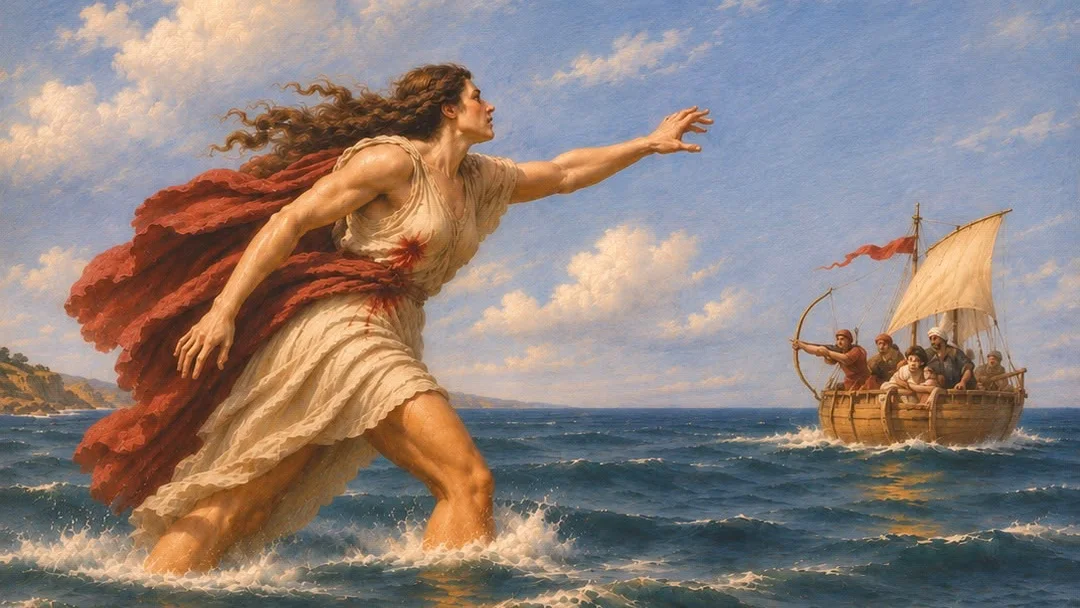
When the giantess discovered what had happened, she pursued the sailors out to sea, desperately trying to reach the boat carrying her children. But before she could reach them, the sailors shot and killed her. The vessel continued its voyage, eventually arriving in Malta. The two giant children survived, and what happened next supposedly determined the ancestry of two entire communities.
The girl settled and married in Gozo, where she was said to have become the ancestor of the Gozitan people. Her brother settled and married in Mosta, and the people of that village were believed to be his descendants. The girl was also identified with the giant responsible for moving enormous rocks.
It was an extraordinary explanation for the origins of two communities. But for earlier generations, it was part of a much wider belief that giants once inhabited the Maltese islands.
The descendants of giants
The legend was among the stories collected by Manwel Magri, the Maltese priest and folklorist who documented local traditions around the beginning of the twentieth century. Magri was particularly interested in the apparent connection between the legendary giants and the physical characteristics of people living in Gozo and Mosta. In fact, Magri observed that some soldiers from Gozo and Mosta were unusually large and strong.
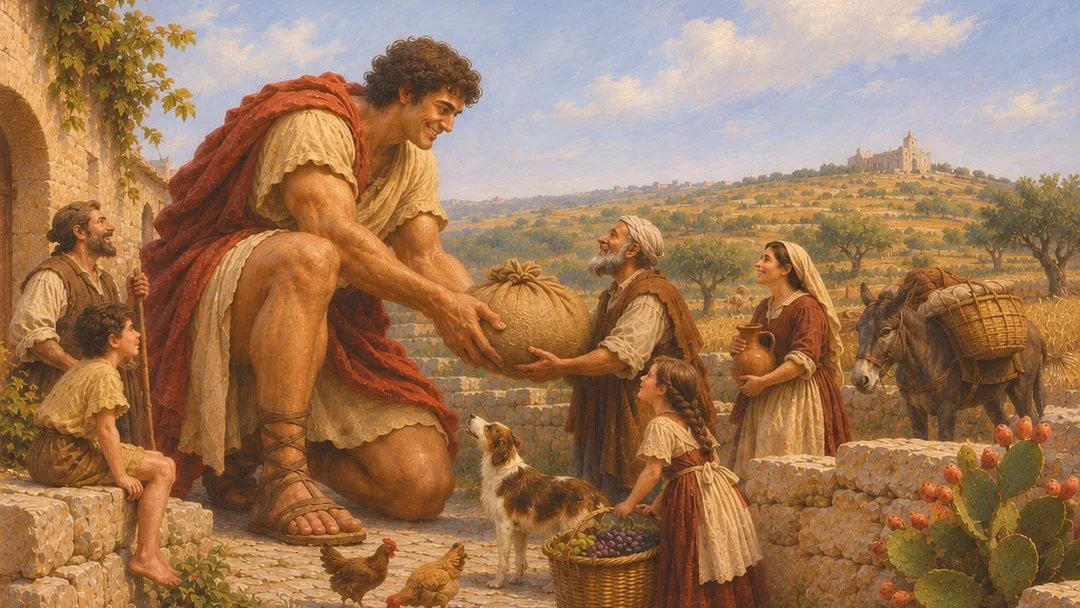
In Magri’s views, the physical stature of the Gozitans and Mostin explained the presence of these old stories and giant ancestors. The belief that giants inhabited the Maltese islands was not confined to one legend.
Across Malta and Gozo, the locals could hardly ignore the enormous, and yet mysterious, prehistoric structures. It comes to no surprise therefore that these temples, present before time immemorial, were associated with powerful beings who must have possessed the strength to move stones beyond the abilities of ordinary people.
The most famous example is Ġgantija, the prehistoric temple complex in Xagħra, whose name preserves its association with giants. But other places carried similar traditions.
In Gozo, il-Ġebla ta’ Sansuna was associated with a giantess named Sansuna who supposedly used an enormous stone as a bench. Sansuna herself was credited to have carried the large megalithic stones across Gozo to build the Ġgantija temples.
At Ta’ Ċenċ, a ruin known as id-Dura tal-Mara was likewise associated with a giant woman. Other place names also preserved traces of these beliefs. Mifsud identifies Bir Ġabbar and Bur Ġabbar as possible reminders of the older Semitic word ġabbar, meaning giant, while a place in Victoria known as il-Ġemgħa tal-Ġganti was supposedly where giants once gathered.
For people who could see enormous megalithic structures standing across the countryside, the possibility that Malta had once been inhabited by giants seemed far less unreasonable than it does today.
A legend about belonging
Obviously, there is no archaeological or scientific evidence that giants inhabited Malta. Yet the legend remains interesting for another reason. It offers a glimpse into how people once explained their identity through storytelling.
The giantess was not simply a fantastical creature. Through her children, she became part of the imagined ancestry of two communities. The story connected ordinary people to extraordinary ancestors and gave familiar places a role in a much larger narrative. It also preserved a recognisably human tragedy: a mother trying unsuccessfully to save her abducted children.
Perhaps that combination of tragedy, ancestry and the supernatural helped the story survive in Maltese oral tradition.
Source: Stephan D. Mifsud, Maltese Mythology, Vol. 1, pp. 34–35, drawing on Manwel Magri (MŻ38, ħrafa 15.2).