
The Hidden Cost of a Parliamentary Seat
Elected office looks like a privilege from the outside. Research into the people who actually hold it tells a more complicated story.
There’s a common assumption that once someone is elected to parliament, the hard part is over. The campaign is won, the seat is secured, and whatever follows is simply the reward.
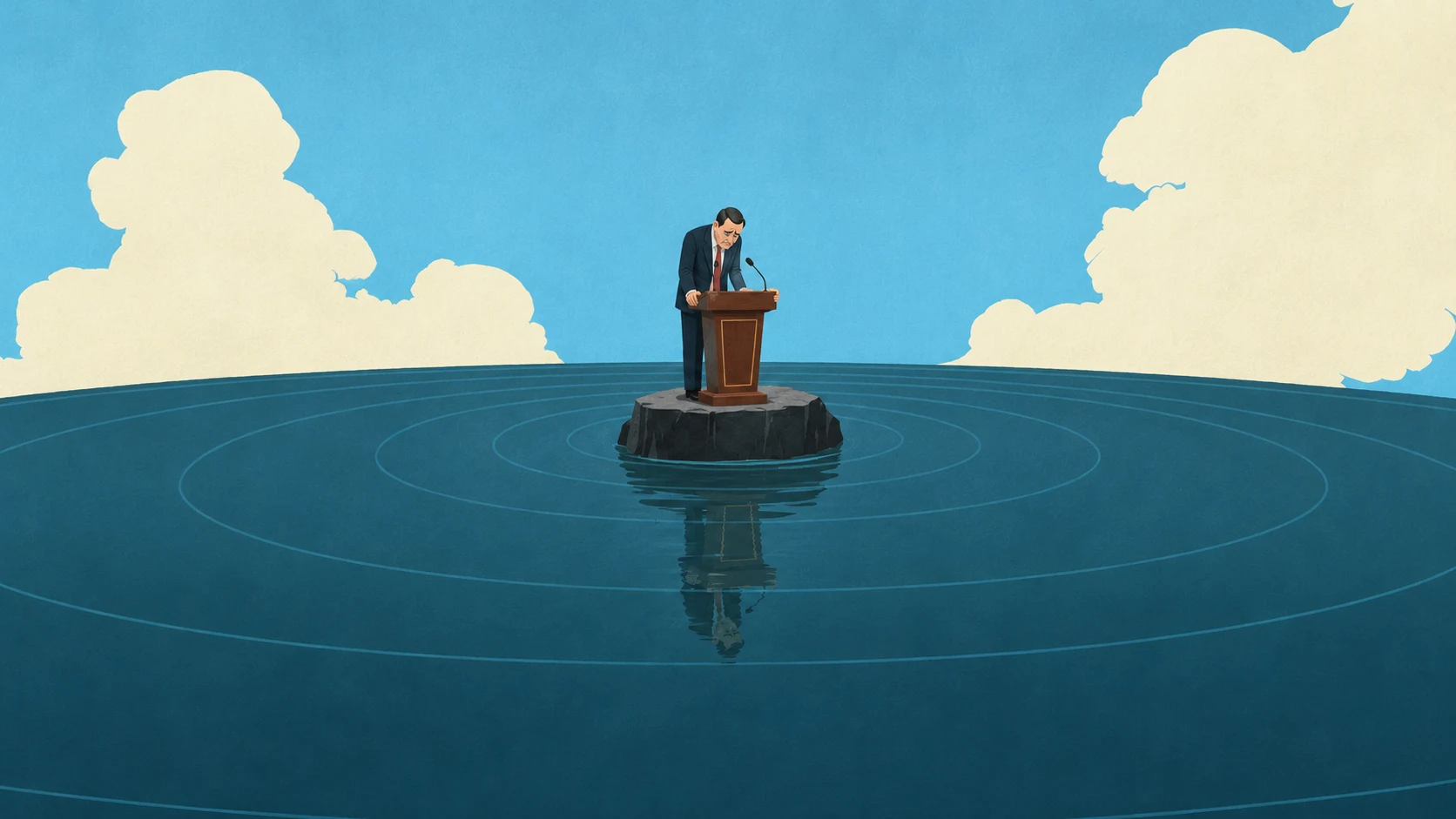
Psychological research into political office tells a different story, one in which election is less a finish line than the start of a sustained, largely invisible strain on health, family life and identity.
For a psychology dissertation I completed at the University of Malta back in 2024, I interviewed six sitting Members of Parliament, evenly split between government and opposition, across genders and age groups, about what winning a seat had actually done to their daily lives. Six MPs out of a House of 79 is, on its own, far too small a sample to draw statistically confident conclusions about the institution as a whole, and that limitation is worth stating plainly rather than glossing over. None of what follows names anyone, by design; the value of the research lies not in any one person’s story, but in how consistently certain patterns showed up across a small group of people who otherwise disagree about almost everything else.
The first pattern was the disappearance of a private self. Several participants described losing the ordinary boundary between being in public and being off duty: a routine errand becomes a constituency interaction, a family member’s illness becomes something strangers feel entitled to comment on. This isn’t unique to Malta; in fact, a 2020 study by Matthew Flinders and colleagues, published in Parliamentary Affairs, found that the blurring of public and private life is one of the most consistently reported stressors among elected politicians across parliamentary democracies, precisely because there is no formal “off” switch built into the role the way there is in most other professions.
The second pattern, and the one participants raised most urgently, was social media. Several described online hostility as more psychologically taxing than the legislative work itself, not ordinary disagreement, but personal attacks that extend to family members and staff. This tracks with a growing academic literature: a 2024 study in Frontiers in Psychiatry by Susanna Every-Palmer and colleagues documented rising rates of stalking, harassment and gendered abuse directed at politicians since the pandemic, and other researchers have found the abuse falls disproportionately on women in politics. More than one participant in my own research raised, unprompted, the concern that this climate is quietly discouraging capable people, especially women, from ever putting themselves forward at all.
The third pattern concerned support, or the lack of it. Family consistently emerged as the primary buffer against burnout, a finding that lines up with a 2023 study by Josianne Scerri and colleagues on Mediterranean family ties in Malta, which found that close-knit families function as both emotional support and practical infrastructure. But professional psychological support was a different matter entirely. Where it appeared in the interviews, it appeared quietly, often undisclosed even to close family, reflecting a stigma around mental health support that Scerri and colleagues, in that same 2023 research, documented well beyond the political sphere. The UK offers a useful point of comparison here: a 2019 cross-sectional survey of the House of Commons by Poulter and colleagues found concerning rates of mental distress among sitting MPs and identified stigma, not lack of access, as the primary reason so many did not seek help.
Malta’s parliament has some genuinely distinctive structural features worth naming plainly, because they shape all of this. It is a part-time legislature that sits three evenings a week, and Malta has the highest number of parliamentarians per capita of any EU member state, which in practice means most MPs are also holding down a separate profession or business alongside their political role. That structure was not designed with any malicious intent, but it does mean the boundary problems described above are, to some extent, built into the job by design rather than incidental to it.
None of this is an argument that politicians deserve more sympathy than anyone else carrying a demanding job. It’s an argument that a system’s ability to attract and retain capable, diverse representatives depends in part on whether it treats their wellbeing as infrastructure rather than an afterthought. The UK’s own research on this topic prompted internal reviews within Westminster on staff and member support; back in 2024, family-friendly workplace measures, something as simple as a space for children within the building, appeared in my own interviews not as a fringe demand but as something several participants, across party lines, independently wished existed.
There is a live, current example of exactly this playing out. In mid-2026, Speaker Carmelo Abela wrote to MPs to gauge interest in introducing a childminding service during sittings, an initiative that followed an appeal from Nationalist MP Adrian Delia and drew explicit cross-party support from Labour MP Ramona Attard, who noted that MPs had been bringing children into the building because there was nowhere else for them to go. It’s worth adding a note of caution alongside the encouragement: a previous Speaker made a nearly identical promise back in 2017, and nearly a decade later, it still hadn’t been delivered. Whether 2026 turns out differently is not yet known. But the fact that MPs on both sides of the House are independently naming the same gap my 2024 research turned up suggests the pattern is real, not anecdotal. Normalising conversations about the psychological cost of public service, rather than treating it as a private failing to be managed alone, isn’t a soft add-on to good governance. Tired, isolated, unsupported representatives make worse decisions for everyone they represent, which makes this, in the end, as much a policy question as a personal one.