
To be or not to be… a juror
Who can sit on a Maltese jury, who is disqualified or exempt, how a jury is drawn and challenged, and whether lawyers should be allowed to research the people who will decide their client’s fate.
A jury is composed of a foreman and 8 common jurors.
To serve as a juror, in general you have to be:
- At least 21 years of age
- A citizen of Malta and residing on the islands
- Knowledgeable of the Maltese language
- Of good character.
Now if you’re wondering what determines the good character of a person, I can inform you that it has far less to do with who can crack the most jokes at the dinner table and far more to do with your Certificate of Conduct, or as we call it in Maltese, ‘Il-Kondotta’.
This piece of paper usually changes depending on whether you have been found guilty of a crime under the Criminal Code. However, a guilty verdict doesn’t automatically exclude you from being eligible to become a juror. The Criminal Code clearly states that you cannot serve as a juror if you have been found guilty of a crime liable to imprisonment for a term exceeding one year. This exclusion also doesn’t apply to those people who have received a free pardon or people convicted of involuntary homicide.
By proxy, those found guilty of crimes in any other country also fall within the parameters of a disqualification from serving as a juror.
Also disqualified from serving are:
- Interdicted and incapacitated people
- People who are bankrupt
- Those who suffer from physical and mental defects, which defects are reputed to make you unfit to serve
- People who are themselves under trial for any crime.
We’ve reviewed the general eligibility and what disqualifies you from serving. Now we head towards the exemptions. Exemptions are different from disqualifications because they’re usually related to the titles a person holds rather than the personal qualities of the person.
These people are exempt from serving as jurors for as long as they hold their title:
- Members of the House of Representatives
- Mayors and their Executive Secretaries in Local Councils
- Judges and Magistrates
- The Registrar of the Courts
- Honorary Consuls
- Clergymen
- Members of the AFM
- Officers of the Police Force
- Principal Probation Officer and Probation Officers
- Heads of Government Departments and their deputies
- Professors and full-time teachers of the University
- Headmasters and teachers of secondary, primary and technical schools
- District Medical Officers and health inspectors
The Court may also take into consideration to exempt any pharmacists serving in villages, physicians, surgeons or obstetricians who are still practising their professions. With this group we also find people who have completed their sixtieth year of life. This particular group of people need to file an application before the Court in order to be considered exempt. The Court also exempts people who take care of family or people who suffer from physical or mental infirmities.
A potential list of jurors is compiled twice a year
Twice a year the Director of the Criminal Courts and Tribunals calls a meeting and invites the Commissioner of Police, the Senior Magistrate, the Attorney General, the President of the Chamber of Advocates and the President of the Chamber of Legal Procurators. Together they draw up two lists: a list of potential jurors qualified and competent to serve as jurors of a Maltese-speaking trial and a list of potential jurors qualified and competently versed in the English language so as to be able to follow proceedings in said language.
A further list is drawn up made up of people who are competent to serve as foremen (sort of ‘a head juror’). The people in this list would have usually served as jurors already.
The lists are then published in the Government Gazette during the month of August.
An amended list of jurors is published again within the first 15 days of November after giving enough time to the Court to decide upon applications of people who wish to be struck off the list.
After the publication of the lists, the names of the potential jurors are written on ballot papers and put in sealed boxes (the ballot papers of those who are qualified to serve as foremen are put in a separate sealed box). The boxes are kept under lock and key and only opened in the presence of a judge or judges in open Court.
Every month, the registrar of the Courts opens the boxes and draws 10 ballots from the box of potential foremen and 40 ballots from the box of potential jurors. The picked ballots are kept by the registrar and the boxes are closed again and sealed.
The list of names drawn are then published again in the Government Gazette.
Every person whose name was drawn shall be summoned by what the law describes as ‘writ’, in Maltese we say ‘mandat’. It is basically an order to appear before the Court.
How a jury is formed
The names of persons summoned to Court to serve as jurors are written on separate ballots and shall then be put into 2 different boxes (those of foremen and common jurors). After having shaken the box, the registrar shall start drawing ballots with names of foremen and jurors. The person whose name is drawn is called forward into the Court room and the registrar will look towards the Attorney General and then the defence team to ask whether they intend on challenging the name of this person.
This is how a jury is formed.
All the above-mentioned information was extracted from the Maltese Criminal Code (Chapter 9 of the Laws of Malta).
Fun fact: Article 472 of the Criminal Code specifically states that the jury cannot have food or drink once they enter into the deliberation stage. They may only do so with permission from the Court. Whether this article is actually enforced or otherwise is another issue.
Not your typical trial-by-jury
Nonetheless, this is not the only form a trial-by-jury can take place in. A typical trial-by-jury has jurors made up of members of the public. But a defendant may opt to have his case heard by a Judge without impanelling a jury.
The reasons why a defendant may opt for a jury without jurors are multi-faceted but in general often revolve around the issue of prejudice, especially if the case managed to garner extensive media coverage.
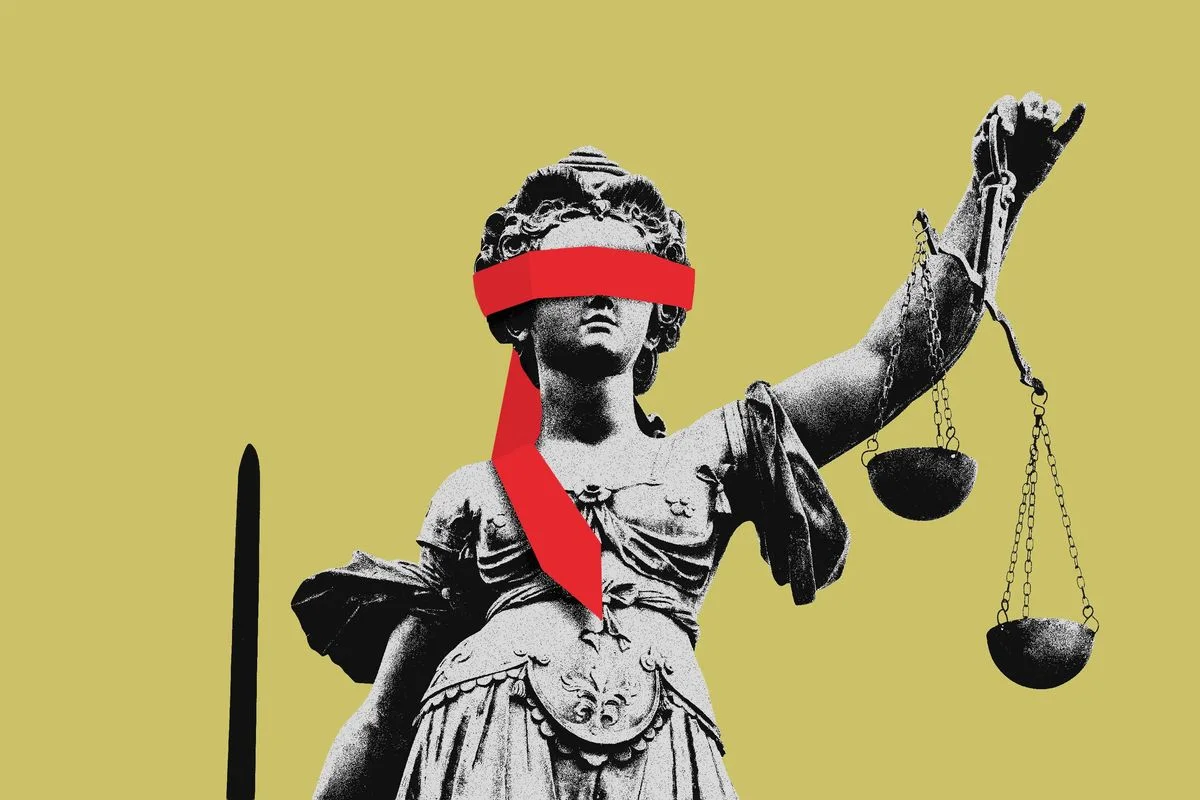
Lady Justice is said to be blindfolded, barring her from forming judgement based on a look. The concept of criminal justice is a tough pill for many to swallow because serving justice doesn’t always look like Sleeping Beauty getting awakened by her Prince Charming, the happily ever after we all crave. No, it sometimes looks like Maleficent getting a Disney deal and a sequel, which to the general public may seem unfair.
A judgement handed by the Constitutional Court on the 24th of June 2024 speaks of a trial being heard by judges instead of jurors. The complainant in this case expressed his fear at a prejudiced jury since his case was covered extensively by the media.
Here’s what the Court said:
“Fl-ewwel lok il-Qorti tosserva li ma kien hemm xejn x’iżomm lill-attur milli jagħżel li l-każ tiegħu jinstema’ quddiem Imħallef mingħajr ġurati, jekk qiegħed jibża’ li l-ġurati li għad iridu jintagħżlu mhux ser ikunu imparzjali minħabba l-pubbliċità li ngħata l-każ fil-mezzi tal-media skont l-Art. 438 tal-Kodiċi Kriminali. Imħallef ikollu l-esperjenza u l-formazzjoni li tippermettilu li jiddistakka ruħu minn affarijiet li huma esterni għall-proċess ġudizzjarju. Inoltre, bl-għajnuna tal-avukat li qiegħed jiddefendih jista’ jitlob lill-Qorti Kriminali li quddiemha ser isir il-ġuri, sabiex tagħti d-direzzjoni li hemm bżonn lill-ġurati sabiex jiddeċiedu biss fuq il-provi li jitressqu waqt il-ġuri…”
Liam Debono ammess għall-patroċinju gratwit v. L-Avukat tal-Istat, Qorti Kostituzzjonali, 258/21/1 GM
Surveying jurors
How does one ensure that his jurors are not prejudiced towards their case or client? This is a bit of a tough question with no straightforward answer.
When speaking about how a jury is formed, we mentioned how the Attorney General and the defence team may choose to challenge the name of the person who was drawn to form part of the jury.
A name can be challenged without giving a reason. We call these ‘peremptory’. In general, the Attorney General and the accused are allowed 3 peremptory challenges.
A name can be challenged for a particular reason. We call this a challenge ‘for cause’. The Attorney General and the accused may provide a reason as to why the name of the potential juror is being challenged but the reason has to be approved by the Court. If the reason provided is not approved by the Court, then the challenge is dismissed and the person whose name was drawn is admitted as a juror. (In this case, both the accused and the Attorney General may request to ask questions to the potential juror on oath, to fully establish the reason behind the challenge.)
In this manner, both the defendant and the Attorney General try to ensure that the impanelled jury is not prejudiced towards their cause.
We’ve lately encountered the notion of researching potential jurors. Now this is not a new concept that we’ve discovered here on this tiny island.
If we look towards the United States, which is a country that thrives on trials-by-jury even for civil suits, companies exist to provide defence teams with research, information and backgrounds on jurors in order to create strategies fit for trial.
In the United States, the practice of picking jurors is referred to as ‘voir dire’. It means ‘to speak the truth’ and it refers to questions posed to potential jurors by a lawyer or a judge in order to identify whether they are suitable jurors.
Companies providing consultancy work for lawyers usually offer real-time services to assist in the voir dire process by preparing individual juror profiles based on information found in the public domain. This information is then used to draw up refined and tailored questions to potential jurors during jury selection.
Drawing up juror profiles entails the gathering of information, and in an era of free-flowing information, this task might be easily achievable. However, it is the quality of information that matters. Some companies providing these consultancy services to lawyers monitor jurors’ online activities to see whether any content they post online reveals any bias which may threaten the defendant’s right of fair hearing.
Other companies provide a database of information based on investigations they conduct ranging from professional history to voting and criminal history.
It is also not absurd for these companies to conduct national surveys to reveal any community-based biases. In this manner, lawyers receive valuable information in order to adjust their strategy in accordance with the local mindset to provide a defence which is more palatable to consume.
How is this ethical?
I have no doubt in mind that you’re questioning how ethical all this is but in a world of tailored content and algorithms, are we genuinely expecting lawyers not to use tools available at their fingertips? Don’t be fooled however, these are not new tricks. Technology just made tricks easier and highly accessible. But valuable information is everywhere if you’re cunning enough to know how to look for it.
So, how does one wade through these murky waters to gather information in an ethical manner?
The San Francisco Bar Association would argue that lawyers must not seek to obtain access to private information through deceptive means or unlawful acts. They must not communicate directly or indirectly with the potential jurors and they cannot investigate jurors in a manner which may influence their state of mind in relation to the trial.
Knowing all this undoubtedly deters people from wanting to serve as jurors, because why is someone judging us over the memes we post? (If the sarcasm isn’t obvious to you, this is a blatant exaggeration. Online misconduct is hardly about memes.)
The article Should Voir Dire Become Voir Google? Ethical Implications of Researching Jurors on Social Media considers that efforts by lawyers to conduct investigations might result in an invasion of privacy and in reality there is no recognised right to research jurors.
On the other hand, the article does consider that not conducting online research might be tantamount to a danger for the integrity of the trial. The journal explains how a jury’s verdict can be undone by the actions of a single juror due to online misconduct. The author emphasises that this might lead to a mistrial or an overturned verdict which, in and of themselves, are a miscarriage of justice.
On the other hand, Ethical Considerations for Attorneys Researching Jurors on the Internet laments the justice system’s lack of revamping to keep up with the modern world. And in reality, this is the area on which the discussion hinges, because research of jurors is inevitable, but to what extent is it ethical?
A more predominant question comes to my mind however: which juror isn’t prejudiced? Lawyers have tools to research jurors but jurors have the exact identical tools to research practically whatever they want pre-trial. And with social media becoming a public notice board for literally everyone, do we expect potential jurors not to form an opinion on cases which received massive media attention? Keeping in mind that content is shoved down our throats during every waking minute. Or should members of the media be restricted to providing minimal information pre-trial for the sake of the common good of society at large, so potential jurors can carry out their duties without prejudice?
In today’s technologically heavy era, the effectiveness of trials-by-jury comes into question, but until now it remains a tool used to carry out justice.
Sources
- Criminal Code, Chapter 9 of the Laws of Malta
- Liam Debono ammess għall-patroċinju gratwit v. L-Avukat tal-Istat, Constitutional Court, 258/21/1 GM (24 June 2024)
- Magna Legal Services, What to expect from jury research services
- Nighthawk Strategies, Jury vetting
- Bar Association of San Francisco, Ethical issues in researching prospective jurors
- John G. Browning, Should Voir Dire Become Voir Google? Ethical Implications of Researching Jurors on Social Media, 17 SMU Sci. & Tech. L. Rev. 603 (2014)
- Anthony M. LaPinta, Ethical Considerations for Attorneys Researching Jurors on the Internet, Journal of Race, Gender and Ethnicity, Vol. 9 (May 2020)