
Georgia’s jailed journalist, and Europe’s dilemma: “Hope is not a plan”
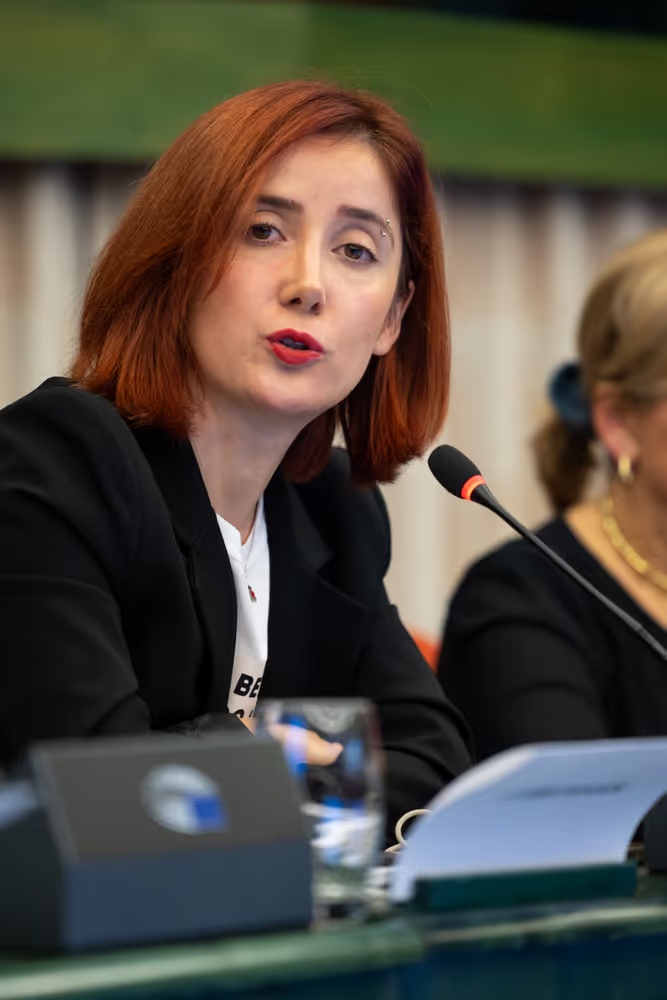
STRASBOURG. Irma Dimitradze came to the European Parliament to speak for someone who could not. Dimitradze, a Georgian journalist from Batumelebi, represented her imprisoned colleague Mzia Amaglobeli at the Sakharov Prize ceremony.

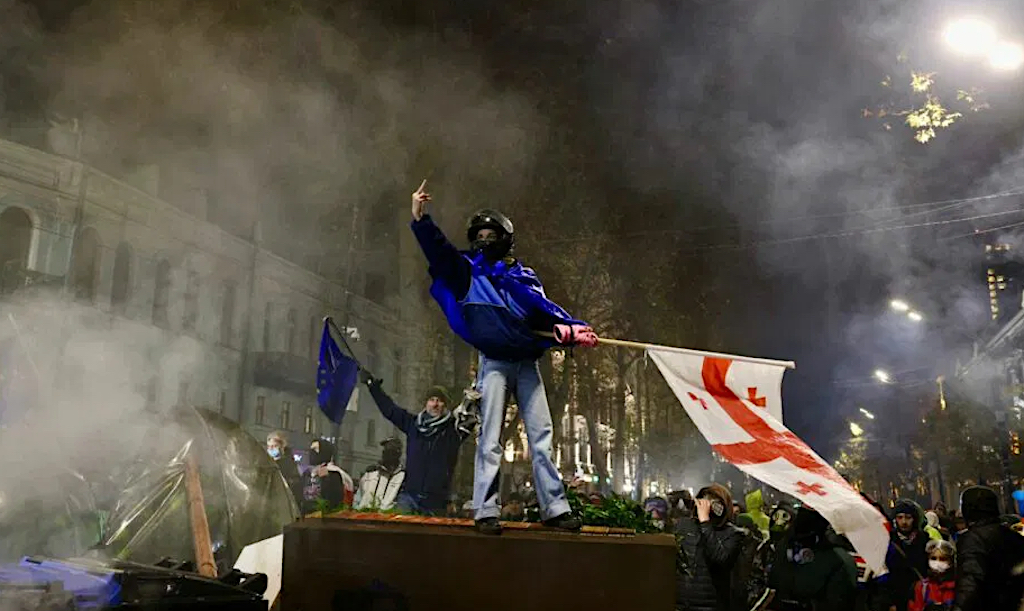
The prize is designed to spotlight freedom of thought. In Georgia’s current climate, that spotlight functions as both protection and provocation. Amaglobeli’s detention has become part of a wider argument about whether Georgia is moving closer to European democratic norms or further into a system where the state can intimidate media and dissenters with fewer costs.
What is going on in Georgia?
Mzia Amaglobeli is a Georgian journalist and media director of Batumelebi and Netgazeti. She was arrested in January 2025 during anti government protests and later sentenced to two years in prison. Press freedom groups argue the prosecution is politically motivated and part of wider pressure on independent media. In November 2025, Georgia’s appeals court upheld her sentence, and her legal team indicated they would pursue further appeal. The European Parliament named Amaglobeli a 2025 Sakharov Prize laureate, honouring her as a symbol of the struggle for freedom of expression and democracy in Georgia.
Georgia’s political crisis escalated after a disputed October 2024 election and the government’s decision on 28 November 2024 to pause EU accession talks until 2028, triggering sustained pro EU protests. Authorities have responded with tougher rules on demonstrations, arrests, and an expanding crackdown on opposition figures, civil society, and independent media, while the ruling Georgian Dream insists it still supports EU and NATO integration. International reporting has also described dismissals of civil servants linked to protest activity and a broader shift toward more authoritarian governance.
A prize that does not free prisoners
Dimitradze was blunt about the limits of international recognition. “This award doesn’t necessarily translate into freeing the prisoners,” she said. She pointed to the example of Alexei Navalny, a Sakharov laureate who never made it out of prison alive.
Her point was not to dismiss the prize, but to warn against treating symbolism as strategy. History does not have to repeat itself, she argued, but only if powerful institutions respond to repression with consequences that match the scale of the assault. Weak steps cannot stop a “huge massive attack”. The response must be “as strong” as the attack.
In her framing, the ceremony is not closure.
“No dream, no hope.” Only goals.
When asked about the language of hope that often surrounds political prisoners, Dimitradze rejected it almost impatiently. Hope, she said, is no longer part of her vision. Nor is “the dream”. In Georgia, those words are not neutral. The ruling party is Georgian Dream. A major pro government TV channel is IMEDI, a Georgian word that translates as “hope”. In Dimitradze’s telling, both terms have been hollowed out and repurposed. The correct approach is not another appeal to optimism, but the discipline of objectives. A clear goal, sustained action, and the acceptance that struggle contains both the possibility of winning and of losing.
It is a starkly operational view of politics. You stay in the process. You keep moving. That, she implied, is how winning becomes possible.
Dimitradze’s most insistent message was about Russia, and about the mistake she says Western Europeans make when they treat Russia as distant.
Yes, there are tanks. Russia fought a war with Georgia in 2008 and Russian forces remain entrenched in the breakaway regions, leaving a substantial share of Georgia’s internationally recognised territory outside Tbilisi’s effective control.
But Dimitradze argued that the more dangerous weapon is hybrid warfare: influence operations that travel through narratives, technology, and targeted persuasion rather than armoured vehicles. The biggest error, she said, is to assume propaganda fails because it looks obvious. “Propaganda works,” she insisted, because it sinks in gradually, shaping public opinion and creating “alternative realities”.
Her example was deliberately mundane … advertising.
She described how AI generated marketing content in Georgian initially looked clumsy, because Georgian is a small language and harder for systems to model well. Then it improved quickly, to the point that it no longer felt foreign. The lesson, she said, is that disinformation does not need to arrive with a Russian flag to serve Russian interests. It can leak through ecosystems of targeted ads, manipulated narratives, and synthetic media that are distributed through platforms people already use.
For societies that feel far from Russia, Dimitradze offered one practical filter. The value of the message. If a message undermines human rights, freedom of expression, or democracy, treat it as suspect regardless of its packaging.
Why Georgia’s street politics matters to Malta
Dimitradze’s argument is that Georgia’s crisis is not only Georgian. It is part of a larger contest over the rules based order European countries depend on, including independent courts, accountable policing, parliamentary constraints, and genuine political competition.
She suggested that democratic states are often late to block malign influence and late to sanction the money and assets that underpin it. Meanwhile, authoritarian systems move faster, use technology aggressively, and exploit hesitation.
Her conclusion was simple and severe. If repression is answered with weak steps, it spreads. If it is answered with strong steps, it can be deterred.
The Sakharov Prize, in her telling, is not the end of a story. It is a moment Europe is asked to decide whether it will defend its values with policy, or only celebrate them with ceremonies.