
Prime Minister Joseph Muscat treats a foreign delegation to pastizzi at Serkin
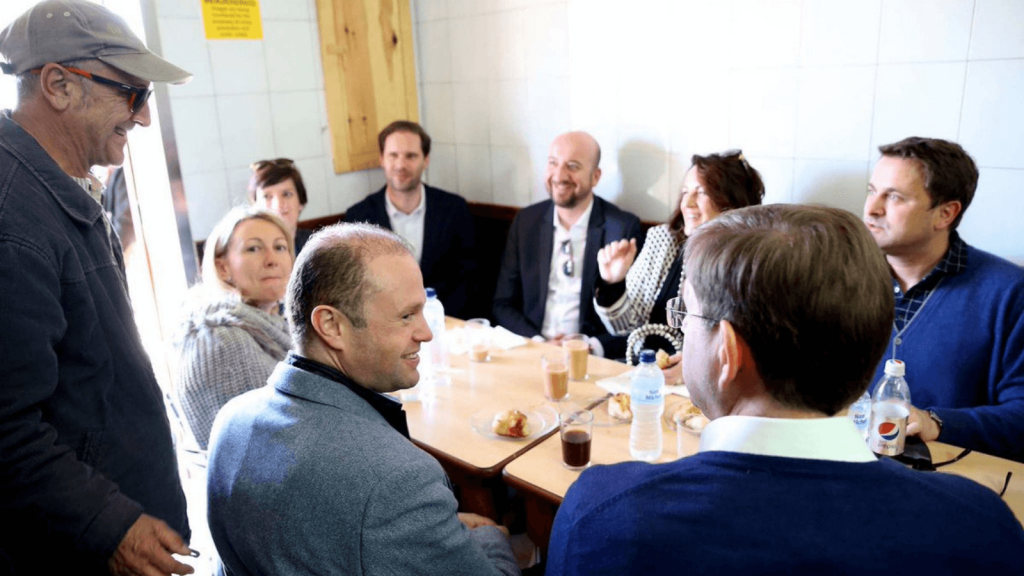
The year 2017 was a very particular year for Maltese politics. Today marks the anniversary of when Prime Minister Joseph Muscat brought a foreign delegation to Serkin in Rabat to eat pastizzi, like locals do. The images travelled: dignitaries in suits, no cutlery. It looked spontaneous. It wasn’t. It was soft power by design. A visual pitch for a country that wanted to believe that everything was “business as usual”.
However, the backdrop matters. 2017 was not a calm year. The Maltese party in government was dealing with corruption allegations stemming from the Panama Papers. The government was under scrutiny in Brussels and foreign media over governance, transparency, and a booming financial-services model which suddenly raised eyebrows. In fact, a few months after this event, Muscat called, and easily won, an election against Simon Busuttil’s PN.
The first half of the year also marked Malta’s EU Presidency, which brought a parade of delegations and cameras. The administration leaned hard into nation-branding: sell warmth, normality, Mediterranean ease. Pastizzi were perfect theatre, cheap, local and sent a message to the electorate that “We’re one of you.”
This is why the Serkin stop split opinion at home. Supporters saw clever storytelling: a break from sterile protocol lunches, a very Maltese and human moment that landed in international press and social feeds. Critics saw inappropriate diplomacy, lowering the bar of statecraft, confusing charm with seriousness, and trying to paper over the deeper institutional crashes which the country was supposed to be dealing with. Both sides were right about one thing: the image worked. People remember it. In communications terms, it cut through.
But images don’t float free of context. Later that year, Daphne Caruana Galizia was assassinated. The killing detonated Malta’s political climate, pulling international attention back to the very questions the government was trying to soften: accountability, proximity between politics and business, and the robustness of institutions. In hindsight, the Serkin photo-op sits uncomfortably beside the gravity that followed. What read as breezy authenticity now feels like a freeze-frame from just before the weather changed.
States have long used everyday culture to disarm, to humanise, to build rapport. It can work. It backfires when it looks like a substitute for it. The pastizzi moment didn’t cause the trust crisis that engulfed Malta in the years after; but it illustrates the gap between surface messaging and the deeper anxieties of that period. The country was selling normality at the same time it was being asked hard questions about how power operated.
So the Serkin visit endures as a neat case study in political branding: smart execution, perfect visuals, shallow shelf life. Diplomacy wrapped in greaseproof paper travels fast. Whether it holds when the spotlight turns harsh is another matter.