
Malta plays its first official international football match
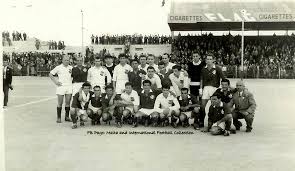
On 24 February 1957, Malta played its first international football match, hosting Austria at the Empire Stadium in Gżira. The match finished 3–2 to the visitors, but the scoreline never told the full story. Malta ended the afternoon with the crowd on its feet, a late surge that nearly produced a draw, and a sense that Maltese football had just crossed a line from “local competition” into something bigger.
Malta didn’t suddenly wake up in 1957 with a national side, football had been embedded for decades. The game was introduced by the British as far back as 1882, and the Malta Football Association traces its birth to 1900, making it one of the older federations around. Long before Malta joined FIFA or UEFA, it already had an organised domestic scene, referees, structured competitions, and an association able to negotiate fixtures abroad.
A big part of getting to international football was also about having a stage and the habit of hosting outsiders. The Empire Stadium itself opened in 1922 with an exhibition match between an MFA XI and HMS Ajax, a very colonial-era detail, but it shows Malta was already playing representative sides against visiting military teams and touring opponents decades before the first “official” international.
As late as the 1950s, players like Sammy Nicholl were still turning out in unofficial representative games for an “MFA XI” selection.
The Austria match began as admin-to-admin football networking. The MFA accepted a request from the Austrian FA for a friendly against Austria’s “B” team — and local interest spiked immediately. Then Austria upgraded the occasion by deciding to send their full “A” team, using the Malta trip as preparation for a match against Germany in Munich on 6 March 1957.
On Malta’s side, coach Joe Griffiths called a 16-man squad to train, and the build-up became a public obsession: the newspaper “Il-Berqa” even ran suggested line-ups from readers, basically turning team selection into a national debate before a ball was kicked. The opponent continued to add to the sense of occasion, as Austria decided to use this match as preparation for the upcoming World Cup. The Austrian team ultimately arrived with a very strong selection that included players linked to the country’s elite football of the era, names associated with the Austria squad that finished third at the 1954 World Cup.
The match was staged at the Empire Stadium, then the symbolic centre of big-occasion Maltese football. Contemporary accounts and later retrospectives consistently describe a capacity crowd, the kind of afternoon where the stadium isn’t just full, it’s alive, because everyone knows they’re watching a “first.”
Malta’s starting line-up reflected the local football realities of the time: heavy representation from Sliema Wanderers and Floriana, the clubs that dominated the conversation, with Valletta defender Joe Cilia the notable exception outside that Sliema-Floriana spine.
Austria struck first after 15 minutes in the most painful way possible: an own goal credited to Joe Bonnici, with pressure and a deflection that rolled past Scerri. Malta went into half-time 1–0 down, still in the game, still with the crowd believing it could stay respectable.
After the break, Malta actually raised its level but failed to equalise during its best spell, and Austria punished them late with two goals in quick succession. At 3–0, the “first international match” risked becoming a harsh lesson.
Then came the part that turned a defeat into a landmark memory. With only minutes left, Tony Cauchi pulled one back, Malta’s first ever goal in official international football.
Almost immediately, Malta did it again. In the dying seconds, Sammy Nicholl made it 3–2. Suddenly the stadium mood flipped. Malta surged forward one last time, and came agonisingly close, as Lolly Borg hit the crossbar.
If you strip away romance, this was still a loss. But for a debut, it was the right kind of loss. Competitive, dramatic, and enough to convince the public that Malta could belong in international football, even before the formal affiliations and qualifier structures were in place.