
Maltese Internees in Uganda: Malta’s Darkest Hour
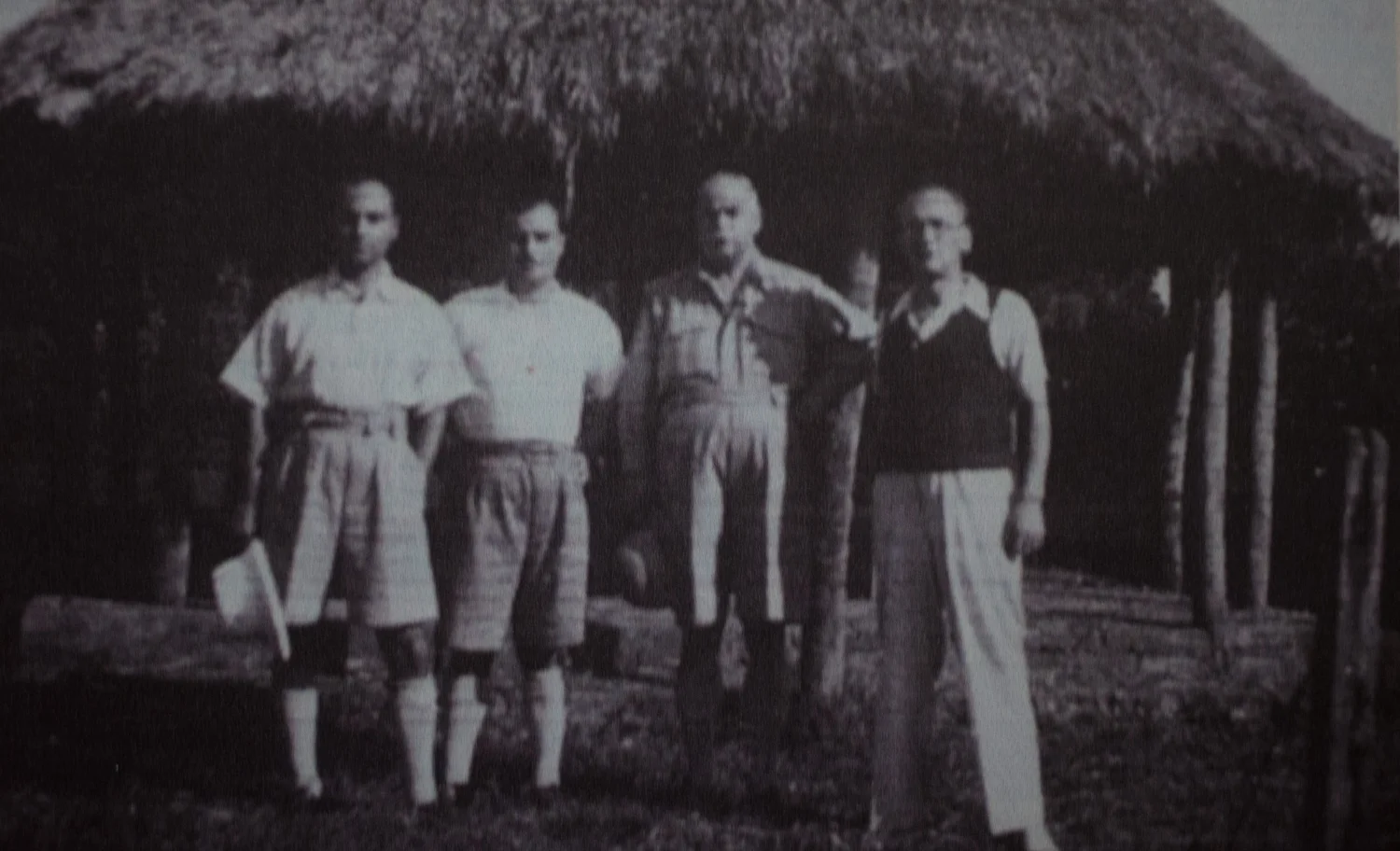
Three of the Maltese internees, Formosa, Ganado and Cossai, together with Enrico Mizzi in front of the internment camp at Uganda
If you think the PL–PN rivalry is fierce, strap in. During the Second World War, the Constitutionalist Party accused members of the Partito Nazionale of conspiring with Mussolini. Was Gerald Strickland onto something, or was this a calculated move to neutralise his main political rival, Enrico Mizzi? This episode remains one of the darkest chapters in Malta’s political history.
Long before the war, Malta was already defined by a deep and bitter political divide. On one side stood the pro-British Constitutionalist Party, led by Strickland. On the other was the pro-Italian Nationalist Party, led by Mizzi, who believed that Italian language and culture were the only path to lifting a neglected Maltese society. This was not a polite disagreement over policy, but a clash over Malta’s identity and future direction.
In 1939, Britain passed legislation allowing for the detention of persons believed to be enemies of the state—potential traitors, often referred to as “quislings.” The law was primarily aimed at figures associated with British Union of Fascists, led by Oswald Mosley, whose movement maintained close ideological and political ties with Mussolini and Hitler.
In Malta, Strickland’s party held a majority in the Council of Government. A staunch imperialist, he enjoyed the confidence of British authorities. Together with his daughter Mabel, he also controlled The Times of Malta, which became a vehicle for sustained attacks against the pro-Italian Nationalists, portraying them as a fifth column within a strategically vital colony.
On 30 May 1940, forty-eight Maltese citizens were arrested without any formal accusation. Among them were prominent Nationalists, including Mizzi himself, Herbert Ganado, editor of Leħen is-Sewwa—the Church newspaper and a rival to The Times—and Chief Justice Sir Arturo Mercieca. A number of dockyard workers were also swept up in the arrests, widening the scope far beyond party leadership.
Through The Times of Malta, Strickland openly urged the British authorities that “it would be wise if the internees were not allowed any longer to stay in Malta, and be shipped and deported to India or South Africa.” In strict legal terms, the British administration had no power to deport Maltese citizens. Yet in February 1942, the internees were deported nonetheless.
The story of the Maltese internees in Uganda during World War II, examining deportation, political rivalry, and wartime abuse of power. En route to Egypt, their ship was attacked by Axis aircraft on no fewer than twenty occasions. From there followed an arduous 3,400-kilometre journey to internment camps in Uganda. Under the scorching sun, the deportees were subjected to hard labour and appalling sanitary conditions, with malaria outbreaks becoming a grim feature of daily life.
More recently uncovered documents complicate the picture. They suggest that British authorities were convinced that Mizzi had received significant financial support from Mussolini to fund his political activities, and that he may have met Mussolini personally in 1936. Although Mizzi never openly endorsed fascism, he consistently campaigned for an Italian takeover of Malta, reinforcing British suspicions even in the absence of hard proof.
The central question remains unresolved. Was Mizzi truly a Mussolini quisling, or did the British conspire with Strickland to eliminate a formidable political opponent? Those who were found to have directly collaborated with Italian Fascists, such as Carmelo Borg Pisani, were tried and hanged for treason. In Mizzi’s case, however, the British never found sufficient evidence to bring such a charge. Internment was legal under wartime regulations; deportation was not. Others, including Ganado, later maintained that their only crime was a political association—real or perceived—with Mizzi.
Despite Strickland’s opposition, the deportees were eventually repatriated to Malta in March 1945. The former judge of the European Court of Human Rights Giovanni Bonello would later describe the deportation as a crime against humanity. Strickland himself remained unapologetic, later stating:
“I repeat that my own conscience has not been at peace, because I consider it possible that persons may have been wrongfully interned, but it was an essential error, on the right side, at a time when Malta was in mortal danger.”