
The day the Manoel Theatre opened its doors
On 19 January 1732, Malta witnessed a defining moment in its cultural history with the completion and first use of its very first purpose-built theatre. The event was recorded by Fra Gaetano Reboul in his private diary, preserved today at the National Library of Malta, where he noted that the building of a new theatre had been completed and that it was inaugurated, or rather used for the first time, with a theatrical performance staged in the presence of the Grand Master.
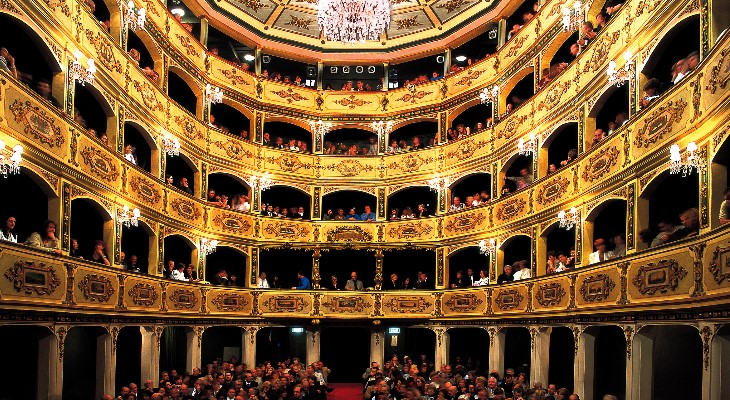
The building to which Reboul referred was the Teatro Pubblico, known today as the Manoel Theatre, a venue that would go on to become one of the oldest continuously operating theatres in Europe.
The First Performance in the Manoel Theatre
The inaugural performance was the tragedy La Merope, written in 1714 by the Italian playwright Francesco Scipione Maffei. The play was presented by Italian knights of the Order of St John, with Grand Master António Manoel de Vilhena himself attending the performance.
This first staging marked the moment when Malta acquired a permanent home for theatrical expression, moving beyond improvised halls and temporary stages.
The opening performance was swiftly followed by further productions. On 21 January 1732, French knights presented the comedy Il giocatore disperato, while on 26 January Italian knights returned to the stage with Don Pilone, ovvero, il Baccettone falso. Within days of its opening, the new theatre had already established itself as a lively and active centre of performance.
Malta Before 1732
Before the construction of the Manoel Theatre, Malta did not entirely lack theatrical activity, but it lacked a true theatre. Historical records indicate that performances had taken place since at least the carnival of 1639, usually within the hall of the Auberge d’Italie. These early events were often informal, closely tied to carnival traditions, and at times controversial. On one occasion, serious disputes arose after Grand Master Jean Paul Lascaris Castellar prohibited the entry of women.
Throughout the seventeenth century, tragic and comic operas continued to be staged in improvised settings. Payments recorded in the 1650s and 1660s show that actors were hired for special performances, yet no permanent venue existed. Even as late as 1717 and 1746, theatrical productions were still being mounted in the auberge hall, despite references indicating that a theatre had already been operating in Malta for over fourteen years.
The absence of a purpose-built structure remained evident.
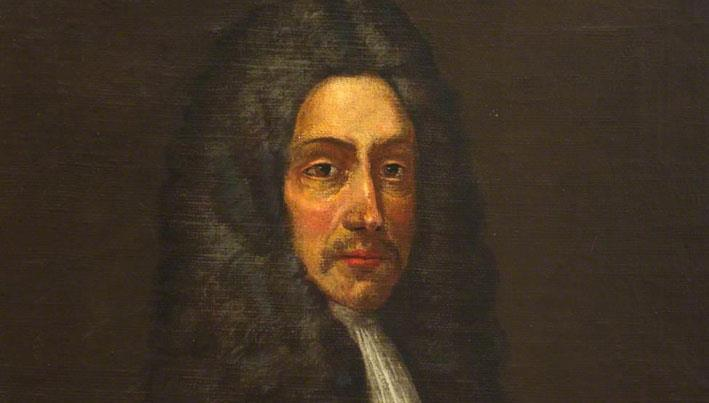
The creation of Malta’s first theatre was the result of the vision of Grand Master António Manoel de Vilhena, who governed the islands between 1722 and 1736. Vilhena is widely regarded as one of the most popular Grand Masters in Maltese history, remembered for his extensive public works and for shaping much of eighteenth-century Valletta. Contemporary sources state that he wished to provide the island with a theatre dedicated to the “honest recreation of the people”, a phrase later immortalised in the inscription above the entrance.
Construction in Record Time
On 16 March 1731, three adjoining houses located at the corner of what are today Old Theatre Street and Old Mint Street were sold to the Fort Manoel Foundation. The buildings, formerly belonging to the Priory of Navarre, covered an area of 94 and a half square canes and were purchased for 2,186 scudi. Construction began immediately.
By January 1732, barely ten months later, the theatre was complete. Such a rapid construction period suggests that the existing houses were not entirely demolished but were incorporated into the new structure, although a new façade had to be erected to give the building its monumental character.
Above the main entrance, Vilhena’s coat of arms was placed alongside a Latin inscription commemorating the foundation of the theatre and its purpose.
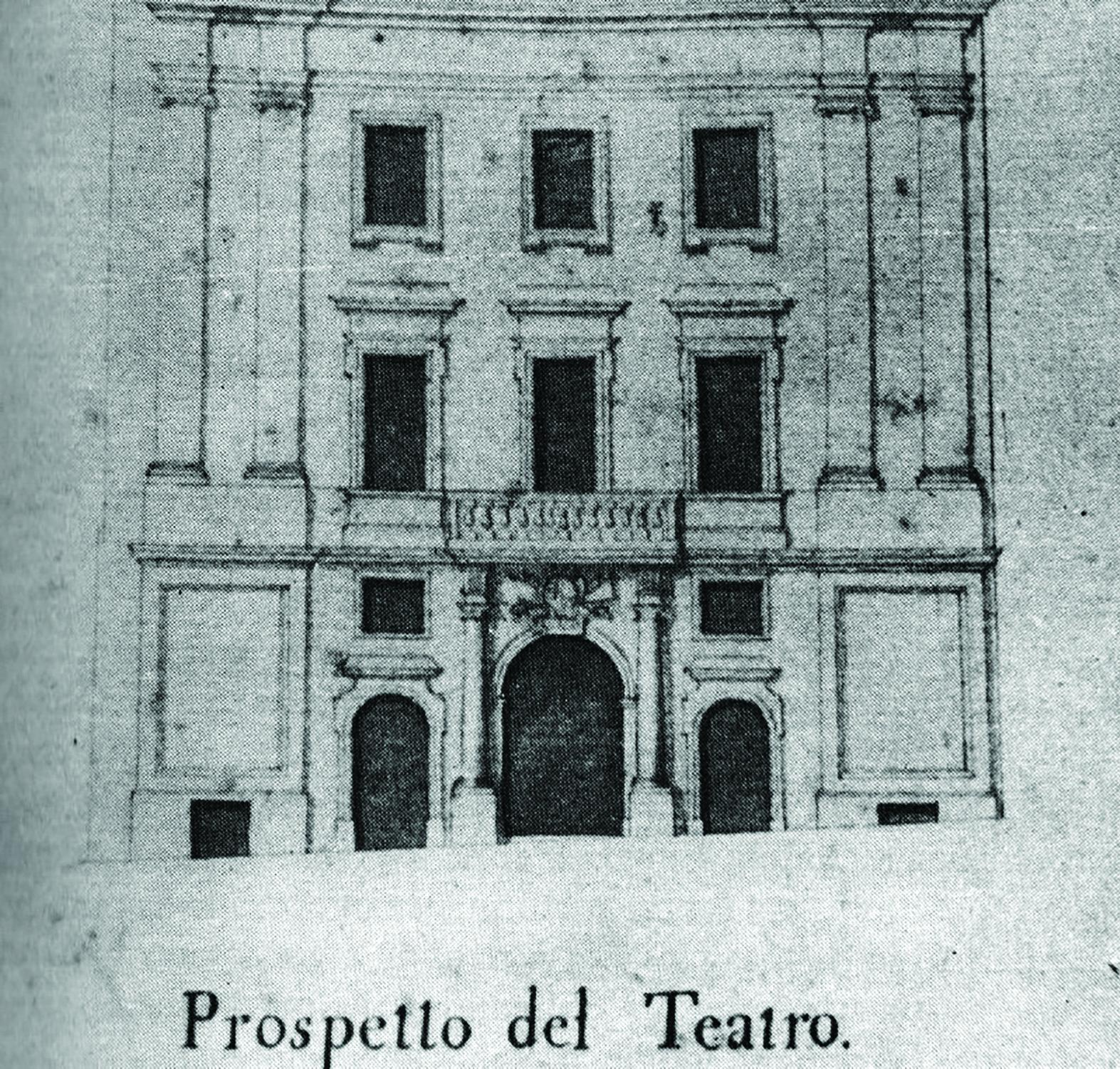
Original Facade Plans - Source Times of Malta
Opera Comes to Valletta
Whether opera was staged during the theatre’s first year remains uncertain. The earliest confirmed operatic performance took place during the carnival of 1735 with Artaserse by the German composer Johann Adolf Hasse. This was followed in 1736 by two further works by the same composer, Demetrio and La sorella amante, firmly establishing opera as part of Valletta’s cultural calendar. Original librettos of these performances are preserved today at the National Library of Malta, offering rare insight into the theatre’s earliest repertoire.
Administration and Daily Life
Under the Order of St John, the Teatro Pubblico was administered by the Congregazione del Forte Manoel. Day-to-day management was entrusted to an appointed treasurer, who leased the theatre to an impresario responsible for organising performances.
The impresario was obliged to present regular operas and comedies, maintain the building and its furnishings, employ custodial staff, and manage all payments related to performers and musicians. A reserved box was kept for the foundation, and librettos were to be submitted whenever possible. Leases typically ran from September until the end of carnival at a rate of 200 scudi, paid in instalments.
A Living Legacy
Over the centuries, the Manoel Theatre underwent several structural adaptations, particularly during the early nineteenth century under British administration. These works altered the auditorium into its present oval form and introduced additional galleries and boxes.
Despite these changes, the theatre has retained its historical identity and continues to be admired for its exceptional acoustics and intimate design. What began on 19 January 1732 as a single tragic performance has endured for nearly three centuries. Today, the Manoel Theatre stands not only as Malta’s oldest theatre, but as a living monument to the moment when Valletta first claimed its place on the European cultural stage.
Sources
The inauguration of the Manoel Theatre in 1732 - Times of Malta