
Why the Bambina statue was moved from Senglea to Birkirkara during WWII
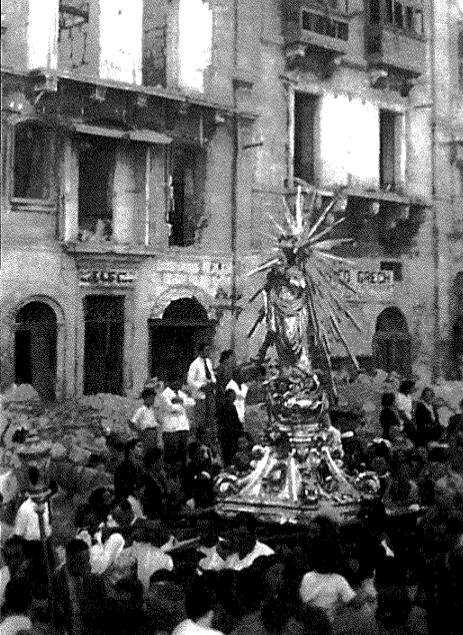
The statue of Marija Bambina on its way back to Senglea
During the Second World War, Malta did not only protect military assets. It also protected meaning. One of the clearest examples is the decision to move il-Bambina, the devotional statue venerated in Senglea, out of the city and into Birkirkara for safekeeping.
Senglea was a frontline city
By 1940, Senglea had become one of the most heavily bombed locations on the island. Its proximity to the Dockyard made it a constant target for Italian and later German air raids. Entire streets were flattened. Churches, homes, and public buildings were all vulnerable. Keeping an irreplaceable religious statue in a town under near-daily bombardment was simply untenable.
Birkirkara offered depth, not immunity
Birkirkara was not “safe” in an absolute sense. No place in Malta was. But it was safer. Located inland and away from primary military targets, Birkirkara offered geographical depth. Bombing there was less frequent and less concentrated. For this reason, civilians, archives, and sacred objects were quietly relocated there throughout the war years. The Bambina statue was part of this broader, rational strategy of dispersal.
Faith adapted to survival
It is tempting to frame the story as symbolic, as a story of faith fleeing violence, devotion seeking shelter. But historically, the move reflects something more practical: the Maltese instinct to preserve continuity. The statue mattered not only as an object of worship, but as a cultural anchor. Losing it would have meant losing a shared point of identity at a moment when communities were already under extreme strain.
Safeguarding it was therefore an act of cultural defence.
Return, not disappearance
Importantly, the statue was not hidden away indefinitely. Once the intensity of air raids diminished, il-Bambina was returned to Senglea. This matters. It was never about abandoning the city or transferring devotion elsewhere. It was about ensuring that something worth returning still existed when the war ended.
What this anecdote tells us
This small episode reveals something larger about wartime Malta.
Under existential pressure, the island did not only think in terms of weapons and shelters. It also identified what needed to be preserved for life after the bombs stopped falling. The Bambina’s journey from Senglea to Birkirkara and back again is not a miracle story. It is a story of judgment, foresight, and quiet resilience. And that, more than symbolism, is what kept Malta intact.