
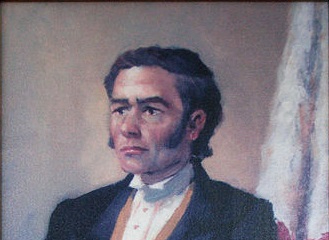
Mikiel Anton Vassalli
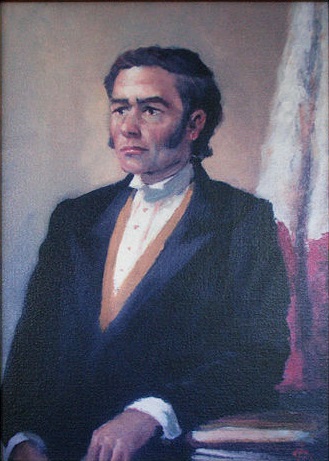
On 5 March 1764, in Ħaż Żebbuġ, Mikiel Anton Vassalli was born into a Malta that still belonged to the Order of St John. He would end up living through the collapse of that regime, the shock of the French occupation, and the early decades of British rule. In that turbulent mix, Vassalli became something rarer than a politician or a pamphleteer: a man obsessed with one blunt idea, that a people cannot really become a nation if their language is treated as unworthy of books, schools, law, and public life.
His early life was not the usual story of an elite Valletta household of the time. He was the son of Grabiel Vassallo and Katerina. Sources note that “Vassallo” was his proper surname, even if “Vassalli” became the name history kept using. He lost his father when he was still young, and his mother remarried. What matters more is what happened next, by 1785 he was studying Arabic in Valletta at the Propaganda Fide school under Dun Ġużepp Calleja, and he later moved to Rome, pushing into Oriental studies and Syriac, and trying to build an academic career there.
In Rome, Vassalli did the thing that made his name famous from generation to generation. He treated Maltese as a written language that deserved rules, structure, and prestige. In 1790 he published his work on Maltese orthography, and in 1791 he published a grammar. Then came the bigger move when in 1795 he asked Grand Master de Rohan for permission to open a school dedicated to teaching Maltese reading and writing, something that was quite revolutionary in a society where Italian dominated formal life and Maltese was pushed into the informal, spoken corner. In 1796 he published his dictionary, the Lexicon, and its introductory discourse laid out his wider social and political beliefs, not just vocabulary lists.
That wider worldview is where his story stops being a clean “language hero” biography and turns into the messy reality of late eighteenth century Malta. Vassalli mixed scholarship with activism at exactly the wrong moment. He moved among Jacobin circles, clashed with the Order’s authorities, and was implicated as a leader in a conspiracy to topple the Order’s government. In June 1797 he was sentenced to life imprisonment and jailed at Ricasoli, and he appears to have escaped with help. When Napoleon took Malta in June 1798, Vassalli returned and tried to secure a role at the University, applying for a lectureship of Arabic, but he did not get it.
Then came the whiplash of the blockade years and the early British period. In September 1799, while trying to leave Valletta during the blockade, he was arrested and jailed in Mdina on Alexander Ball’s orders. In 1801 he was sentenced to exile and forced out of Malta via Tunis on his way to France. This is the part of his life that often gets blurred into a single line, but it matters, Malta’s most influential early champion of Maltese spent two decades away from the island, cut off from the audience he wanted to educate.
Exile did not turn him into a quiet retiree. Sources describe him entering the cotton industry in France, building a family life that even historians still argue over in the details, and eventually returning to Malta in June 1820. Back home, he worked as a translator for the Church Missionary Society, and in February 1825 he was appointed professor of the Maltese language at the University of Malta, helped by Sir John Hookham Frere, who even paid his salary. A couple of months later, in April 1825, he opened what is described as the first School of Maltese at the University, an institutional milestone that turned his lifelong argument into an actual timetable of lectures.
His final years show how wide his ambitions really were. He published a revised grammar in 1827 and a collection of Maltese sayings and proverbs in 1828. He also produced religious translations, including the Gospels and Acts, published in London in 1829. Yet the ending was harsh: Vassalli died in poverty in Pietà on 12 January 1829, and sources note that he was even denied a Catholic burial, despite not having become Protestant. The man who gave the Maltese language dignity, did not receive much dignity in return.