
The Church speaks out against Malta’s integration to the UK
On 21 January 1956, Malta’s path toward political integration with the United Kingdom entered one of its most divisive moments. On that day, Archbishop Michael Gonzi and the Bishop of Gozo, Giuseppe Pace, issued a joint Pastoral Letter warning of the risks that integration posed to the Catholic Church’s position in Maltese society.
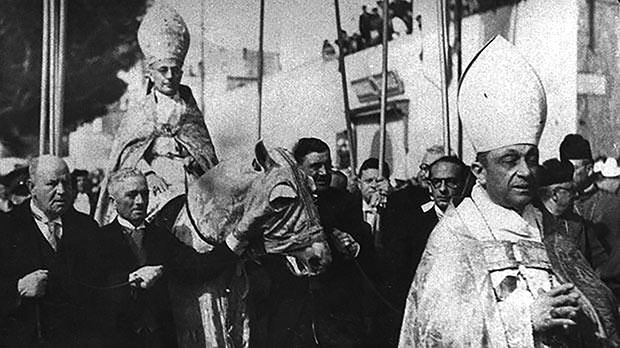
At stake was not only Malta’s constitutional future, but the question of who would hold authority over the island’s social order. The integration proposal, championed by Prime Minister Dom Mintoff after his Labour Party victory in 1955, sought to make Malta an integral part of the United Kingdom. Under the plan, Maltese citizens would gain representation at Westminster and benefit from British social and economic standards, while retaining local self government.
Initially, relations between Mintoff and the Church appeared stable. The Labour leader gave assurances that the Church’s position would be safeguarded under integration. For a brief period, these guarantees seemed sufficient. That calm did not last. In late 1955, and culminating with the joint letter of January 1956, the Catholic hierarchy adopted a far more confrontational stance. The Pastoral Letter expressed concern that integration would expose Malta to legislation passed by a predominantly Protestant British Parliament. Particular alarm was raised over marriage law and education.
Church leaders worried that constitutional integration would eventually place such matters such as marriage and divorce within the jurisdiction of Westminster, weakening Catholic doctrine and ecclesiastical authority in a society where religion shaped daily life. The language of the letter was careful, but its message was unmistakable. Integration was presented not simply as a political arrangement, but as a moral risk.
The intervention transformed the referendum campaign into a battle between institutions.
Malta rapidly divided into opposing camps. The Church found support among the Nationalist Party, the Progressive Constitutional Party, and lay religious organisations. The Labour Party, in contrast, drew backing from the General Workers’ Union and large sections of the working class who viewed integration as a route to economic security and social mobility.
What had begun as a constitutional debate hardened into a struggle between clerical authority and political sovereignty.
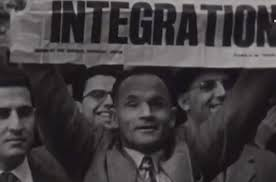
The repercussions extended beyond Malta’s shores. In London, the Pastoral Letter triggered unease within the British government. Questions were raised in the House of Commons, where ministers were forced to clarify whether integration could allow Parliament to legislate on Maltese religious matters. The Colonial Secretary publicly reaffirmed Britain’s commitment not to undermine the Roman Catholic Church in Malta and insisted that no constitutional proposal would violate earlier assurances given to the Archbishop. The fact that such statements were necessary underlined how fragile the integration project had become.
When the referendum was held in February 1956, a majority of valid votes favoured integration. However, turnout fell below the threshold London had indicated was politically necessary. The result was declared inconclusive. Mintoff blamed the Church’s intervention for discouraging participation and clouding the mandate. The integration project soon collapsed, marking a decisive turning point in Malta’s post war politics.