
Trying to end usury in Malta 16th century
By the second half of the sixteenth century, usury in Malta was embedded in daily life. Court records and ecclesiastical investigations describe a society in which labourers, widows, craftsmen, farmers, and even members of the Order of St John were forced to borrow at extreme rates. Interest commonly ranged from 10 to 35 percent and in many cases climbed far higher. Loans were hidden through fictitious sales, forced purchases of goods, inflated contracts, or “interest-free” agreements that quietly included profit. Pawns included jewellery, clothing, tools, livestock, and even human beings. For many households, borrowing was not a choice as employment was low across Malta.
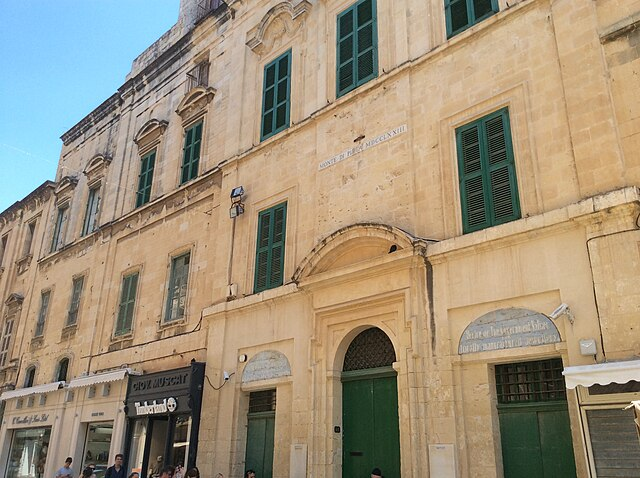
This is the environment that produced the idea of the Monte di Pietà. The model was imported from Italy, where Franciscan reformers had promoted charitable pawn banks as a Christian response to predatory lending. Small loans would be issued against pawns, and any charge applied would cover only administration and storage, not profit. In moral terms, this mattered. Church doctrine condemned usury as sinful, but allowed modest fees if they reflected real costs.
In Malta, the strongest early push came from Fra Humanuele de Couros in the 1590s. Couros proposed the establishment of a Monte under the title of St Anne. He pledged a substantial personal donation and requested additional capital from the Treasury. The goal was to shield both the poor and the knights from “shameful and illicit profit” being extracted by moneylenders operating at punishing rates. He even drafted detailed statutes regulating valuation of pawns, repayment periods, staffing, and the use of any surplus.
However, the project did not move from paper to practice. The Order hesitated over financial exposure, internal control, and the level of interest to be charged. Papal approval was sought and delayed. Disagreements emerged over whether even small charges were morally acceptable. As a result, the Monte was not operationalised in the sixteenth century, despite repeated attempts and clear social need. It would only become fully functional much later, under Grand Master Ramon Perellos at the turn of the eighteenth century, when capital was finally assembled and the institution activated.
Crucially, this story is often oversimplified. Two realities matter.
First, the Monte was not created only to protect the poor. It also served the interests of the Order itself. Knights were borrowing heavily from private lenders. This undermined discipline, reputation, and internal authority. Usury was becoming a problem inside the institution, not just outside it. The Monte was therefore a tool of social control as much as charity.
Second, usury in Malta was not an ethnic or religious issue. A simplistic narrative blames Jewish moneylenders but local records do not support this. Christians, women, slaves, Greeks, and even clerics were actively involved in lending at interest. There was no formal credit system, and people filled the gap however they could.
When the Monte di Pietà finally began operating it was an attempt to redesign how credit worked, to limit exploitation, and to stabilise households before debt destroyed them.
Four centuries later, debates about access to credit, financial vulnerability, and predatory lending still dominate public life. The Monte di Pietà is a reminder that Malta has been struggling with these issues for a very long time.