
HMS Sultan strikes a rock off Comino and later sinks
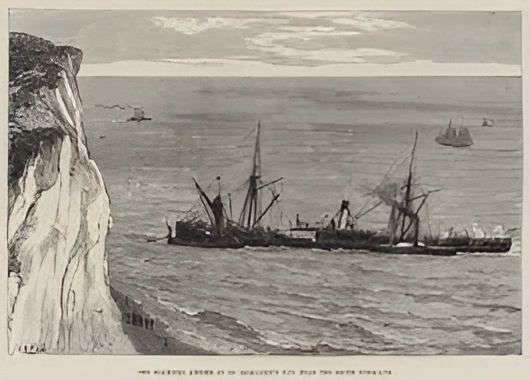
On this day in 1889, one of the Royal Navy’s major warships, HMS Sultan, ran aground on an uncharted rock off the south eastern coast of Comino, in the channel between Malta and Gozo. In this context “uncharted” means that the rock was not marked on the nautical maps sailors would be using.
Sultan was not some small patrol craft or forgotten transport. It was a large Victorian ironclad, part of the British Mediterranean presence at a time when Malta was one of the empire’s most important naval bases. What happened that day was simple, brutal and embarrassing: during torpedo practice, the ship hit a reef that was not properly marked, her bottom was ripped open, and she began taking on water.
What makes the story rather embarrassing, is that this was not a battle, and not some storm in the middle of nowhere. It happened in waters that the British used constantly and considered strategically vital. Royal Navy vessels were sent to help, and every effort was made to pull Sultan free, but it did not work. The ship remained stuck, damaged and vulnerable, until a gale on 14 March finally pushed her off the rock, at which point she sank. So 6 March is the day of the accident, but the full disaster unfolded over the following week.
The grounding also caused political fallout. In the House of Commons, MPs directly questioned the Admiralty about whether the rock had been shown on naval charts and whether Malta’s surrounding waters had been inadequately surveyed. The First Lord of the Admiralty admitted that the rock struck by Sultan was not marked on the chart, and said the general survey of the Maltese Islands had been completed in 1863, with only occasional partial resurveys after that. In other words, this was not just a naval mishap. It exposed the risks of overconfidence in imperial infrastructure, even at one of Britain’s key Mediterranean strongholds.
What looked like a total loss did not quite end there. Sultan became a major salvage operation. The wreck was eventually raised in August 1889 by the Italian firm Baghino & Co for a fee of £50,000, then towed into the Malta Dockyard for preliminary repairs. Even by late August, Parliament was still being told that the ship was afloat off Comino but not yet fit to be moved, because too much water remained inside and the pumps were causing problems. After repairs in Malta, she finally made the journey back to Portsmouth in December 1889. So this was not just a ship sinking off Comino. It became a drawn-out salvage operation and a very public embarrassment for the Royal Navy.
In March 1889 comino became the scene of one of the Royal Navy’s most awkward Mediterranean accidents, serious enough to be photographed, debated in London, and remembered in maritime history long after the ship itself was repaired and sent back into service.