
Grand Master Nicolás Cotoner tightens the plague crackdown during the 1676 plague in Malta
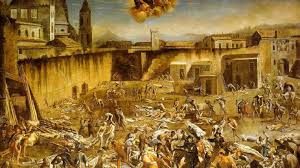
By late February 1676, Malta was no longer dealing with a rumour, a “bad fever”, or a handful of suspicious deaths. It was dealing with a full-blown public health disaster, and the island’s administration under the Order of St John was being forced into decisions that were both brutally practical and politically explosive. They restricted movement, isolated the sick, policed the population, and kept a port economy functioning while the disease tore through the Grand Harbour towns.
That’s the backdrop to 26 February 1676, when Grand Master Nicolás Cotoner met again with the special plague committee and agreed that the measures taken so far were not enough, and that stricter controls had to follow.
The outbreak had begun months earlier. Contemporary accounts place the first clear cases in Valletta around late December 1675, initially in the household of a merchant family, and crucially, the disease was not immediately identified as plague.
This early hesitation mattered. Malta in the 1600s was a dense, walled, harbour-centred society, ideal conditions for contagion. And because admitting “plague” meant triggering quarantine regimes, trade disruption, and panic, there was pressure to delay the label until it was undeniable.
By 28 January 1676, the health authorities held a confidential meeting and concluded plague had “probably” appeared. They created a hard-power governance structure to fight it: Plague Commissioners (senior knights) with sweeping authority, and a tribunal meeting twice daily to enforce orders and manage logistics.
The special committee met again on 26 February. Cotoner promised that whatever was necessary, medical help and broader support, would be provided, because the island was sliding into chaos. But the most telling line is political: some argued the measures were already sufficient; others argued they weren’t severe enough, and the second camp won, leading to “more vigorous measures”.
This tells us that there was real disagreement inside the system (including among medical practitioners) about how bad this was and how hard the response should be. The leadership finally accepted that half-measures were failing, and that the next step would look like coercion. It wasn’t a single dramatic proclamation that instantly solved anything. It was a recognition that the outbreak was escalating and that the state needed to escalate too.
Some of the most severe restrictions of the Malta 1676 plague crackdown came into force in the following weeks. From 24 March, movement was very rigorously restrained, and the sick and suspected were totally isolated from the wider community.
Parts of Valletta that were heavily affected, including the Manderaggio, the “Archipelago”, and French Street, were effectively placed under a neighbourhood lockdown. Residents were ordered not to leave their homes.
The state then had to do the other half of lockdown policy, keep people alive. Commissioners ensured basic services continued, butchers, bakers, cheesemongers, delivering necessities to people shut inside.
Other rules were a mix of medical belief and practical risk-reduction. One order, for instance, prohibited barbers from cutting the hair of the sick or of relatives of those who had died.
And then there was enforcement. As the epidemic worsened, penalties escalated to the extreme, authorities used capital punishment to make examples of people who disobeyed orders or failed to report cases.
Malta’s vulnerability was structural. It lived off the sea, trade, shipping, the naval economy of the Order, and that same connectivity was how epidemics arrived and spread. This is why quarantine was existential policy. Mediterranean ports had long used 40-day isolation (“quarantine”) for people and goods arriving from infected areas, the classic model for trying to prevent importation of disease through maritime trade.
Malta already had infrastructure for this. The lazaretto on Manoel Island served as a quarantine station, with permanent structures dating to the mid-1600s and later expansions. Cotoner himself is credited with enlarging the lazaretto in the years immediately preceding the outbreak, an example of policy that looks boring until the day it becomes relevant.
Internationally, Malta’s crisis triggered isolation from neighbours. During the 1676 outbreak, Sicily’s authorities cut contact, even rejecting mail, showing how fast a connected island could be economically and diplomatically strangled once it was labelled infected.
This was one of Malta’s deadliest plague catastrophe. Many accounts place deaths at more than 11,000, although archival totals in some records are lower, and historians treat the exact figure with caution. Either way, for a population estimated around 60,000–70,000, it was mass death on a national scale.
The epidemic ended later in 1676 (public celebrations are recorded in September), but the experience reshaped institutions. One concrete legacy linked to this period was the push to strengthen local medical capability. In 1676, Cotoner founded the lectureship (chair) of Anatomy and Surgery connected to the Holy Infirmary, partly driven by the reality that epidemics depleted medical manpower and exposed how dependent Malta was on expertise.
Centuries later, Malta faced another pandemic in 2020. Medicine had advanced massively, but the pattern was familiar: restrictions, enforcement, public pushback, and the constant balancing act between keeping people safe and keeping life moving. The core question barely changed, how much freedom are we willing to give up in exchange for protection?