
Malta’s deadliest air crash, outskirts of Żurrieq
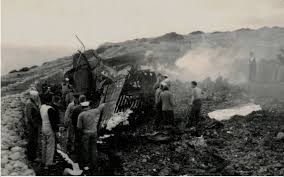
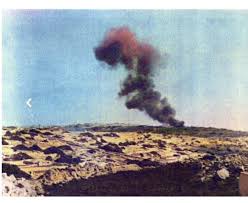
In early afternoon of 18 February 1956, in clear view of people on the ground, Malta’s deadliest air crash took place. A four-engined British transport aircraft, Avro York, had just departed from Luqa Airport. In mid-air, it began trailing smoke, drifted off its instructed turn, and then fell out of the sky. Within minutes, Malta had witnessed its worst aviation disaster, 50 lives lost on the outskirts of Żurrieq.
The aircraft (registration G-ANSY) was not a commercial holiday flight. It was a troop transport chartered by the Royal Air Force from Scottish Airlines, carrying personnel travelling from the Suez Canal Zone back to the UK, with a scheduled stop in Malta and a destination to London Stansted Airport. On board were 45 passengers and five crew. The accident left no survivors.
Contemporary reports describe a take-off that initially looked normal, until it didn’t. Air traffic controllers at Luqa saw smoke from one of the engines and alerted the cockpit. Eyewitnesses also reported smoke trailing behind the aircraft as it climbed. Instead of turning right as instructed, the plane drifted left; the port wing dropped steeply; and the York went into a near-vertical dive into an area of cliffs and fields near Żurrieq, exploding on impact.
Rescue was effectively impossible. Recovery teams and first responders, including RAF crash crew and members of the United States Navy, arrived quickly, but the heat and wreckage made it immediately clear there could be no one left alive. The following day, the last bodies were removed from the steep hillside at Nigret.
Almost everyone on board was RAF. One passenger was a British Army private who had requested permission to travel home because his father was ill. Another group of the victims had secured their seats through a “lucky draw” at their station in the Canal Zone, a prize that was meant to spare them a long journey by sea.
An official Court of Inquiry was convened, and its conclusion was blunt: the disaster was caused by a combination of mechanical failure and human error. The report found evidence of an engine problem (with black smoke observed from the outer port engine), but stressed that the engine failure alone did not have to be fatal.
The decisive factor was the loss of speed and control in the moments that followed. In other words: a survivable emergency became unrecoverable through the way it was handled at low speed and low altitude.
The aftermath also left Malta with a physical legacy of remembrance. Many of the victims are buried at the military cemetery in Mtarfa, and over time the crash became part of a wider story, Malta as a strategic stopover point in an era when British military routes routinely passed through the island. Today, a memorial is associated with Ġnien il-Ġibjun, close to where the aircraft came down, a quiet marker in a place better known for views out to Filfla.
A second memorial exists at the National Memorial Arboretum, underlining that this was not only a Maltese tragedy, but also a British one.
The tragedy reached the floor of the Parliament of the United Kingdom within days, and it was filmed at the scene by British Pathé, evidence that the crash resonated beyond the island even in the slower media age of the 1950s.