
The first meeting of Malta’s National Assembly in 1919
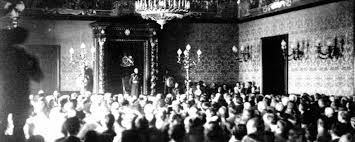
The first meeting of the Malta National Assembly took place in 1919. On the 25th of February, representatives from across Maltese public life gathered in Valletta for the first sitting of the Assemblea Nazzjonali. This was a turning-point moment in Malta’s push for self-government. It wasn’t a parliament, and it wasn’t elected by universal suffrage (the right of everyone to vote). But it mattered because it turned a growing, angry, post-war mood into an organised national demand, Malta should run its own local affairs.
The First World War had ended, but Malta’s economic stress didn’t magically ease. Food supply disruptions and price spikes hit ordinary households hard. Bread and wheat prices in particular became a flashpoint, and resentment towards profiteering and colonial administration was already boiling.
That social pressure overlapped with something else, politics. Malta’s institutions under British rule left very limited space for genuine local control, and after the war Maltese leaders pushed for a “fresh start” in how the island was governed.
The National Assembly was essentially a broad civic-political forum, a national gathering that aimed to speak for Malta’s constituted bodies and organised groups, and to press a unified constitutional demand. It emerged from calls for Maltese unity around a clear programme for self-government, with Dr Filippo Sceberras a central figure in rallying that movement.
The first meeting was held in Valletta, and it immediately revealed the core tension inside Maltese politics at the time.
At that first sitting, one faction, associated with Dr Enrico Mizzi, tabled a resolution that leaned on the post-war language of national “rights” and the international moment created by the Versailles Peace Conference. The implication was clear, Malta should be treated like other nations asserting self-determination, meaning a claim that pointed toward independence, not just internal reforms.
But that position ran into strong opposition from more moderate voices, especially Sceberras, who pushed for self-government in local matters, rather than an outright independence demand. The debate wasn’t academic, it was about strategy. It was about identifying what was achievable, what would unify the country, and what might provoke a crackdown.
Even so, the key takeaway is that the Assembly’s first session put a national constitutional demand on the table, targeting “full political and administrative autonomy” in matters of local concern.
The first meeting mattered because it created a national forum for the constitutional fight.Before this, Maltese political pressure often came through petitions, newspapers, and fragmented lobbying. The Assembly attempted something bigger, more structured. The Assembly represented a unified national front that could claim legitimacy because it represented organised Maltese society, not just a party clique.
The National Assembly is directly tied to what happened a few months later, Sette Giugno and the 1921 Constitution. The Assembly’s second meeting, in June 1919, is deeply linked to the unrest that exploded into the Sette Giugno riots, the moment when social anger and political tension spilled into the streets and the British response left multiple Maltese dead.
In the longer chain of events, the National Assembly is part of the runway that leads to the 1921 Self-Government Constitution and the opening of Malta’s first parliament later that year.
People often compress Malta’s road to independence into neat dates, but the reality is messier. It’s built out of moments where public pressure, political organisation, and colonial calculation collide.
25 February 1919 is one of those moments. It’s the day Maltese society tried to speak with one voice, even when it couldn’t fully agree on the end goal. It made one thing unavoidable, Malta was no longer willing to be governed as a passive colony.