
Malta’s first archbishop
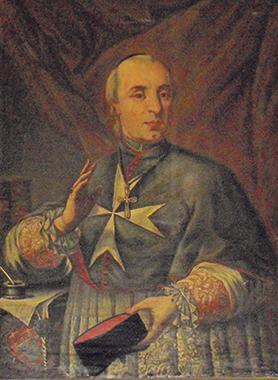
If you grew up assuming Malta only got an archbishop in the 20th century, you’re basically right, but also not. On 3 March 1797, Pope Pius VI issued a papal brief that gave the Bishop of Malta archiepiscopal dignity by attaching to the Maltese see a prestigious titular title, Archbishop of Rhodes. The first man to carry it was Vincenzo Labini, who from that point could be styled Archbishop of Rhodes and Bishop of Malta.
That wording matters because it wasn’t the same thing as “Malta becomes an archdiocese.” In Church terms, Malta’s structure did not suddenly change overnight in 1797. What changed was the rank of the person at the top. In practice, Labini still governed the same diocese, with the same parishes and clergy, but he now had the status and precedence of an archbishop. Historians describe it exactly like that: a move to a “higher ecclesiastical dignity” by adding the titular archbishopric.
Rhodes wasn’t chosen randomly. By the late 1700s, the “Archbishop of Rhodes” was the kind of title Rome could use, a historic Mediterranean archbishopric that, at the time, had no residential archbishop, so it could be assigned as an honour without redrawing any borders.
There’s also a symbolic layer that’s hard to ignore: Rhodes is deeply tied to the Knights of St John, whose earlier base was Rhodes before they moved to Malta in 1530. That doesn’t prove it was the reason, but it helps explain why “Rhodes” would have felt like a weighty, recognisable badge of prestige in Malta under the Order. At minimum, Labini himself was a man of that Knights-era world, he had been ordained a priest of the Order before becoming bishop.
This upgrade came right before Malta’s political earthquake, the French arrival in 1798. The old regime collapsed, and the island went into chaos. A bishop with archiepiscopal dignity speaks with a different weight in a crisis, especially in a society where Church authority was woven into daily life. Labini would need every bit of that weight. Contemporary accounts and later historians describe him as unusually tactful, someone who could manoeuvre between power centres without losing control of his diocese. During the French period, he ended up navigating a high-risk balancing act: trying to protect the Church and calm the population while dealing with a revolutionary government that was openly meddling in religious life.
One of the most telling examples is his pastoral letter of 13 August 1798, issued at a moment when anger at French religious policy was boiling. Sources describe the letter as “momentous” in context, an attempt to steady the island when it was obvious the situation was sliding toward confrontation.
For anyone who cares about the fine prin. Malta’s formal elevation to archdiocese is much later. The Diocese of Malta had long been connected to Palermo in Sicily as a suffragan see, a medieval arrangement that stayed part of the wider Church structure for centuries.
The real turning points came after the Knights. In 1831, the Maltese see is made independent of Palermo (a major institutional break, tied to wider politics under British rule and the old Sicilian claim over appointments). In 1928: the long-running “Rhodes” arrangement ended, meaning Malta can’t keep using that specific titular archbishopric.
This is one of those moments that sounds like Church trivia until you zoom out. Malta in the late 1700s was a small island sitting on top of big empires, big fleets, and big ideological shocks. In that world, hierarchy wasn’t just ceremonial, it was a way of signalling legitimacy and influence. On 3 March 1797, Rome effectively said, the Bishop of Malta doesn’t just matter locally, he carries an archbishop’s rank in the wider Mediterranean Church.