
What Coca-Cola’s registration tells us about Malta’s place in interwar trade
On 4 January 1927, a trademark linked to The Coca-Cola Company was registered in Malta. The mark, later catalogued as TM1915, covered mineral water, aerated water, soft drinks, and ginger beer. Nearly a century later, it remains valid.
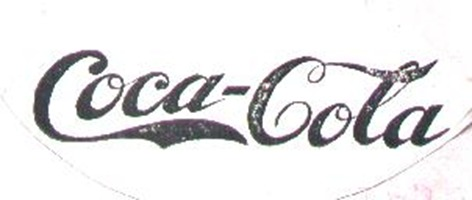
Taken at face value, the registration appears unremarkable. Malta in the 1920s was small, peripheral, and far removed from the consumer markets that would later define global branding. There is no evidence of bottling operations or mass distribution on the island at the time. Yet the decision to register the trademark in Malta reflects a broader logic that shaped international trade in the interwar period in the Mediterranean.
To understand it, Malta must be seen not as a market, but as a node.
Malta’s value for Coca-Cola lay in routes, not consumers
In the early twentieth century, Malta’s economic significance rested on its position rather than its population. As a British colony, the island functioned as a naval base, coaling station, and logistical hub linking Europe with North Africa, the Middle East, and Asia. Shipping routes, military movements, and imperial administration converged there.
Historians of the British Empire have long noted that trade followed infrastructure before it followed demand. Goods circulated along the same routes as ships, soldiers, and supplies. Ports such as Malta were therefore commercially relevant even when local consumption was limited.
For internationally mobile products, especially bottled drinks that could be shipped and stored, this mattered. Registering intellectual property in Malta allowed firms to secure legal recognition along a major maritime corridor without committing capital or establishing production.
Trademarks as legal instruments, not marketing tools
The registration also needs to be understood in the legal context of the time. In the 1920s, trademarks were not primarily tools of mass advertising. Their function was defensive. They established ownership, prevented imitation, and secured standing in court. For firms expanding cautiously beyond their home markets, trademark registration was a low-cost way of managing risk.
Economic historians of multinational enterprise describe this as a common interwar strategy. Companies protected names and product categories in advance of any physical presence. This was particularly relevant in port economies, where local traders or bottlers could appropriate foreign brand names without formal authorisation.
Malta, operating under British commercial law, offered a predictable legal environment. Colonial courts recognised trademark rights and enforced them consistently. For foreign firms, that legal certainty was an asset in itself.
Products before brands
The scope of the Maltese trademark is also telling. It covered mineral water and ginger beer alongside soft drinks. In the early twentieth century, these products were often framed in terms of hygiene, purity, and health rather than lifestyle or leisure. Newspapers and trade publications of the period frequently presented aerated drinks as safe alternatives to untreated water.
The 1927 registration is therefore less a story about what people drank in Malta, and more a reminder of how global commerce operated in an era of uncertainty. Trade followed routes. Firms protected names before markets. And small places mattered because the law there worked.