
How the first Innu Malti saw a judge challenge the empire
On 5 January 1902, a Maltese courtroom became the unlikely stage for a constitutional confrontation between colonial authority and cultural nationalism. However one would expect that the debucle would be over a legislation or taxation. No, this debate was about a song. More precisely, a newly composed Innu Malti that the British administration feared would turn a night at the theatre into a political act.
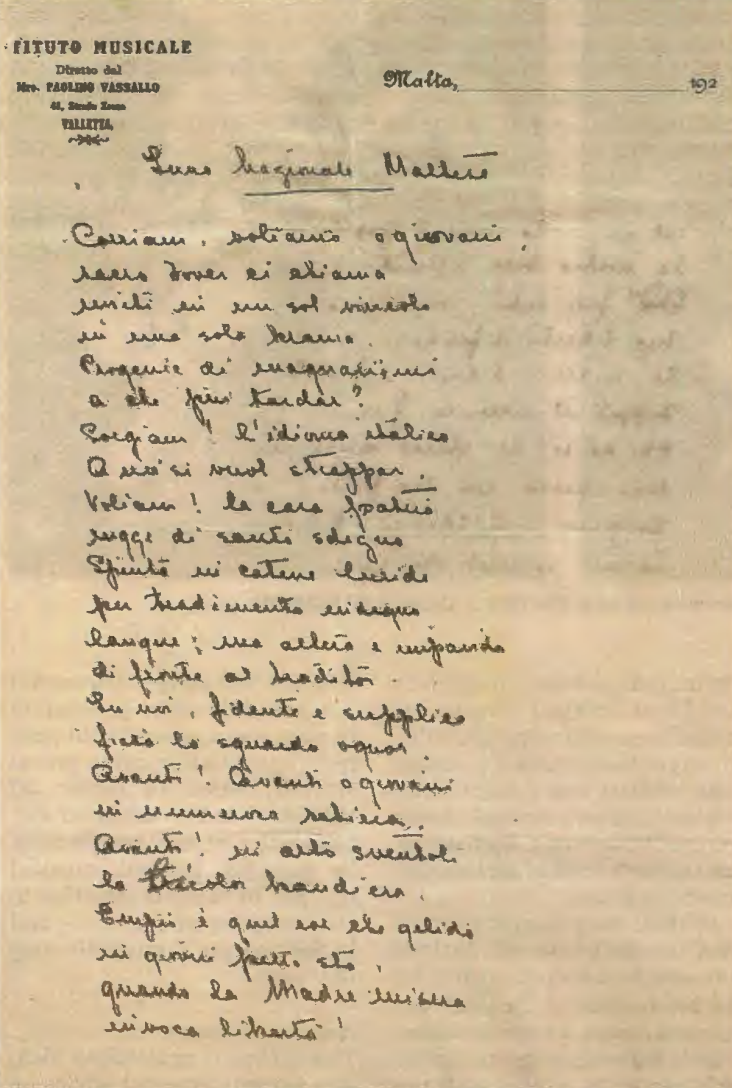
Letterhead of Mro Paolino Vassallo on which Vassallo wrote the lnno Nozionale Maltese
What unfolded that Sunday was a rare moment when the mechanics of colonial power were forced into the open. For a brief window, law constrained authority. The anthem itself was never sung. But the judgment delivered that day exposed how far the imperial government was prepared to go to suppress symbols of national identity.
A colony under pressure
At the turn of the twentieth century, Malta was politically restless. Demands for meaningful self-government had been repeatedly dismissed. Councils existed, but were dominated by officials appointed by the Governor. At the same time, the administration was accelerating the anglicisation of public life, pushing English into administration and education at the expense of Italian, which had been Malta’s language of law and culture for centuries.
These pressures were not abstract. They affected employment, schooling, taxation, and social status. By 1901, opposition had crystallised around the General National Committee, led by Filippo Sceberras, which drew support across class lines. Public meetings were large, disciplined, and pointedly peaceful. That, paradoxically, made them more threatening to a colonial administration wary of organised dissent.
The Innu Malti that alarmed the government
Against this backdrop, nationalist organisers announced that a new Maltese national anthem would be performed on 7 January 1902 at the Royal Opera House in Valletta. The event was billed as a cultural evening, but posters openly linked it to the broader patriotic movement. Tickets sold out quickly. Anticipation spread well beyond Valletta.
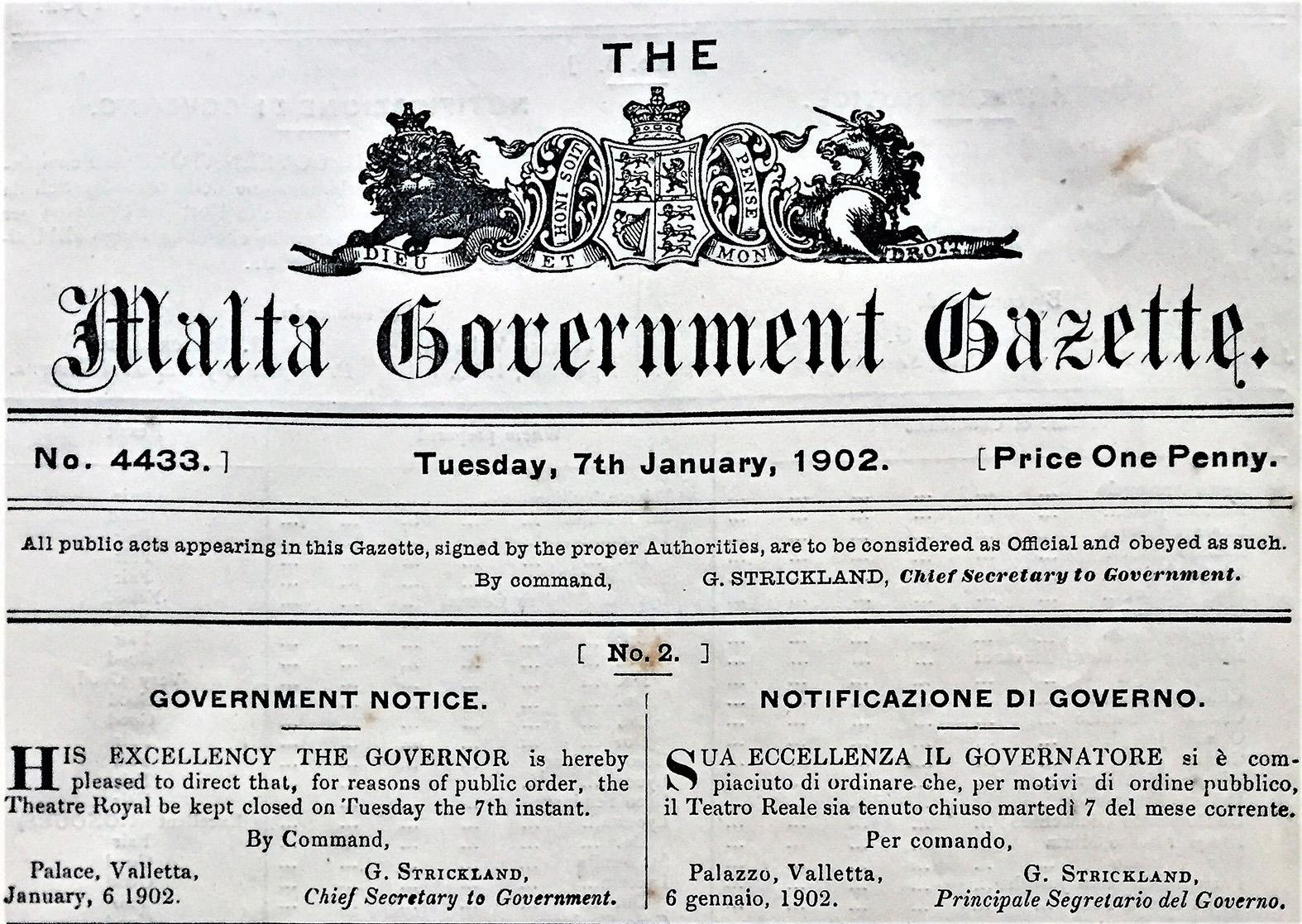
The Malta Government Gazzette which ordered the closure of the Opera House
The organisers were careful. The composer was not named. The lyrics were not disclosed. Secrecy was part strategy, part necessity. A song, after all, could travel further and faster than a speech. The government understood this. The Opera House was technically leased to a private impresario, Achille Malfiggiani, under conditions that allowed the authorities to close it for reasons of public order. On 4 January, the Principal Secretary to Government, Count Gerald Strickland, invoked that clause through a private letter, ordering the theatre to remain shut on the night of the performance.
The anthem was stopped before it could be heard.
An unusual decision to go to court
The nationalist organisers, led by Francesco Azzopardi, responded in a way that was highly unusual for the time. They sued. They argued that they had lawfully rented the theatre for the evening and that the closure was an illegal breach of contract. More significantly, they forced the court to confront whether the colonial government could exercise sovereign power informally, through private correspondence, without public legal authority.
The case was heard urgently on Sunday, 5 January 1902, by Judge Paolo Debono, one of the most respected figures on the bench. The courtroom was packed long before proceedings began. Tensions ran high. When the Crown Advocate defended the government’s action, parts of the crowd jeered loudly enough for the judge to clear the court.
The judgment that briefly restrained power
Judge Debono’s ruling was precise and, in its own way, daring. He drew a clear distinction between the government acting as a sovereign authority and the government acting as an ordinary legal person. When the administration leased out the Opera House, it did so as a landlord, not as the embodiment of imperial power. As a landlord, it was bound by the same contractual obligations as anyone else.
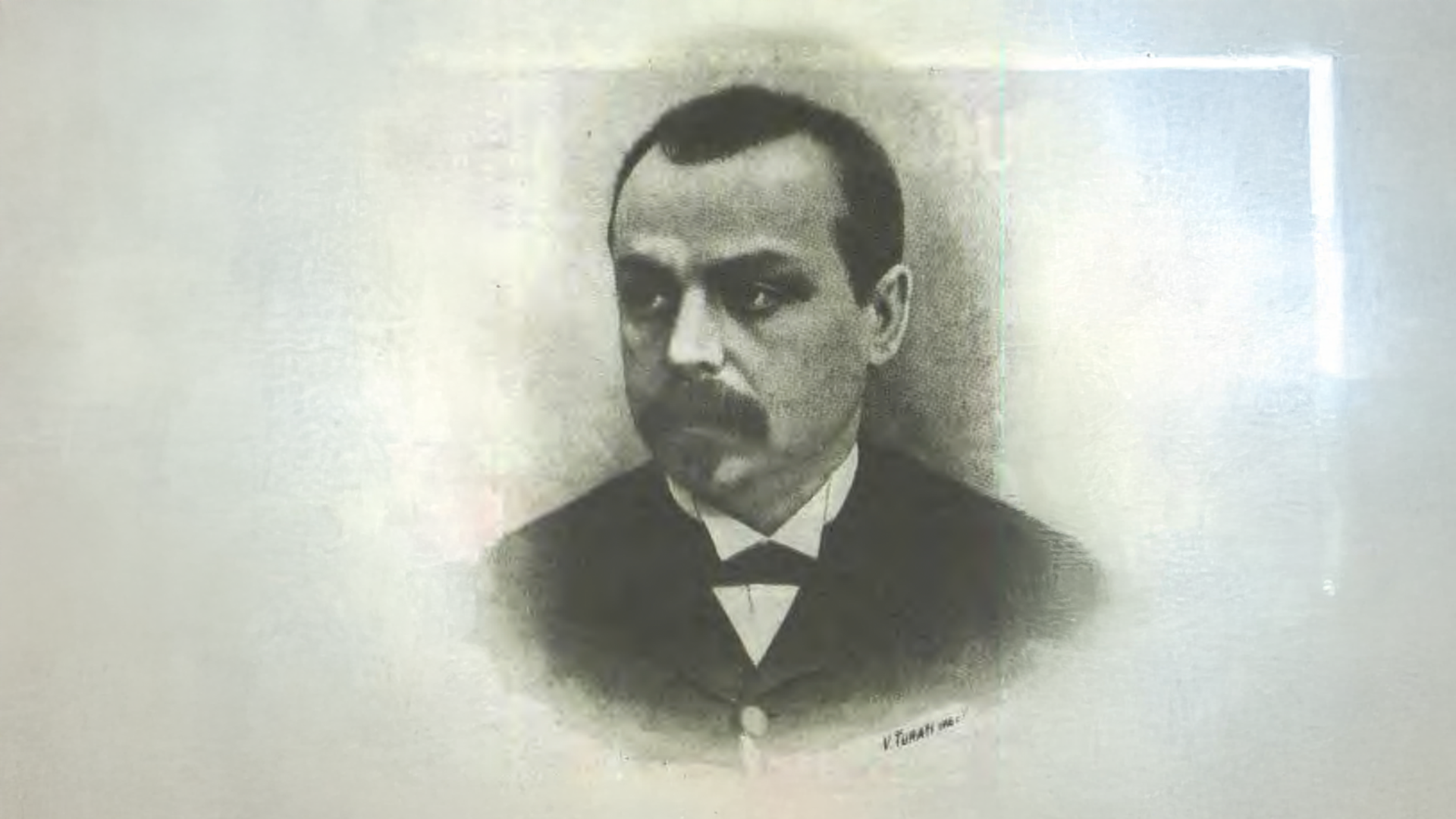
Judge Debono
If the government wished to invoke public order and close the theatre, it could do so. But it had to act openly and formally, through a proclamation or official notice, not by quietly instructing a tenant to break a contract. The private letter ordering the closure was therefore unlawful. For a brief moment, the law had spoken clearly. The court adjourned the case to assess damages for breach of contract. Outside the courthouse, crowds applauded. Many assumed the anthem would finally be performed.
How the empire adapted
That assumption proved naive. Within twenty-four hours, the government issued a formal notice in the Malta Government Gazette, officially closing the Opera House for reasons of public order. The legal flaw identified by the court was corrected. The political objective remained unchanged. The final rehearsal of the anthem was interrupted mid-song. The performance scheduled for 7 January never took place. The choir was dismissed. The theatre remained closed. From the imperial perspective, the system had worked. A potential flashpoint had been neutralised without disorder.
What was lost, and what was revealed
The anthem itself vanished into obscurity. Contemporary newspapers described the music as simple, powerful, and immediately memorable. A notice announced that the score would be printed and sold if enough orders were received. No copy has yet been found. The composer remains uncertain. The lyrics are unknown. What survives is not the song, but the episode itself.
This was not the birth of Malta’s current national anthem. That would come two decades later, with Dun Karm Psaila and Robert Samut. This was something more fragile and more revealing: a moment when cultural expression became a constitutional issue, and when colonial authority was briefly forced to justify itself in legal terms.
Why 5 January 1902 still matters
It is tempting to frame this story as a simple clash between nationalism and empire. That would miss its deeper significance. The case shows how colonial governance operated in practice. Power was not only exercised through force or censorship, but through contracts, leases, and administrative discretion. When challenged, it adapted quickly, learning from legal defeat without conceding political ground.
At the same time, it shows the limits and the potential of law under empire. Judge Debono did not defy British rule. He did not endorse nationalism. What he did was insist on procedural clarity. In doing so, he exposed the mechanics of control and, for a moment, constrained them. The first Innu Malti was never sung. But on 5 January 1902, the idea that power should explain itself was heard loud and clear.
Source