
Franco Debono’s Bondi+ interview amidst the PN’s political crisis
Updated: Jan 6
On this day, Maltese television became the stage for one of the most emblematic episodes of the Nationalist Party’s internal crisis during the final years of the Gonzi administration. A live discussion on Bondiplus, hosted by Lou Bondi, featured PN backbencher Franco Debono at a time when the government’s one-seat parliamentary majority had rendered every dissenting voice politically consequential.
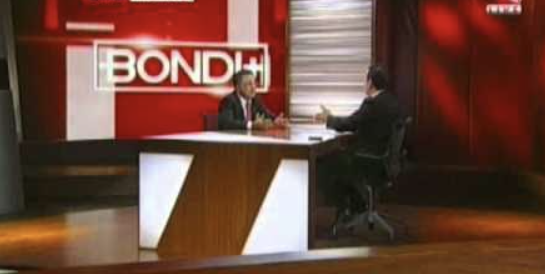
The context was already charged. The background was a government operating with a one-seat parliamentary majority and a party leadership increasingly perceived as closed, rigid, and insulated. Prime Minister Lawrence Gonzi was facing mounting criticism not because of a single rebel MP, but because of a leadership style that many within his own parliamentary group felt excluded voices, ignored warnings, and relied on a narrow circle of decision-makers.
Debono’s dissent did not emerge in isolation and the interview itself did not create the crisis. However, it did crystallise it. It reflected a broader frustration among backbenchers who believed they were being sidelined while policy decisions, including sensitive justice reforms, were pushed forward without meaningful consultation. In this context, abstentions and public criticism became the only remaining tools available to force internal debate.
What unfolded was an intense, fast-paced exchange that reflected the broader tensions within the party, rather than a personal clash between host and guest. Bondi pressed Debono repeatedly on motive, loyalty, and consequence. Debono, for his part, insisted that dissent was not betrayal, and that political service did not require silence.
The programme has since entered Maltese political folklore for moments that were unscripted and disarmingly human. Among them was Debono’s exasperated retort, “Mela jien il-papagall tiegħek?” (Am I your parrot?), delivered after repeated attempts to prompt him to restate earlier remarks. Another recurring theme was the now-famous debate over whether Debono’s mobile phone had been switched on or off, a seemingly trivial detail that became symbolic of mistrust, surveillance, and the hyper-charged atmosphere of the time.
These moments mattered not because of their theatrics, but because they revealed how fragile governance had become. With a razor-thin majority, internal disagreement was no longer manageable through private channels alone. It spilled into studios, headlines, and public argument.
In retrospect, the episode stands less as a confrontation between two individuals and more as a snapshot of a party struggling to reconcile discipline with dissent, and authority with legitimacy. It captured a point at which Malta’s political system was forced to confront an uncomfortable reality: when numbers are tight, every voice counts, and every conversation becomes political history.