
How the Kukkanja tradition started in Malta (probably)
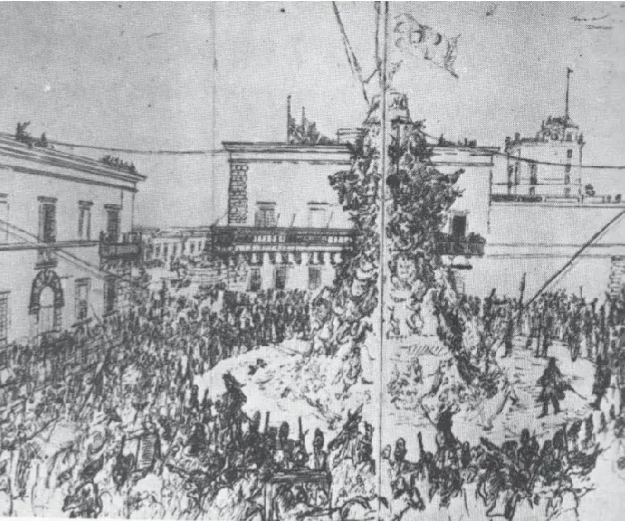
On 23 February 1721, Malta had just started its Carnival season under the rule of Grand Master Marc’Antonio Zondadari. This is the period most historians link to the introduction of the kukkanja into Maltese Carnival.
Sources are clear on the year 1721 and on Zondadari’s role, but they do not give a clean, documented “first performance” date for the Kukkanja tradition. What we do know is that the kukkanja was introduced in 1721 and that it was a Neapolitan tradition.
The kukkanja quickly became one of the most recognisable, and chaotic, parts of Maltese Carnival. At its core, it was a public contest for food and prizes, staged as a spectacle in the middle of Valletta. Contemporary descriptions describe crowds gathering in St George’s Square (Palace Square) and, at a signal, rushing toward the prizes: hams, sausages, and even live animals. It was part game, part controlled disorder, and completely in the spirit of Carnival’s pre-Lent excess.
What makes this tradition even more interesting is the meaning behind the name. Kukkanja comes from cockaigne or cuccagna, a European idea of an imaginary “land of abundance”, a fantasy place of endless food, comfort, and pleasure. In Italian tradition, this turned into the albero della cuccagna: a smooth pole made slippery with soap or fat, with food prizes tied at the top for people to try to reach. In other words, the Maltese kukkanja was not just random chaos; it was Malta’s local version of a much older Mediterranean symbol of abundance, competition, and festival excess.
There is also a strong political angle here, and it gives the story more depth than “old Carnival game.” Historians writing about early modern Naples describe the Cuccagna as ritual public spectacles staged by rulers, not only to entertain people, but also to manage crowds, reduce tension, and perform public generosity. It was part celebration and part social control: a kind of bread-and-circuses politics in festival form. Seen in that context, Malta’s kukkanja under the Knights was also a political performance, not just a tradition.
That also helps explain why the event was so tightly managed. Accounts note that guards had to be stationed in the square to keep order during the event and even in the days before it, so the prizes would not be stolen in advance. Carnival under the Knights was never simply “anything goes”. It was theatrical, public, and highly visible, but still watched and controlled. That mix of freedom and authority is why the kukkanja provides us with such a good understanding of the Maltese Carnival in the Knights’ period.
The tradition did not continue smoothly forever. It faded and returned at different points, and it also had a darker side. One of the darkest chapters followed in 1763, when the kukkanja turned into a deadly tragedy during the rule of Grand Master Pinto. According to Maltese historical accounts, a hungry and impatient crowd rushed the kukkanja before the official signal was given, and the soldiers guarding the spectacle responded with force, using musket butts and bayonets to push people back. The most widely cited toll is 17 killed on the spot and 37 who later died from their injuries, amounting to 54 deaths in total. The shock of the massacre led to the carnival kukkanja being stopped for a period, before it was later revived under safer conditions. That event serves as a reminder that this was not just a festive game, but a tightly controlled public ritual where entertainment and authority were always intertwined. Even so, the tradition survived in Maltese memory and was revived in later periods, which is why it still carries weight today as a symbol of Carnival’s older, rougher character.