
Malta’s inflation is less volatile than that of the EU. Why is that?
Across Europe, the cost of living remains one of the most politically sensitive economic issues. Even as inflation has slowed, households continue to feel the strain from higher rents, food prices and borrowing costs that built up during the past three years. Of course, Malta is not immune to these realities. However, a consistent pattern emerges in this story as Malta experiences less volatile inflation flows with lower peaks.
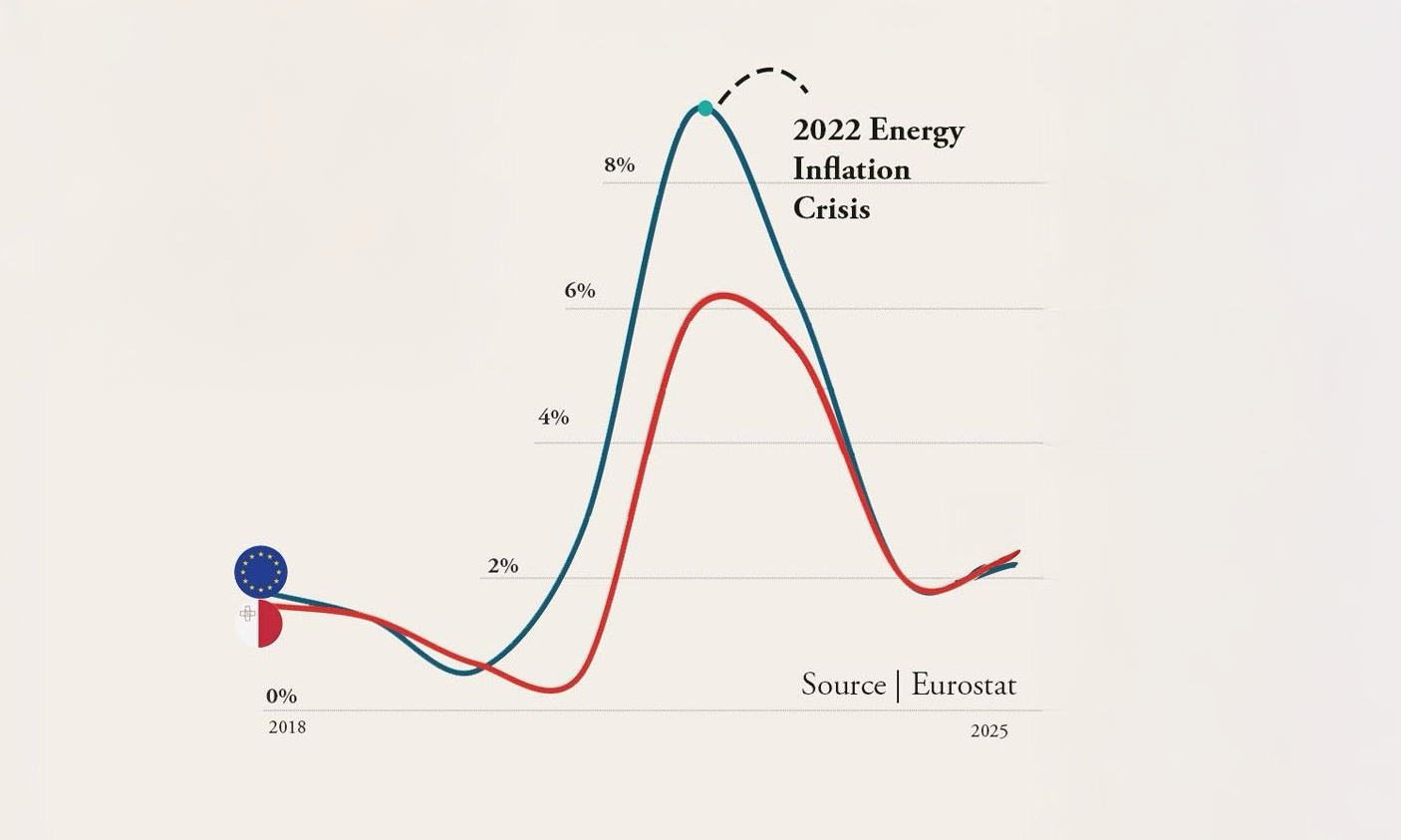
However, inflation figures talk about averages. Cost pressure is subtly different. Therefore, what we should be interested in is not only how fast prices are rising, but which prices are rising, for whom, and with what consequences. Cost pressures are the increases in specific everyday expenses such as rent, food, energy or services that directly strain household budgets, regardless of what the overall inflation average shows.
Cutting Energy Inflation
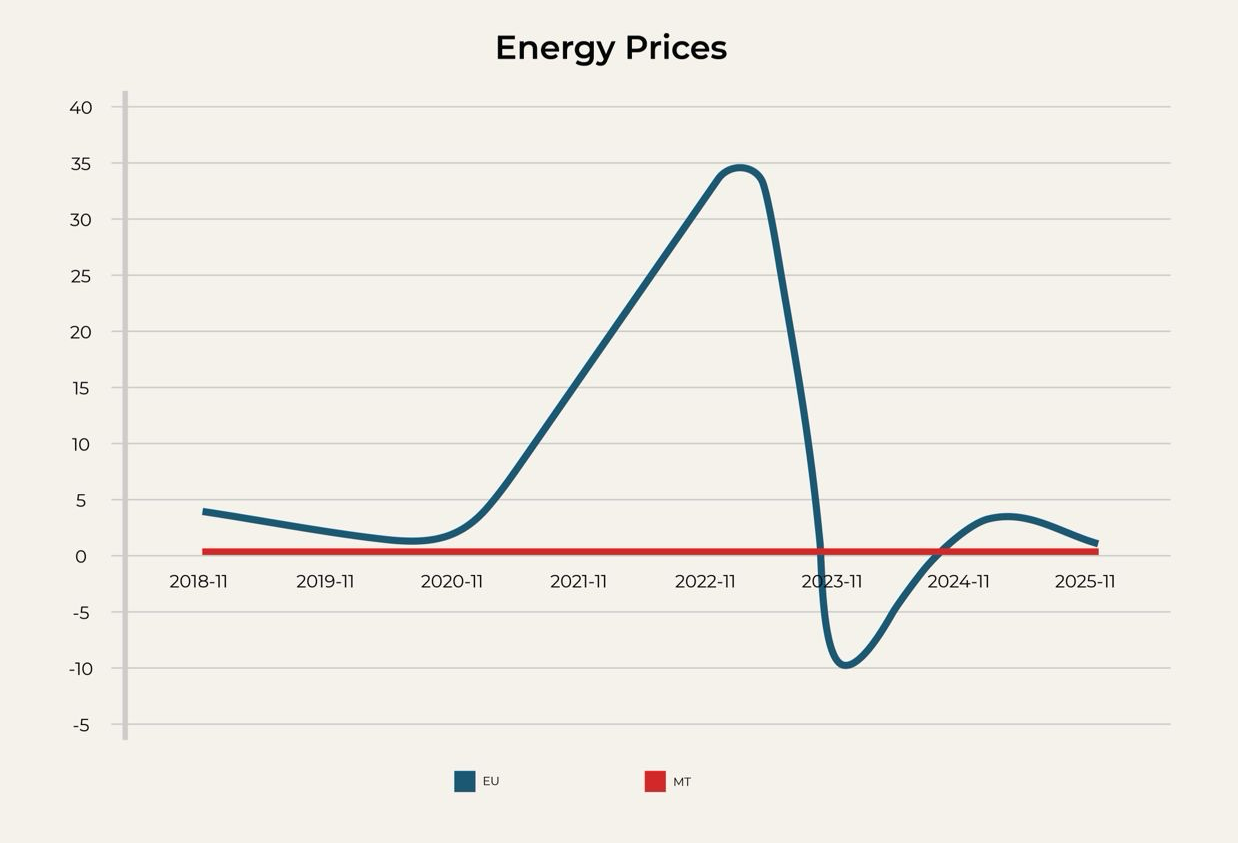
The main driver of the “lower inflation” trend is that the Maltese government has tended to soften the blow as much as possible. Malta deliberately “switches off” the biggest inflation accelerant: energy. As energy prices increased and tapered off across Europe, many households in other member states remained exposed because utility bills follow market swings. Maltese households avoided that volatility by being insulated with energy subsidies that essentially covered the inflation from the international energy price spike. But the long-term challenge goes beyond energy.
Daily Pressures
It is true that electricity bills are a major concern for families. So much so that they were one of the main drivers behind the PN’s defeat in the 2013 election. But food prices are the most visible and politically sensitive part of the cost of living, because they are daily expenses and they hit the most vulnerable households the hardest.
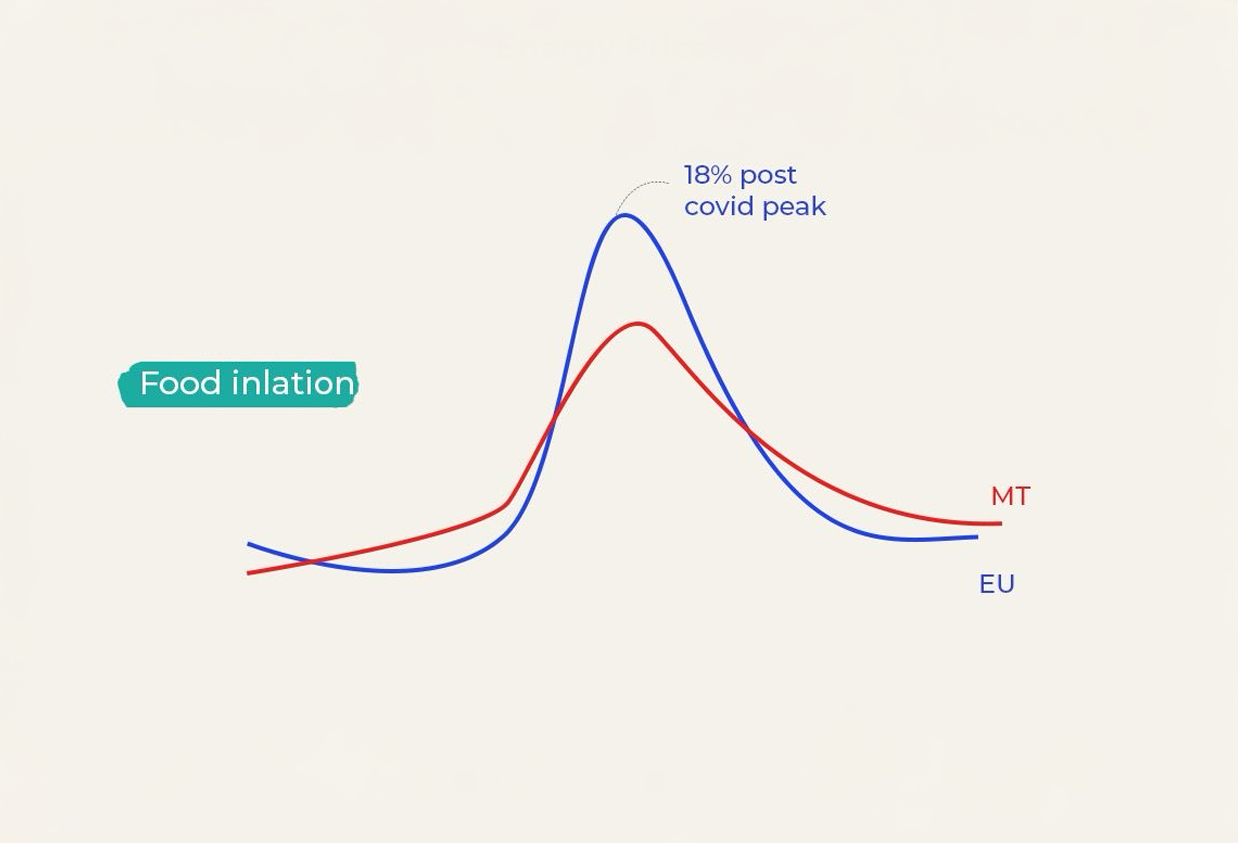
Malta is structurally vulnerable here, essentially a price taker. When global prices rise, those in Malta follow. However, the data does not suggest that Malta has dramatically outperformed or underperformed the EU in food inflation. It has been slightly above the EU average but broadly in line. Most of the time slightly higher, sometimes slightly lower, depending on the year and product category.
Housing Cost
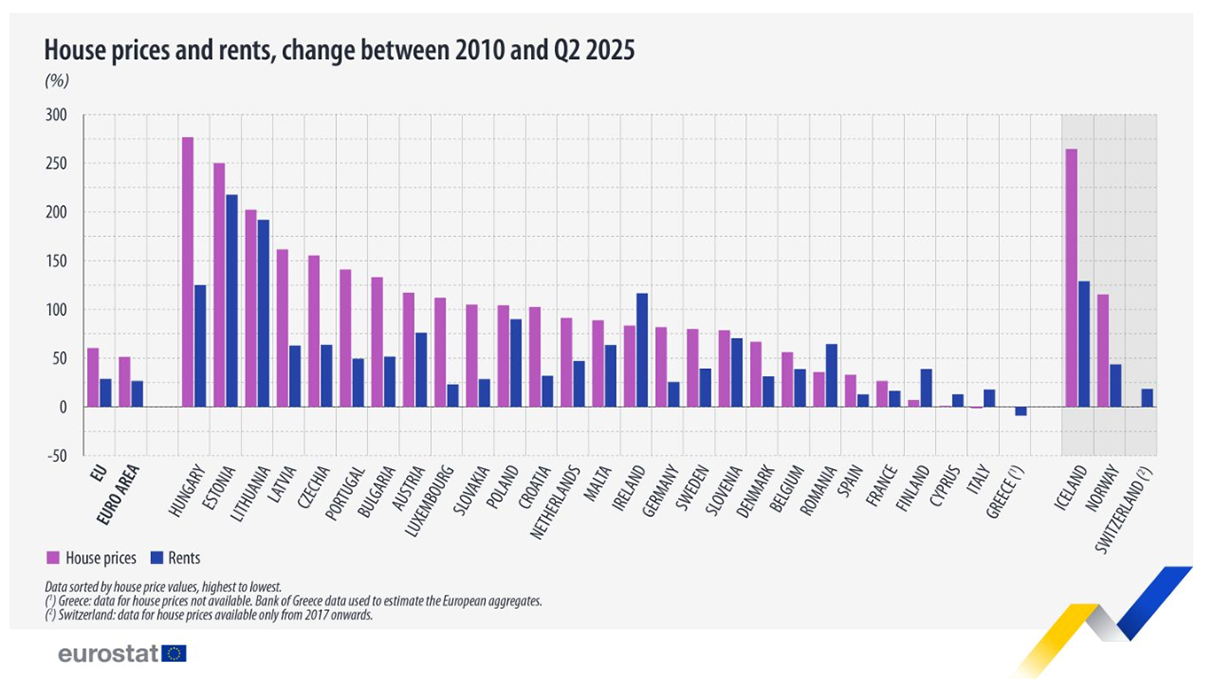
The real tension in Malta’s cost-of-living story lies in housing. In key years, rent inflation in Malta has been significantly higher than the EU average. In 2019, it rose more than four times faster. In 2022, three times faster. In 2023, it surged at a rate several times the European average.
Population growth, foreign labour inflows, the return of tourism, and competition from short-term letting all feed into demand. A sceptic will rightly point out that many Maltese do not rent but buy property, and that rent inflation is felt most acutely by foreign workers and short-term residents. That is largely true. It is also precisely why the analysis cannot stop at rents, but also examine house prices. The story there is more or less the same.
The Robustness of the Social Welfare
A large part of Malta’s relative resilience on the cost of living comes from how essential services are organised. While prices in many European countries have risen sharply in areas such as healthcare, education and care, Maltese households remain largely shielded from the most destabilising forms of cost escalation.
Education is the clearest example. Schooling costs are largely subsidised or free and access to tertiary education is not priced through tuition fees. On the contrary, University students receive stipends which have once again risen. This removes an entire category of financial stress that weighs heavily on families in many other EU states, where education costs have become a significant household burden.
Healthcare follows a similar pattern. Core services are free at the point of use, and medicines are regulated. While healthcare costs across Europe have been rising, Maltese households are not exposed to them in the same way. There is no widespread reliance on the private sector, eliminating a cost for families, which can often be unpredictable in one of the most sensitive areas of household spending.
Recent expansions in home-based care support have materially changed this equation. The extension of home care subsidies, the higher hourly support rate under the Home Helper of Your Choice scheme, and improved assistance for full-time carers reduce the private cost of care. In practical terms, this means that families are less likely to face an abrupt drop in income at the same time as new expenses arise. It is a quiet intervention, but a significant one. It prevents care needs from becoming a direct trigger for financial stress.
Malta’s cost-of-living story is not one with a narrative were “Malta is cheap”. It is a question of absorbing shocks better. Where other European households have taken in the shock themselves, Maltese households have been properly shielded. This does not mean the model is without strain, but in a period marked by volatility, that distinction is the difference between discomfort and destabilisation of the social fabric.