
Today in History (30 January 1976): Malta signs a cooperation agreement with North Korea
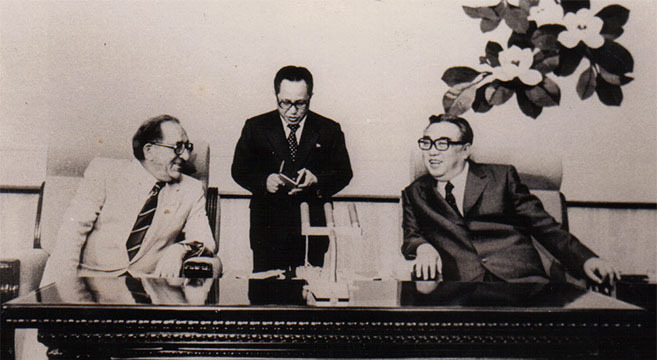
Fifty years ago today, Malta signed a “Renewed Economic and Technical Co-operation Agreement” with the Democratic People’s Republic of Korea (North Korea). The agreement is a big clue to the kind of foreign policy Malta was trying to run in the 1970s.
The agreement is listed by Malta’s Ministry for Foreign Affairs as “North Korea – Renewed Economic and Technical Co-operation Agreement”, signed on 30th January 1976 in Pyongyang. It is recorded as having entered into force on the day of signature, and its current legal status is “no longer in force”.
The key word here is renewed. Malta had already signed an earlier economic and technical cooperation agreement with North Korea the year before (dated 26/02/1975 in the same treaty database). The 1976 signing was effectively the continuation of that track.
Why was Malta doing deals like this in the 1970s?
To understand why a newly independent Malta would be signing cooperation agreements with a highly isolated communist state, we have to look at it in the context of the broader Mintoff era and the strategic problem Malta was trying to solve.
In the early 1970s, Malta’s leadership was pushing a non-aligned posture: keep autonomy, diversify partners, and avoid being trapped as a pawn of either Cold War bloc. Malta joined the Non-Aligned Movement in 1973, and Mintoff actively sought relationships beyond the traditional Western orbit — including outreach to countries like China and others in Eastern Europe — partly to widen Malta’s options for economic support and political leverage.
The United States and the UK certainly read Malta this way at the time. American policy discussions explicitly focused on preventing Malta’s facilities from being denied to the West and on avoiding Malta becoming financially dependent on other patrons. In plain terms, Malta’s position mattered, and everyone knew it.
Against that backdrop, “economic and technical cooperation” agreements were a classic small-state tool. They are flexible, they signal relationships without locking the state into formal alliances, and they create optionality. Even when the material value is limited, the diplomatic value can be real.
Why North Korea specifically?
North Korea in the 1970s was working hard to build diplomatic links with non-aligned and smaller states, partly for legitimacy and international recognition, partly to break isolation. For Malta, the attraction wasn’t that North Korea was an obvious development partner. It was that Malta was deliberately showing it could talk to anyone, and could diversify channels of cooperation in a period when Malta was trying to harden its independence and negotiate from a position of strength.
And yes, Malta–North Korea ties went beyond paperwork. Later reporting and commentary describe a period in which Malta under Labour had unusually close contacts with North Korea, including claims that Kim Jong-il studied English in Malta and had links with Maltese figures of the time.
If the 1976 agreement looks like a niche diplomatic footnote, it’s also part of a longer arc that later became politically explosive.
In the early 1980s, Malta signed agreements with North Korea that were described as “secret” and related to military assistance, sparking controversy once they became public. A Malta Independent report recounts that the agreements provided for weapons and ammunition supplied free of charge and included North Korean instructors for training.
Academic work on Malta’s foreign policy has also pointed to a “strict secrecy” clause in Malta–North Korea agreements from that period, highlighting how unusual the confidentiality was for arrangements involving state-to-state transactions.
That later chapter is not the same thing as the 1976 “economic and technical” agreement — but it matters because it shows that the Malta–North Korea relationship didn’t exist in a vacuum. The 1976 signing sits on the timeline as an early, formal marker of a relationship that later expanded into areas far more sensitive than “technical cooperation.”
What this tells us about Malta in 1976
The story isn’t “Malta loved North Korea.” The story is that Malta in the mid-1970s was practicing a deliberately expansive, sometimes provocative diplomacy: non-aligned, transactional, and visibility-driven. Malta wanted room to manoeuvre, leverage in negotiations, and proof to allies and rivals alike that it wouldn’t be dictated to.
So the anniversary matters less because of what North Korea gave Malta on paper, and more because of what Malta was signalling about itself: a small state trying to act like it had strategic depth, by building options wherever it could find them. Maybe the European Union could learn a thing or two from how Malta navigated that period.