
28 January: Remembering Perit Andrea Vassallo, who you know more than you think
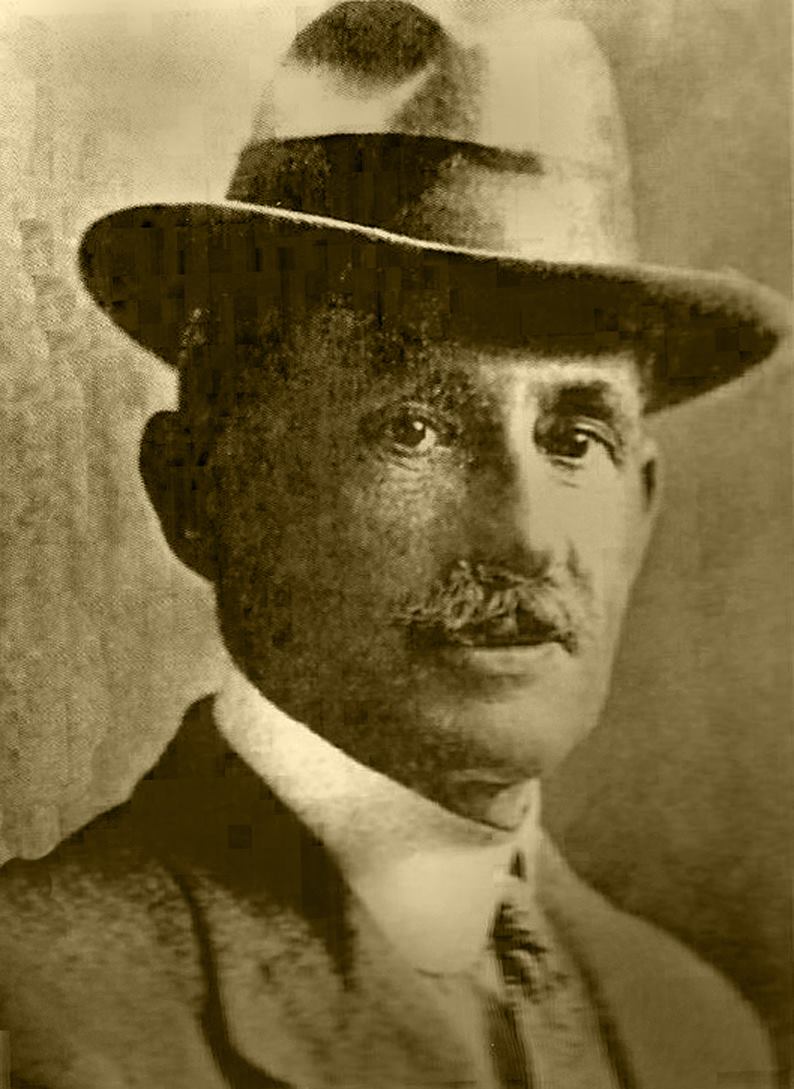
Perit Andrea Vassallo
On 28th January, we remember Perit Andrea Vassallo, the self-made architect behind some of Malta’s most beautiful buildings
If you’ve ever stood in front of Ta’ Pinu and felt that it looks almost “too monumental” for the quiet Gozitan countryside around it you’ve already met Andrea Vassallo’s legacy. If you’ve ever appreciated the parish churches in Ħamrun and Siġġiewi, same story. If you’ve ever strolled through Mdina and stumbled upon that Neo-Gothic house that looks like it time-travelled in from Victorian England, guess what, Andrea Vassallo.
The 28th of January marks the anniversary of the death of Perit Andrea Vassallo, one of the most influential, and arguably underrated, architects Malta produced.
Andrea Vassallo was a Luqa-born, working-class “self-made” architect who helped shape the Maltese islands in the late 19th early 20th century. He is best known for Ta’ Pinu Basilica in Gozo and the designs behind landmark domes and churches, including Ħamrun’s and Siġġiewi’s dome design.
Vassallo was born in Luqa on 2 January 1856 in a working-class family, and started out not as an architect in the hands-on world of building and stone, first as a stone sculptor, then as a designer and supervisor across most branches of construction.
That background matters, because it explains two things about him. He thought in Maltese limestone, which we appreciate so much nowadays as it has become somewhat of a luxury. People like Vassallo are a big part of why we see it that way. He showed us what limestone could be when it’s handled with ambition. His best work is not just about form, it’s about what you can do with stone when you’re not intimidated by it. He didn’t fit the traditional idea of what an architect should be at the time. He built his authority through work, patrons, and institutional recognition, not through formal schooling.
By the late 1880s, he was inside the state machine: he entered government service in December 1887. Over the following decades he accumulated recognitions that show how high he climbed: by the early 1900s he was recognised by major British professional bodies, and he ultimately received the formal warrant as Land Surveyor and Architect in 1908, in a move that was quite controversial, precisely because he was largely self-taught.
You definitely know some of his work
Vassallo’s reach is unusually broad for Malta: religious monuments, public buildings, houses, domes, styles that jump from Neoclassical to Art Nouveau, and projects that became physical reference points for whole towns.
Some of the headline works include:
- The Basilica of Ta’ Pinu (Gozo): widely treated as his masterpiece, both for scale and for the intricacy of its stonework.
- Major church domes: including the designs behind the Ħamrun dome (completed after his death, but based on his design work) and the Siġġiewi dome.
- Casa Gourgion (Mdina): the Neo-Gothic “misfit” near the Cathedral that sparked criticism because it didn’t blend with its surroundings. Ironically, it is now one of the most photographed stops in the old capital.
- Villa Rosa (St Julian’s) and Casa Said (Sliema, now demolished): signals of how he absorbed new European styles, including Art Nouveau, and translated them into Malta’s boom-town coastal architecture.
- Zammit Clapp Hospital: He died in the very hospital he designed, which at the time was called the Blue Sisters.
Vassallo is a key figure in Malta’s “modernisation era”. Vassallo worked at the point where Malta was changing fast: British colonial administration, new institutions, expanding towns, rising middle classes, and a demand for buildings that looked like progress. But instead of being a mere importer of foreign templates, he took styles circulating across Europe and Britain and made them our own, working in Malta’s materials, scale, and social realities.
Vassallo, a man from humble beginnings, ended up designing buildings that became national reference points. For example, Ta’ Pinu is not just a church; it’s part of Gozo’s identity, tourism, pilgrimage, and collective memory.
He exposes a problem we still haven’t solved. Authorship often gets erased from our history. One striking note in the historical record is that parts of Vassallo’s legacy are overlooked or even misattributed, the kind of slow cultural amnesia that happens when documentation is thin.
In 2026 Malta, this shapes what we choose to value, what we choose to protect. Maybe putting a name to a building, would help us to at least recognise the people who built decades-old landmarks, before we dismiss them as “just an old building” which needs to be demolished.