
Queen Mary Visits the Hypogeum
In January 1912, Queen Mary visited Malta during a wider imperial tour that reflected the island’s strategic, political, and cultural importance within the British Empire at the beginning of the twentieth century. The visit formed part of the royal couple’s return journey from the Delhi Durbar in India, an event designed to reaffirm imperial authority at a time when global power structures were becoming increasingly uncertain.
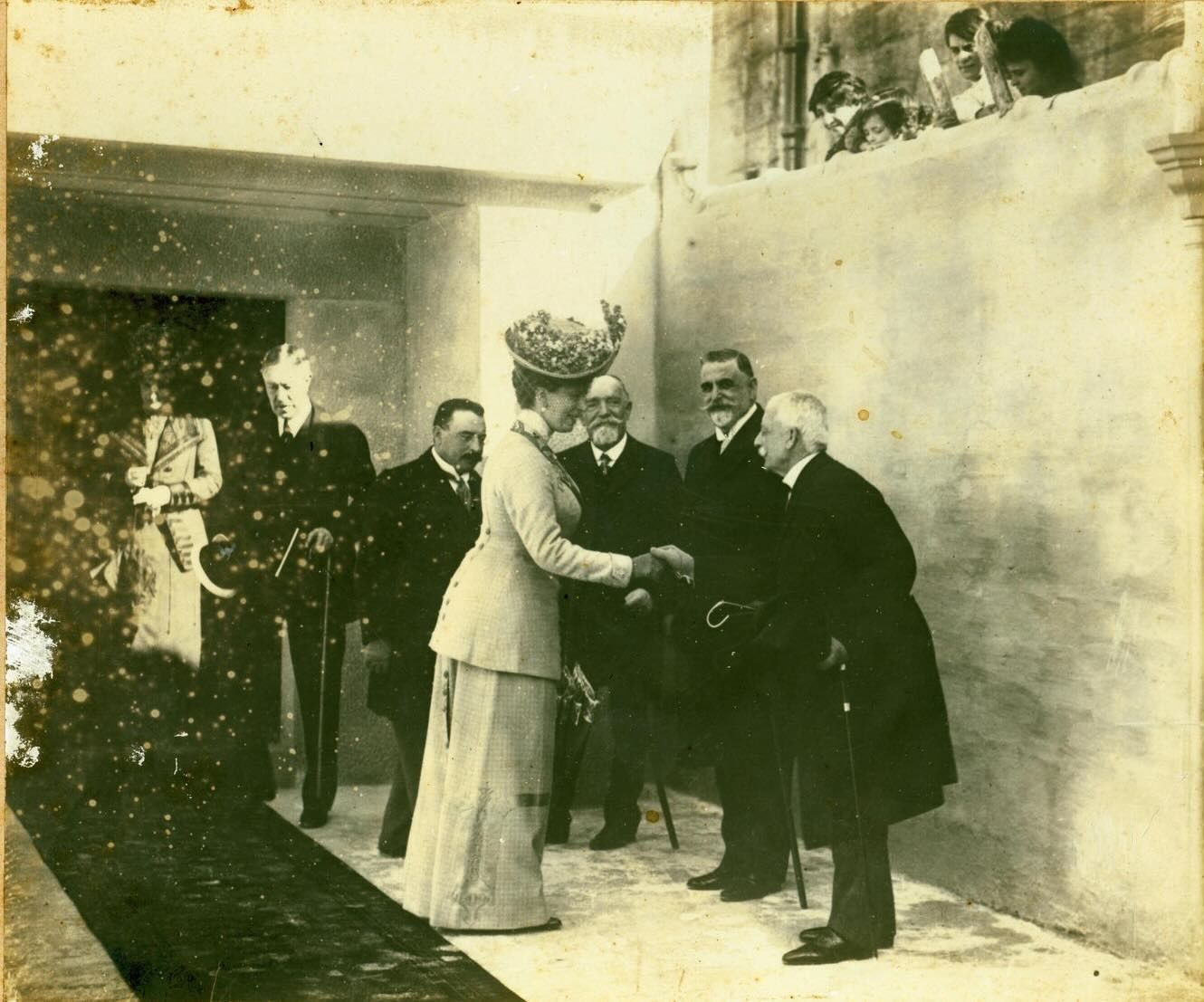
Malta occupied a central position in Britain’s Mediterranean system. As the headquarters of the Royal Navy’s Mediterranean Fleet, the island served as the empire’s primary forward base protecting maritime routes to Egypt, the Suez Canal, and the eastern colonies. Royal visits to such locations were far from routine gestures of ceremony and were used as a deliberate statement of imperial presence, linking the monarchy visibly to naval power, strategic infrastructure, and colonial administration.
During her stay, Queen Mary and King George took part in a programme that combined military inspection, official receptions, and cultural visits, each carefully structured to reflect Malta’s dual identity as both fortress colony and historic crossroads of civilisation. While the visit reinforced the island’s role in imperial defence, it also acknowledged a growing interest in Malta’s archaeological and historical heritage, which by the early twentieth century was beginning to attract international scholarly attention.
It was within this broader itinerary that Queen Mary visited the Hypogeum of Ħal Saflieni, a site discovered only a decade earlier in 1902 when workers cutting cisterns for a housing development accidentally broke through the roof of an underground prehistoric complex. The find had initially been concealed, but its scale and uniqueness soon became apparent, leading to formal investigation under the Museums Committee.
Excavation work had first been entrusted to Father Manuel Magri of the Society of Jesus, who began systematic study of the structure in 1903. Although Magri’s research was cut short by his sudden death in 1907, his work established the importance of the site, which was later expanded under the direction of Sir Themistocles Zammit. By 1908, the Hypogeum had already been opened to visitors, placing Malta among the most significant centres of prehistoric research in the Mediterranean.
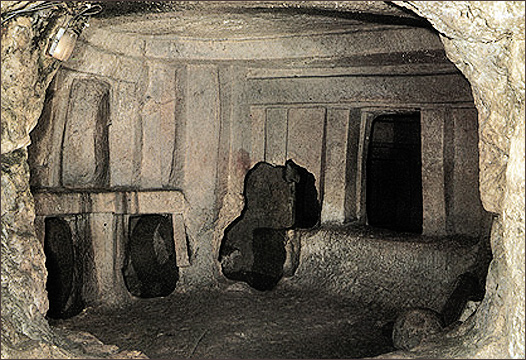
Queen Mary’s decision to include the Hypogeum in her visit was therefore not incidental. At a time when archaeology had become closely tied to imperial scholarship, museum culture, and national prestige, the recognition of such a site by a member of the royal family reinforced Malta’s emerging status not only as a military asset but also as a repository of human history extending far beyond the classical and medieval periods.
The remainder of the 1912 visit followed established imperial practice, with public ceremonies, naval engagements, and official functions intended to demonstrate stability and continuity. Yet with hindsight, the timing is striking. Europe stood on the edge of profound transformation. Later that same year, the Balkan Wars would reshape the eastern Mediterranean, while within two years the outbreak of the First World War would convert Malta into one of the British Empire’s most important wartime logistical and medical centres.
In the decades that followed, the Hypogeum itself would continue to gain recognition. It was inscribed on the UNESCO World Heritage List in 1980, an event commemorated by a Maltese postage stamp, and later underwent extensive conservation works between 1991 and 2000 to safeguard its fragile microclimate. Today, access remains strictly limited to protect a site whose survival depends on careful environmental control.