
Eddie Fenech Adami is born, the politician who steered Malta into the EU
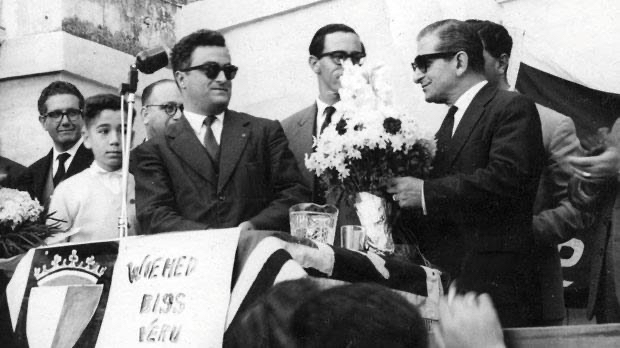
Today marks the birth anniversary of Eddie Fenech Adami, born on 7 February 1934 in Birkirkara.
His political career is hard to separate from the shape of modern Malta: he led the Nationalist Party for decades, served twice as Prime Minister, and later as President. He swerved as prime minister between 1987–1996 and 1998–2004, and then President from 2004–2009.
Fenech Adami trained as a lawyer and entered Parliament in the late 1960s, rising through the Nationalist Party’s ranks before becoming party leader in 1977, a role he kept until 2004. His long opposition period in the late 1970s and 1980s is frequently described in terms of institutional politics, rule of law, civil liberties, and the “direction” of the country, before the Nationalists’ victory in 1987 brought him to government.
In office, his two stints as Prime Minister spanned a formative period: late Cold War uncertainty, post-1989 European realignment, and then the early 2000s push for EU membership. The headline legacy, politically and economically, remains Malta’s EU accession.
A referendum on EU membership was held on 8 March 2003, asking voters whether Malta should join the EU in the enlargement planned for 1 May 2004. The “Yes” side won with 54%, and the Nationalist Party then won the subsequent general election.
After the referendum, Malta signed the Treaty of Accession in April 2003, and formally joined the European Union on 1 May 2004. This sequence matters because it captures how tight the political timetable was: referendum, election, treaty, accession, compressed into roughly a year, with government legitimacy repeatedly tested at the ballot box along the way.
That EU push also explains why Fenech Adami’s name still triggers a reflexive split in Maltese political memory. For supporters, he is the architect of a strategic “return to Europe”; for opponents, he is the man who anchored Malta to a project they viewed as risky, premature, or socially disruptive. The referendum numbers themselves, narrower than many EU accession votes elsewhere, show that this was never a unanimous national moment. Today, 22 years after Malta’s accession to the EU, few people argue that this was not the right move.
In April 2004, shortly before Malta’s EU entry took effect, he moved from partisan leadership into the presidency, serving as Head of State until 2009.
The Malta of today still runs on the foundations he helped build: stable institutions, a credible economy, and a European sense of purpose.