
Is the 2023 Budget as socialist as Minister Caruana described?
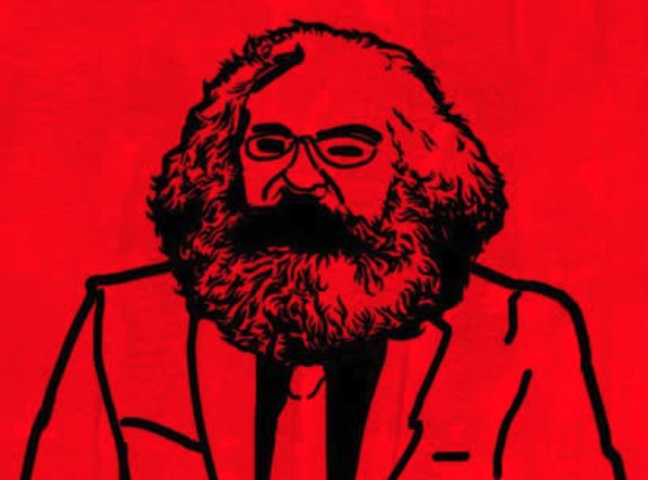
When Clyde Caruana delivered the Malta Budget 2023, he described it as “socialist at heart.” The language was striking, but the detail of the policies revealed something more complex. Many of the measures carried a redistributive character, aiming to protect lower-income groups and expand welfare support. At the same time, these interventions were carefully structured to safeguard businesses and maintain overall economic stability.
Labour’s Balancing Act
Since the departure of Joseph Muscat, the Labour Party’s narrative has sought to reassert its association with its socialist roots while maintaining the pro-business orientation that has underpinned Malta’s growth model. Robert Abela’s administration cannot afford to lose credibility with traditional Labour supporters, but nor can it risk unsettling investors and the private sector. The 2023 Budget reflected this balancing act, combining rhetoric about social justice with policies that reassured businesses and international observers about fiscal discipline.
Crisis as Catalyst
The dual shocks of the COVID-19 pandemic and the surge in global inflation provided the conditions for this approach. During the pandemic, wage supplements were introduced to preserve employment and protect household income. While framed as a measure for workers, they also allowed businesses to remain solvent and avoid mass layoffs. In 2023, faced with inflationary pressures, the government allocated around €608 million to subsidise fuel and electricity. This reduced the burden on households, particularly those with lower incomes who spend a larger share of their earnings on utilities. Yet the subsidies also gave firms cost stability and predictability, allowing them to plan investment and avoid sudden losses in competitiveness.
Measuring the Tilt to the Left
An assessment of the Malta Budget 2023 suggests that around 60% of its measures could be classified as left-leaning. In this case, “left-leaning” refers to policies designed to directly support lower-income households or to expand the welfare state. Energy and fuel subsidies, income support measures such as cost-of-living adjustments and wage supplements, and enhancements to social services all fall into this category. These interventions reinforced redistribution and strengthened the safety net.
However, measures that primarily served to stabilise the business environment, protect competitiveness, or preserve fiscal credibility lean in the opposite direction. This combination explains why Caruana’s description of the Budget as socialist has some grounding, but also why the overall package was less ideological and more pragmatic. Even measures that targeted households were ultimately structured in ways that stabilised the broader economy.
The Welfare State Under Pressure
Malta’s welfare state dates back to reforms introduced by Paul Boffa in 1947, including compulsory primary education and old-age pensions. The Budget 2023 reinforced this legacy, but in a way that reflects changing expectations. Welfare today is no longer conceived simply as a safety net for the most vulnerable. Instead, it is seen as a stabilising instrument for society at large, intended to smooth living standards across the population during periods of crisis.
The system, however, faces long-term pressures. Malta’s ageing population, sustained immigration flows, and structural shifts in the labour market all threaten to place heavier demands on public finances. The government has dismissed concerns about sustainability, arguing that strong growth will continue to provide the necessary fiscal space. Whether this confidence proves well founded remains to be seen.
Malta in the European Context
The Budget reflects a wider trend across Europe. Governments that previously emphasised free markets have increasingly embraced state intervention. Subsidies and transfers, once dismissed as distortions, are now viewed as tools to maintain stability and protect competitiveness. Businesses, which were once opposed to government interference, have become among the strongest advocates for such support in times of crisis. The result is a blurring of ideological lines and a convergence on policies that combine redistribution with stabilisation.
Spunt’s Verdict
The Malta Budget 2023 was presented in socialist terms, and a majority of its measures did indeed target lower-income groups or extend welfare support. Yet the substance of the Budget went beyond ideology. By combining redistribution with measures that preserved competitiveness and reassured investors, it operated as a pragmatic response to crisis.
Caruana’s declaration of a socialist heart captured one aspect of the Budget, but the reality was a hybrid model in which socialism and market-oriented policy were intertwined. The sustainability of this approach will depend not only on Malta’s ability to maintain growth but also on how well it adapts its welfare system to the pressures of demographic change and shifting global economic conditions.