
Mabel Strickland’s 1962 Election Comeback — When a Third Party Entered the Maltese Parliament
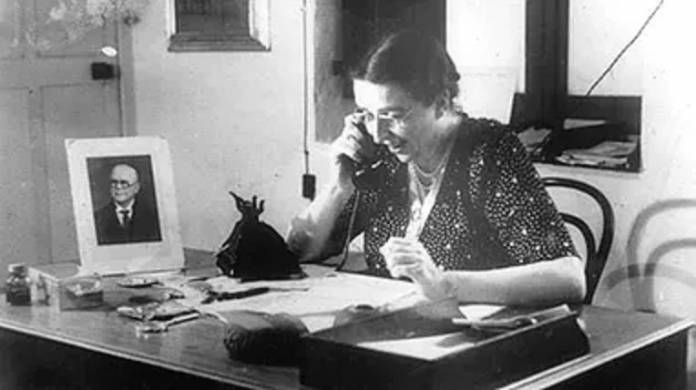
19 February 1962 marks Mabel Strickland’s return to Parliament after the 1962 election. Her way back into Parliament was a comeback that mattered far beyond a single seat.
In the 1962 election, Strickland led the Progressive Constitutionalist Party (PCP) and secured representation in a Parliament that expanded to 50 seats. The party’s result was modest in raw numbers, one seat on 4.84% of the vote, but politically it was a statement that Strickland was back in the room where Malta’s future status would be decided.
This was not her first time in the legislature. She had already been elected in 1950 and 1951, then dropped out after a party split and several unsuccessful contests, only to return in 1962. To understand why her return mattered, you have to zoom out.
The early 1960s weren’t just another electoral cycle. Malta was living through two overlapping fights. The Church–Labour conflict dominated public life and helped shape alliances in this election. The bigger constitutional question was about integration, dominion status, or independence.
Strickland’s politics sat firmly in that second battle. By 1962, she was a well-known, unapologetic voice for maintaining close ties with Britain and the Commonwealth, and she was wary of rushing into independence without strong security and financial arrangements in place.
Who was Mabel Strickland?
Mabel Strickland, born in 1899 wasn’t just “a politician who owned a newspaper”. She was one of the most influential, and controversial, public figures Malta produced in the 20th century, precisely because she operated in two power arenas at once: Parliament and the press.
She was born in Attard, daughter of Lord Gerald Strickland (a prime minister and a major figure in Maltese colonial-era politics). Her education was partly in Australia, and during World War I she even worked as a naval cypher officer for the Mediterranean Commander-in-Chief, a role which was quite unusual for a Maltese woman of her era.
Politically, she grew up inside the machinery of the Constitutional Party, serving as assistant secretary from the early 1920s. After the war she re-emerged at the centre of local political life, eventually winning a seat when the Constitutional Party was reconstituted in 1950, and then again in 1951.
However, she didn’t stay loyal to the old party structure. In 1953 she founded the Progressive Constitutionalist Party, and while she failed to win seats in the 1953 and 1955 elections, she stayed politically active, even at key constitutional discussions in London across the 1950s and early 1960s.
The short explanation for why Strickland remained a national force even when she wasn’t in Parliament, is that she helped build the country’s biggest editorial megaphone.
In 1935, she and her father founded The Times of Malta. She served as editor of The Times of Malta and The Sunday Times of Malta from 1935–1956, and took on senior leadership roles in the wider newspaper group for decades.
Her war record is part of the mythology, as her papers continued publishing through the Second World War, and in 1945 she was appointed a war correspondent with the British Army of the Rhine, covering the Nuremberg Trials.
Strickland is often remembered as a tough, establishment-linked figure, and she was. But she also pushed into spaces where women were not expected to in those times.
She was involved in the wider constitutional and political ferment that led to the 1947 constitution, and she participated in public life at a time when women’s formal political rights were still being fought over. The National Assembly period included landmark steps toward women’s eligibility for public office. Strickland was among the women present in that wider movement.
At the same time, her politics were unmistakably shaped by a belief in Malta’s place within British-led structures, a stance that later put her at odds with the independence drive. Her caution helped push for embedding essential defence and financial arrangements within the independence deal.
Strickland’s 1962 return to Parliament shows us that small parties can matter as even one seat can carry outsized influence. For the generations who do not remember, such figures serve as a reminder that Malta’s road to independence was not a no-brainer, but rather a messy argument between real options, real fears, and real trade-offs.