
Consecration of St John’s Co-Cathedral in Valletta
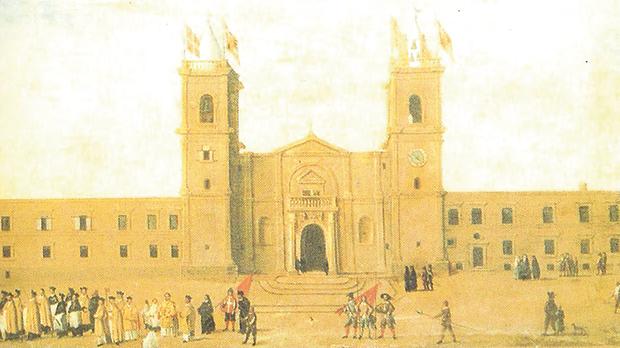
On 20 February 1578, St John’s in Valletta was consecrated, a major milestone in the making of Malta’s new capital after the Great Siege. At the time, it was not yet a “co-cathedral” in the modern sense, but the conventual church of the Order of St John: the spiritual heart of the Knights inside the new fortified city they were building.
The church had been commissioned by Grand Master Jean de la Cassière and designed by Girolamo Cassar, the same architect behind several of Valletta’s key early buildings. The building itself was completed by 1577 and dedicated to St John the Baptist, with the consecration of St John’s Co-Cathedral following on 20 February 1578. This milestone is evidence that by the late 1570s, Valletta was no longer just a military project, it had a ceremonial and religious centre to match its political importance.
What makes St John’s especially striking is the contrast between outside and inside. Its exterior is relatively severe and restrained. But over time, the interior was transformed into one of Malta’s greatest artistic treasures, enriched by generations of grand masters and knights and shaped by the Baroque style that came to define much of Malta’s visual identity.
That transformation is part of why St John’s matters beyond religion. It became a statement of power, wealth, and culture, not only for the Order, but eventually for Malta itself. The building’s artistic legacy includes works associated with Mattia Preti and, most famously, Caravaggio. St John’s still houses Caravaggio’s The Beheading of St John the Baptist and St Jerome Writing, linking Valletta directly to one of the biggest names in European art history.
The “co-cathedral” title came later. After the Order was expelled by Napoleon in 1798, the church’s role shifted, and in 1816 it was formally recognised as a co-cathedral, sharing status with St Paul’s Cathedral in Mdina.
So today’s date marks the moment when one of Malta’s most important buildings was formally brought into religious life, a building that would go on to become a symbol of Valletta, Baroque Malta, and the island’s layered identity across the centuries.