
Malta’s coastal towers
For much of the 16th century, Malta’s coastal defences reflected a clear strategic trade-off. The Knights of St John invested heavily where the strategic return was highest, inside the Grand Harbour. Birgu and later Valletta were turned into some of the most heavily fortified places in the Mediterranean. Beyond that perimeter, however, the coastline remained thinly protected, sparsely settled, and exposed to sudden raids.
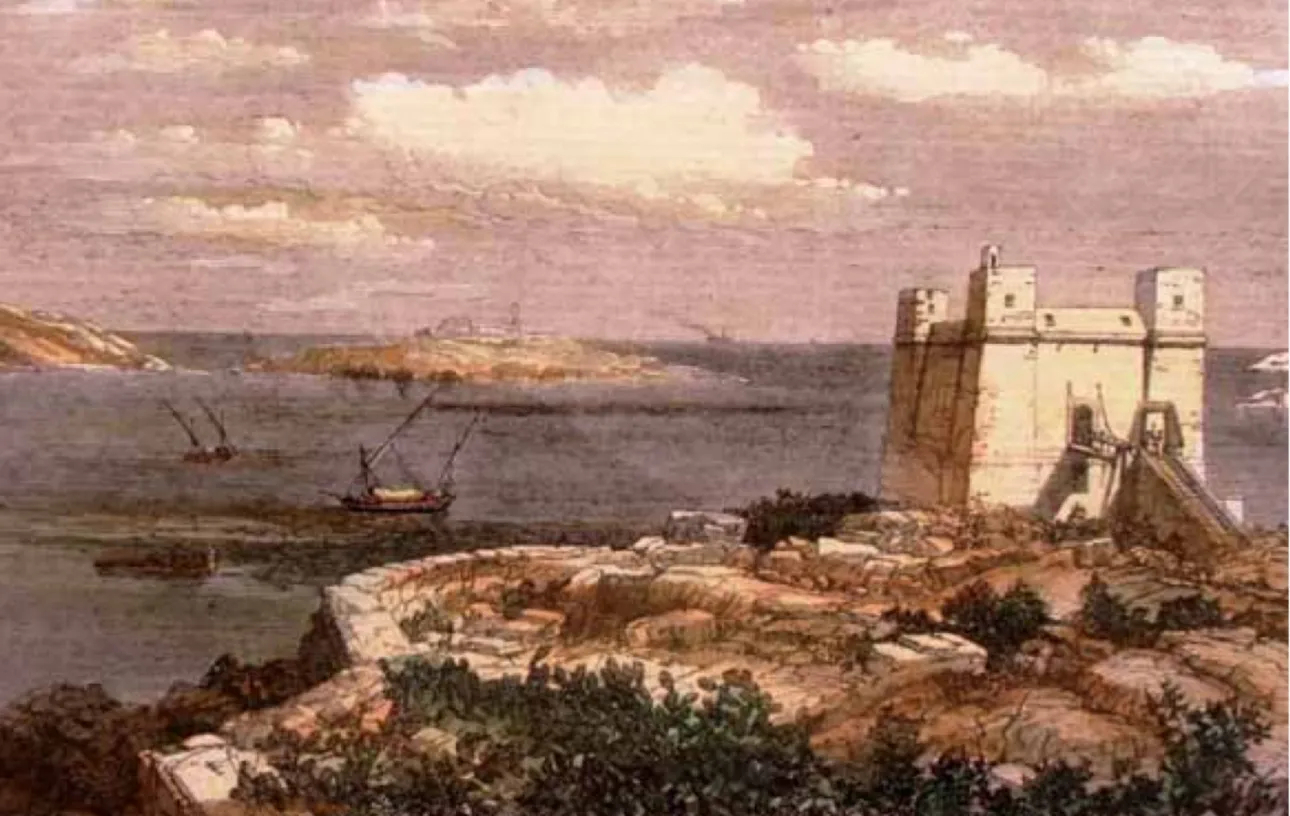
The Order had long experience with coastal warning systems from its time in the eastern Mediterranean, where networks of towers had provided early notice of corsair attacks. Building and maintaining a new fortress city (Valletta) absorbed money, manpower, and political attention. The result was that, well into the late 1500s, the defence of the islands’ shores relied on an older, cheaper system of open watch posts, manned nightly by local militia. These could raise the alarm, but they could not deny access to the coast.
Events at the end of the century exposed the limits of this approach. In 1598, the sighting of a large Ottoman fleet off southern Sicily triggered a fresh round of alarm. More decisively, in 1614, an Ottoman force landed in southern Malta at St Thomas Bay and raided surrounding villages before being driven off. The episode demonstrated a structural weakness: Malta could be well defended at its core and still be strategically vulnerable at its edges.
The first response took the form of targeted capital investment. A tower was built in Gozo in 1605 overlooking the channel between Gozo and Comino. The more ambitious break with the past came soon after. Between 1610 and 1620, six large coastal towers were erected at key landing points around Malta and Gozo, including St Paul’s Bay (where the first stone was laid on the 10th of February 1610), Marsaxlokk, St Thomas Bay and Comino. These were not modest lookouts as Malta had seen in the past but they were substantial stone structures, square in plan, with corner turrets shaped to allow flanking fire along their walls, and platforms capable of mounting heavy guns.
In functional terms, these towers were closer to small forts than to sentry posts. They were designed to dominate the shoreline, to complicate any attempt at landing, and to hold out long enough for a response force to be assembled. Their value was quickly demonstrated when one of them helped block an Ottoman landing attempt in 1614. Over time, some were reinforced further, with additional batteries and structural upgrades, showing how the initial investment created fixed points that later planners could build upon.
Yet this model had a cost problem. Large towers required money to build and troops to man. By the mid 17th century, the Order began to favour a different solution: smaller, cheaper towers intended primarily for surveillance. A new generation of watchtowers was built along the coast, compact in size, simple in layout, and designed for a small permanent guard. Access was deliberately awkward, usually by ladder or rope, reinforcing their role as observation posts rather than fighting positions.
This was not a complete abandonment of heavy structures. Where the geography demanded it, the Order still reverted to the large-tower model, most notably with the construction of a major tower at Mellieħa to cover a strategically important bay. But the broader policy direction was clear. The priority was to extend coverage along the coastline, even if that meant accepting lighter, less heavily armed positions.
The next phase refined this compromise. A further series of towers was built rapidly in the late 1650s, this time with improved construction that allowed at least some artillery to be mounted. Structurally, these towers were stronger than their immediate predecessors, using stone vaulting rather than timber roofs. The intention was to combine density of coverage with a minimum credible level of firepower.
At the same time, the system was institutionalised. The towers were no longer ad hoc militia posts but part of a permanent network, manned year-round by paid guards and equipped at public expense. Each site had a small professional crew and basic armament, replacing an older system that relied on hundreds of peasants taking turns at night watch.
By the late 18th century, the Maltese islands were ringed by roughly twenty coastal towers forming a connected defensive screen. This did not replace the great fortresses of the Grand Harbour, but it complemented them. The harbour remained the strategic core. The towers provided time, warning, and friction at the periphery.