
Malta Tsunami Risk: History, Evidence, and Future Threats to the Islands
Updated: Sep 5, 2025
Understanding Malta Tsunami Risk Through History
Although Malta is not usually seen as a place at risk of natural disasters, both historical records and scientific research show that the islands have experienced earthquakes and tsunamis in the past, and could face them again in the future. While most of these events started far from Malta, their effects have sometimes reached the islands with surprising force, damaging buildings, flooding harbours, and in one case, even changing the shape of the coast.
One of the strongest earthquakes to affect Malta happened in 1693. It struck eastern Sicily, causing widespread destruction there. But even in Malta, the shaking was powerful. Buildings in Valletta, Senglea, Vittoriosa, and Gozo were damaged, and roofs collapsed. No one in Malta died, but the event showed that even distant earthquakes can cause serious damage here.
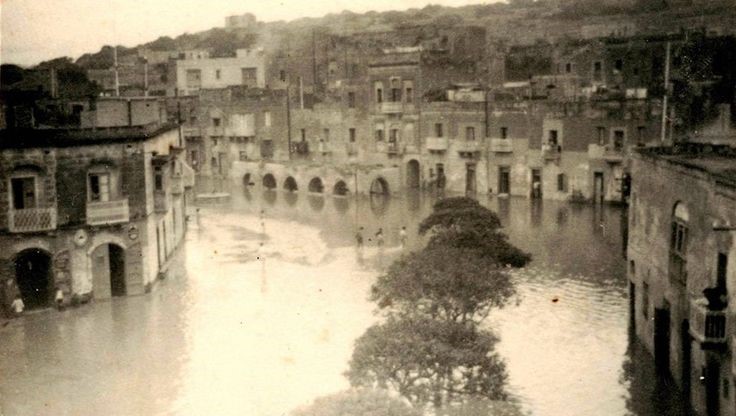
In 1908, another major earthquake hit the Strait of Messina between Sicily and mainland Italy. This time, the earthquake caused a tsunami that reached Malta’s shores. In places like Msida and Marsaxlokk, the sea rose by about a metre. Some boats were damaged and coastal areas were flooded. Once again, Malta avoided any deaths, but the event proved that tsunamis from elsewhere in the Mediterranean can still have an impact on the islands.
Scientific Evidence Behind Malta Tsunami Risk
Recent research has shown that the danger may be even greater than we thought. Dr Malcolm Bray and Prof. Derek Mottershead from the University of Portsmouth, working with the University of Malta, discovered physical evidence that a massive tsunami once hit the islands thousands of years ago. They found huge boulders, some weighing up to 70 tonnes, on Malta’s northeastern coast and on Comino. These rocks had been lifted and thrown inland by powerful waves, in some cases more than 100 metres from the sea. Some were even broken apart by the force of the impact.
The researchers believe these rocks were moved by a tsunami at least four metres high, travelling at over 30 kilometres per hour. They also found deposits of sand and sea material high above sea level, up to 20 metres above the shoreline, which suggests that seawater had once reached far inland. This event was likely caused by a giant earthquake near Crete around the year 365 AD, which is known to have created a massive tsunami that affected many parts of the Mediterranean. There are no written records of it reaching Malta, but the evidence left behind in the landscape is hard to ignore.
How Past Events Shape Today’s View of Malta Tsunami Risk
Until now, many people assumed Malta was mostly safe from such disasters, partly because the islands are not located directly on an earthquake fault, and partly because of the way buildings were constructed, thick limestone walls and low roofs that are less likely to collapse during shaking. But the discovery of tsunami boulders and high flood deposits shows that even if such events are rare, they can be powerful and dangerous.
Future Scenarios Driving Malta Tsunami Risk
To better understand what might happen in the future, a team of scientists studied different scenarios that could produce tsunamis that would hit Malta. They looked at four possible sources. The first was a major earthquake off the coast of Greece, in an area called the Western Hellenic Arc. A tsunami from that region could cross the Mediterranean and reach Malta, especially along the eastern coast. The second was a similar earthquake in the central Ionian Sea, which also has the potential to send waves toward Malta.
The other two scenarios involved underwater landslides. One could happen along the Malta Escarpment, a steep underwater slope just east of the islands. If part of this slope collapsed suddenly, it could send a wave racing toward Malta with very little warning. The fourth scenario was a landslide off the southern coast of Sicily, which could also produce waves strong enough to flood parts of Malta’s coastline.
Vulnerable Areas Exposed to Malta Tsunami Risk
These scenarios showed that some parts of Malta are more at risk than others, especially low-lying coastal areas. Bays like Marsaxlokk, parts of the Grand Harbour, and Marsalforn in Gozo could be affected. In flat areas near the sea, floodwaters from a tsunami could travel several hundred metres inland. Even though the chances of one of these events happening soon are low, the damage would be serious if it did happen.
All of this shows that Malta may not be as safe from tsunamis as once believed. While strong earthquakes and tsunamis are rare, they have happened before—and they could happen again. The land itself holds the memory of these past disasters, and science now gives us a clearer picture of the risks we face. The best way to protect ourselves is to be aware, be prepared, and respect what the past is trying to tell us.
References
- Kliem u Storja (2022). Earthquakes and Tsunamis in and around Malta. Retrieved from https://kliemustorja.com/2022/05/19/earthquakes-and-tsunamis
- Times of Malta (2014). Scientists find evidence of great tsunami in Malta. Retrieved from https://timesofmalta.com/article/scientists-find-evidence-of-great-tsunami-in-malta.533987
- Mueller, C., Micallef, A., Spatola, D., & Wang, X. (2020). The Tsunami Inundation Hazard of the Maltese Islands (Central Mediterranean Sea): A Submarine Landslide and Earthquake Tsunami Scenario Study. Pure and Applied Geophysics, 177, 1617–1638. https://doi.org/10.1007/s00024-019-02388-w