
The 1962 Election Under the Interdict — When Church and Politics Collided in Malta
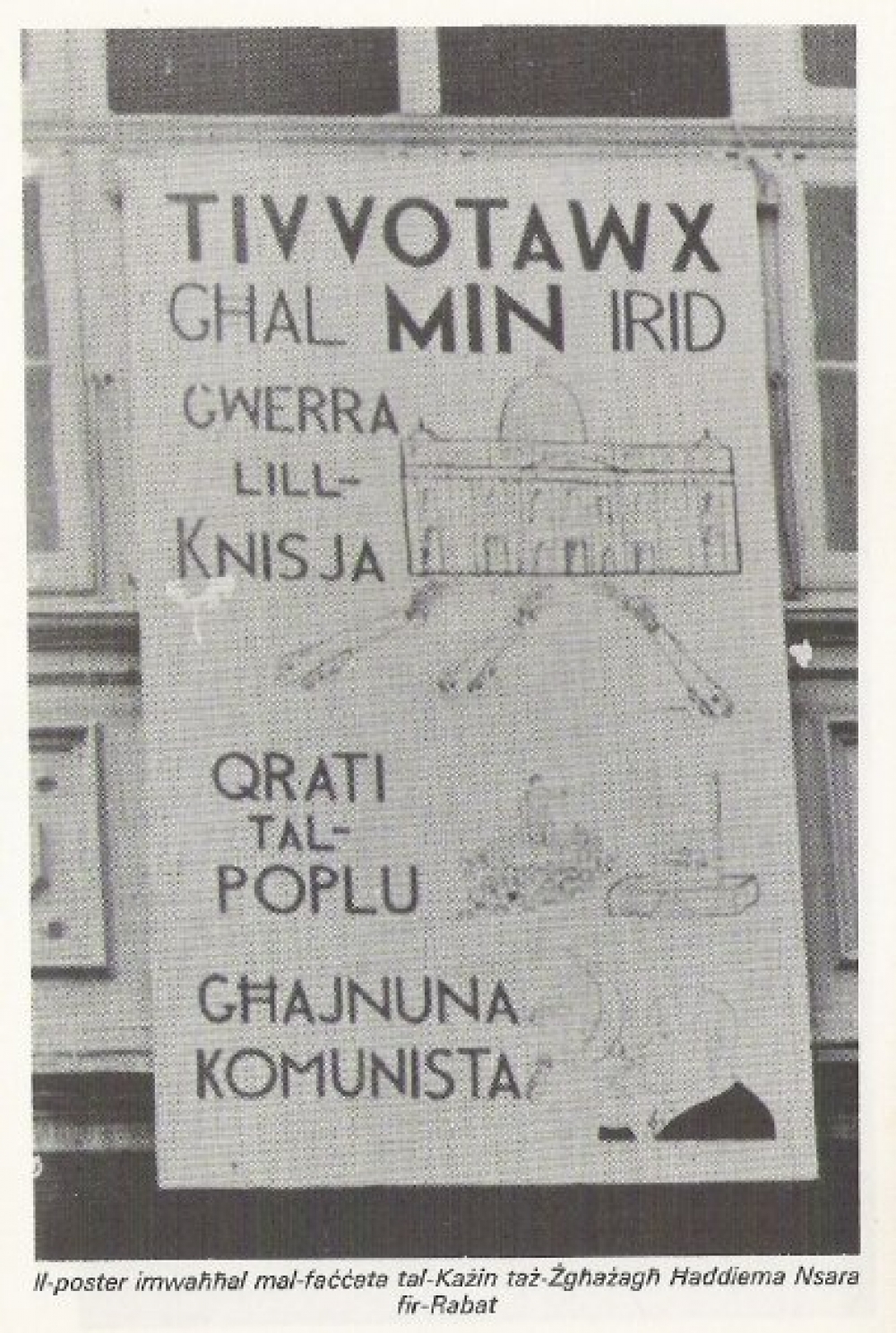
Between 17 and 19 February 1962, Malta went to the polls in one of the most politically charged climates in its modern history, with the Labour Party still carrying the burden of l-Interdett, the Church’s sanction that turned a party preference into a question of sin, shame, and social exclusion.
To understand why the 1962 election under the Interdict still stings in Malta’s memory, you need to grasp what the Interdett did to ordinary life. On 8 April 1961, Archbishop Michael Gonzi imposed an interdict on the executive of the Malta Labour Party, and the wider Church–Labour conflict quickly spilled beyond internal party discipline into the electorate’s daily realities: weddings, funerals, confession, and community standing.
The “argument” wasn’t being fought only in parliament or on platforms, it was being fought at the parish level, across family tables, and in entire towns where being labelled “Laburist” could come with a religious price tag.
In a heavily Catholic society, the Church’s line mattered, not as abstract theology, but as social force. The archbishop at the time was considered by some as the de facto leader of the islands.
The Interdett didn’t just discourage support for Labour; it framed it as spiritually dangerous, and in practice it encouraged an atmosphere where Labour families could be isolated and publicly pressured. That pressure, whether you call it persuasion, coercion, or something in-between, is the key context behind the 1962 result. It wasn’t a “normal” election conducted in a politically neutral moral environment.
And yet, it’s also precisely this that makes the period so historically important: it is one of the clearest moments where Malta’s political future was shaped by two competing sources of authority, democratic politics versus religious power, colliding openly.
The election itself produced a clear headline: the Nationalist Party won 25 of 50 seats, emerging as the largest party, while Labour won 16 seats. Smaller parties also entered parliament: the Christian Workers’ Party won 4 seats, the Democratic Nationalist Party won 4, and the Progressive Constitutional Party won 1.
The faces of the contest were equally defining: George Borg Olivier led the PN, while Dom Mintoff led Labour. But the structure of the contest mattered too. Multiple parties that positioned themselves as pro-Church and anti-communist coordinated politically against Labour
The 1962 vote wasn’t only about who governed. It also functioned as a mandate battle over Malta’s direction in the early 1960s, including the island’s constitutional path and relationship with the United Kingdom. In other words, this election helped set the runway for what Malta would become shortly after, a state moving toward independence. To do that, Malta first had to go through a process of discovering itself, and deciding which path to take in this period of transition.
The Church–Labour war dragged on beyond the 1962 result, and it left scars that outlived the people who led it. Accounts of the period, including retrospective reporting and research, describe a society marked by humiliation, family rifts, and communities split into moral camps.
Eventually, the temperature began to fall only toward the end of the decade. Later accounts note that a form of peace was declared in 1969, after pressure that included the Vatican’s role. The political pendulum continued to swing, with Labour later winning the 1971 election by a relatively narrow margin.
Democratically speaking, the uncomfortable truth is that elections can be procedurally democratic, while the surrounding social climate is anything but a level-playing field. Some argue that the church of the time had a right to speak out, if it had a political opinion. However, the manner in which this was done was largely inappropriate, as later Archbishops acknowledged.